

Key Takeaways
- High-functioning anxiety is not a formal diagnosis; it describes people who live with significant anxiety while appearing successful and composed.
- Signs are often hidden behind traits others praise, such as being punctual, prepared, and dependable.
- Common hidden signs include overthinking messages, trouble resting, constant reading of others, poor sleep, and physical tension.
- It often goes unnoticed because the person keeps performing well, sometimes even to themselves.
- Anxiety is very treatable, and therapies such as CBT can help even when you seem fine on the outside.
From the outside, you look like you have it all together. You are reliable, organized, and successful. People come to you for help. Inside, though, your mind rarely stops, and you are quietly exhausted from holding everything together.
This experience is often called high-functioning anxiety. Because it hides behind accomplishment, it is easy for others, and even for you, to miss.
In this article, you will learn what high-functioning anxiety means, 12 signs that are often overlooked, why it goes unnoticed, practical ways to find relief, and when counseling can help.
What Is High-Functioning Anxiety?
High-functioning anxiety is not a diagnosis in the DSM-5-TR. It is an informal term for people who experience real, ongoing anxiety while continuing to meet, and often exceed, their responsibilities.
Many people who describe themselves this way may meet criteria for a recognized condition such as generalized anxiety disorder or social anxiety disorder. Others have significant anxiety symptoms without a formal diagnosis. Either way, the distress is real and deserves attention.
Often, anxiety itself becomes the engine of productivity: worry pushes you to prepare, double-check, and overdeliver. That works, until the cost to your sleep, health, and relationships starts to add up.
12 Signs of High-Functioning Anxiety Most People Miss
These signs often look like strengths, which is exactly why they are easy to overlook.
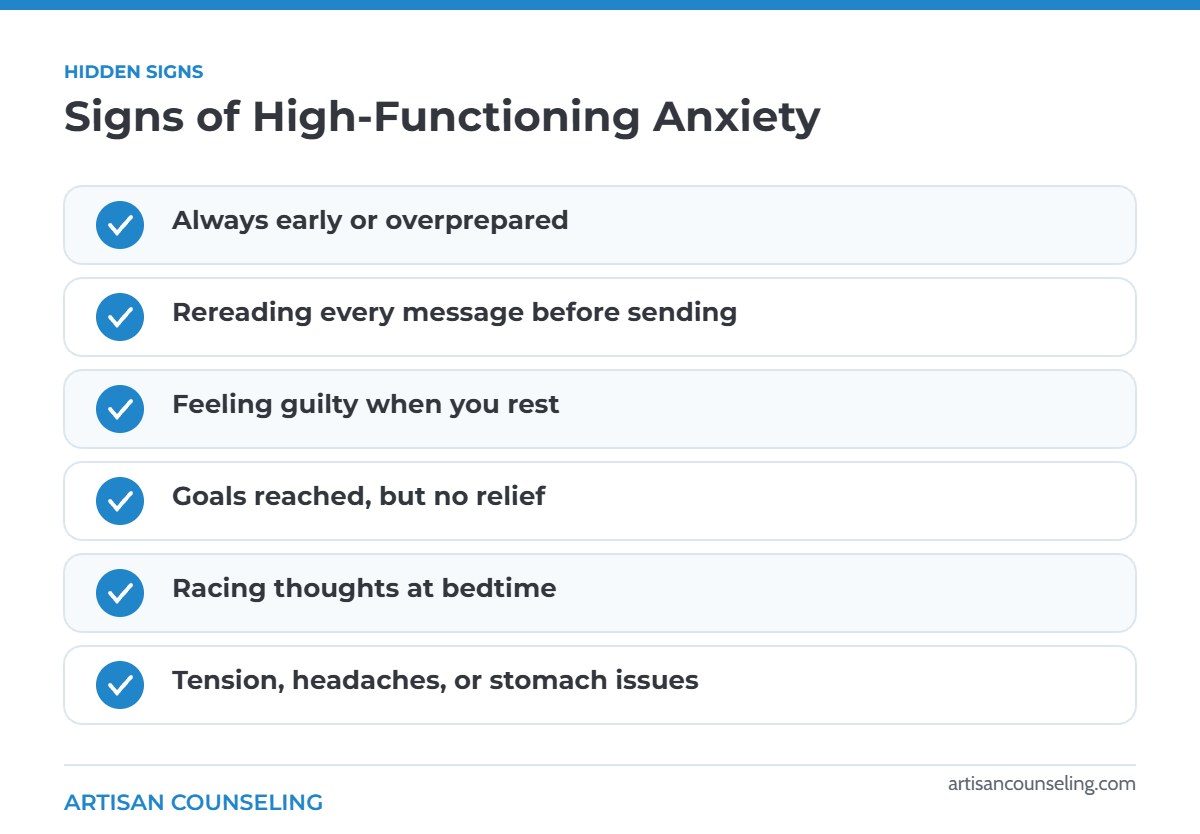
1. You Are Always Early (or Always Overprepared)
Arriving very early or overpreparing can be a way to manage worry about being late, judged, or caught off guard.
2. You Overthink Every Message You Send
You reread texts and emails several times, then worry about how they were received.
3. You Struggle to Rest
Downtime feels uncomfortable or even guilty, so you fill it with tasks.
4. Achievements Do Not Bring Lasting Relief
You hit a goal and immediately move on to the next worry instead of feeling satisfied.
5. You Are the Fixer
You jump in to solve everyone else’s problems, partly because uncertainty feels unbearable.
6. You Are Exhausted but Cannot Slow Down
You feel tired all the time, yet stopping feels harder than pushing through.
7. You Read the Room Constantly
You stay highly tuned to other people’s moods and adjust yourself to keep things calm.
8. You Have Trouble Delegating
Handing things off feels risky because you worry they will not be done right.
9. You Worry About Things That Already Went Fine
You replay events that went well, searching for anything you might have done wrong.
10. Sleep Is a Struggle
Your mind races at bedtime, reviewing the day or planning tomorrow.
11. Your Body Holds the Tension
Headaches, a tight jaw, stomach problems, or muscle tension show up without a clear medical cause.
12. Small Things Are Hard to Let Go
Minor mistakes or comments stay with you long after others have forgotten them.
Why High-Functioning Anxiety Gets Missed
- The behaviors are rewarded. Being early, thorough, and dependable earns praise, which reinforces the pattern.
- There is no obvious crisis. Because you keep functioning, people assume you are fine.
- You may not see it yourself. Constant worry can feel like simply being responsible.
- Stigma. Many high achievers worry that admitting anxiety will make them look weak.
If your mind feels busy even when everything is going well, our article on why you might feel anxious even when nothing is wrong may help.
What Can Help With High-Functioning Anxiety?
Relief usually comes from changing how you respond to anxiety, not from pushing harder.
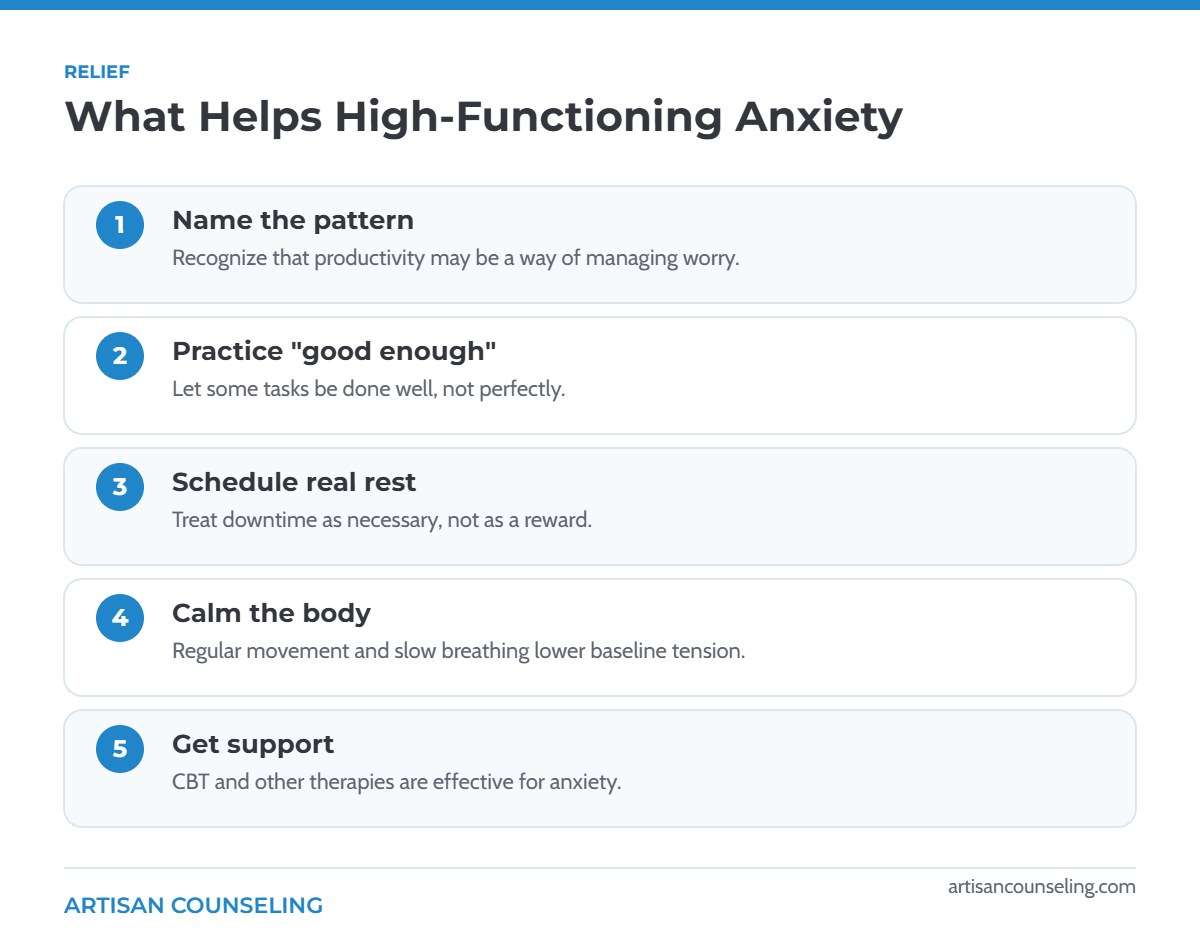
Name the Pattern
Simply recognizing that some of your drive is fueled by worry can be a relief. It lets you ask whether a task truly needs extra effort or whether anxiety is setting the bar.
Practice “Good Enough”
Choose low-stakes tasks and intentionally do them well rather than perfectly. Notice that the outcome is usually fine.
Schedule Real Rest
Put rest on your calendar the same way you would a meeting. It may feel uncomfortable at first; that discomfort often fades with practice.
Calm Your Body
Regular physical activity, consistent sleep, limiting caffeine, and slow breathing can lower your baseline level of tension.
Challenge Anxious Thoughts
Ask, “What is the realistic worst case, and could I handle it?” This can shrink worries that feel enormous in the moment. If thoughts keep looping, see why negative thoughts keep repeating.
Pay attention to how you feel after you finish something important. If relief lasts only minutes before the next worry starts, anxiety may be driving more of your day than you realize.
When Counseling Can Help
You do not need to fall apart to deserve help. If anxiety is affecting your sleep, health, relationships, or ability to enjoy your life, it is worth talking to a professional. Anxiety is one of the most treatable mental health concerns.
Cognitive behavioral therapy (CBT) is a well-established treatment for anxiety, and our article on how CBT helps anxiety explains what to expect. Mindfulness-based and acceptance-based approaches can also help you relate differently to worry.
Frequently Asked Questions
Is high-functioning anxiety a real diagnosis?
No. It is not listed in the DSM-5-TR, but it describes a real experience. Many people with these symptoms meet criteria for an anxiety disorder such as generalized anxiety disorder, which a licensed professional can assess.
What does high-functioning anxiety feel like?
It often feels like a constant background hum of worry, pressure to stay on top of everything, difficulty relaxing, and physical tension, all while appearing calm and capable to others.
Can high-functioning anxiety lead to burnout?
It can. Running on worry and overperformance for long periods takes a toll. Over time, many people experience exhaustion, irritability, and reduced motivation that resemble burnout.
How is high-functioning anxiety treated?
Treatment usually includes therapy such as CBT, along with lifestyle changes like improving sleep and reducing caffeine. For some people, medication prescribed by a qualified provider is also helpful.
Getting Support at Artisan Counseling
If you are tired of holding it all together on your own, our counselors can help you build calmer ways of working and living. We offer individual counseling in Newport News and Suffolk and convenient telehealth sessions across Virginia, which can fit even a busy schedule. Reach out to get started.