Key Takeaways
- Burnout is a response to chronic, unmanaged stress, most often from work, and the World Health Organization classifies it as an occupational phenomenon rather than a medical condition.
- Depression is a mental health condition that affects mood, interest, sleep, energy, and thinking across most areas of life.
- A key difference: burnout often improves with rest and distance from the stressor, while depression usually persists.
- The two can overlap, and untreated burnout may increase the risk of depression.
- If symptoms last two weeks or more, or include hopelessness, a professional evaluation is important.
You are exhausted, unmotivated, and short on patience. Things that used to matter feel pointless. Is this burnout from too much pressure, or is it depression?
The question matters because the answers point toward different kinds of help. Taking a vacation may ease burnout, but depression usually needs more than rest. Mistaking one for the other can leave you struggling longer than necessary.
In this article, you will learn what burnout and depression each are, the signs that help tell them apart, how they overlap, what helps with each, and when to reach out for professional support.
What Is Burnout?
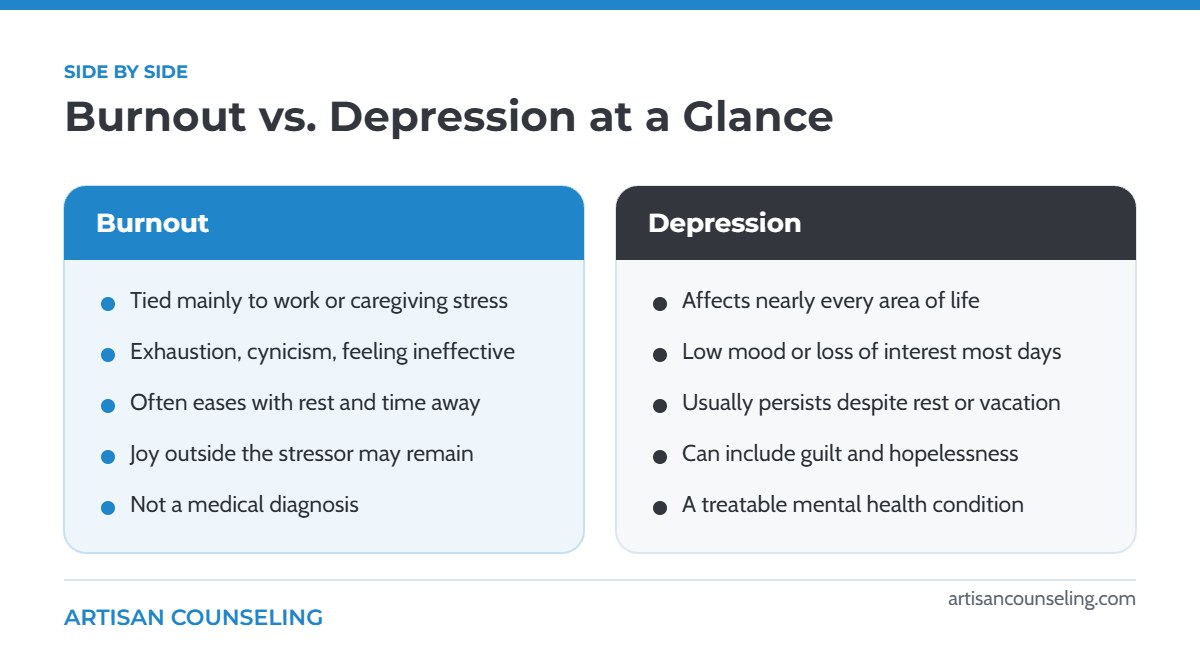
Burnout is a state of physical and emotional exhaustion caused by long-term stress that has not been successfully managed. The World Health Organization describes it in the ICD-11 as an occupational phenomenon, not a medical diagnosis, marked by three features:
- Exhaustion: feeling drained and depleted of energy
- Mental distance: cynicism, irritability, or detachment from your job
- Reduced effectiveness: feeling like you cannot get things done or do them well
Although the formal definition centers on work, many people experience similar exhaustion from caregiving, parenting, or long stretches of overwhelming responsibility.
What Is Depression?
Depression, clinically called major depressive disorder in the DSM-5-TR, is a common and treatable mental health condition. It involves a depressed mood or loss of interest or pleasure for most of the day, nearly every day, for at least two weeks, along with other symptoms such as:
- Changes in sleep or appetite
- Fatigue or loss of energy
- Trouble concentrating or making decisions
- Feelings of worthlessness or excessive guilt
- Moving or speaking more slowly, or feeling restless
- Thoughts of death or suicide
Unlike burnout, depression is not limited to one area of life. It tends to color how you feel about yourself, your relationships, and your future.
How to Tell Burnout and Depression Apart
Only a licensed professional can make a diagnosis, but these differences can help you make sense of what you are feeling.
Where the Feelings Come From
Burnout is usually tied to a specific source of stress. You may dread work but still enjoy weekends, hobbies, or time with friends. With depression, low mood and lack of interest tend to show up everywhere, including activities you once loved.
How You See Yourself
Burnout often brings frustration and cynicism toward the situation: “This job is impossible.” Depression is more likely to turn inward with feelings of worthlessness or guilt: “I am the problem.”
How Rest Affects You
Time off often helps burnout, at least temporarily. With depression, rest rarely restores you, and you may feel just as flat on vacation as you do at work.
Hope for the Future
People with burnout can often imagine feeling better if their circumstances changed. Depression can make it hard to imagine things ever improving.
Where Burnout and Depression Overlap
Burnout and depression share symptoms such as exhaustion, trouble concentrating, irritability, and sleep problems. They can also exist at the same time. Prolonged burnout that goes unaddressed may increase your risk of developing depression, so it is worth taking early signs seriously.
If you are not sure which you are dealing with, that is completely normal. Our article on why you might feel emotionally drained all the time looks at other common causes of ongoing exhaustion.
What Helps Burnout vs. What Helps Depression
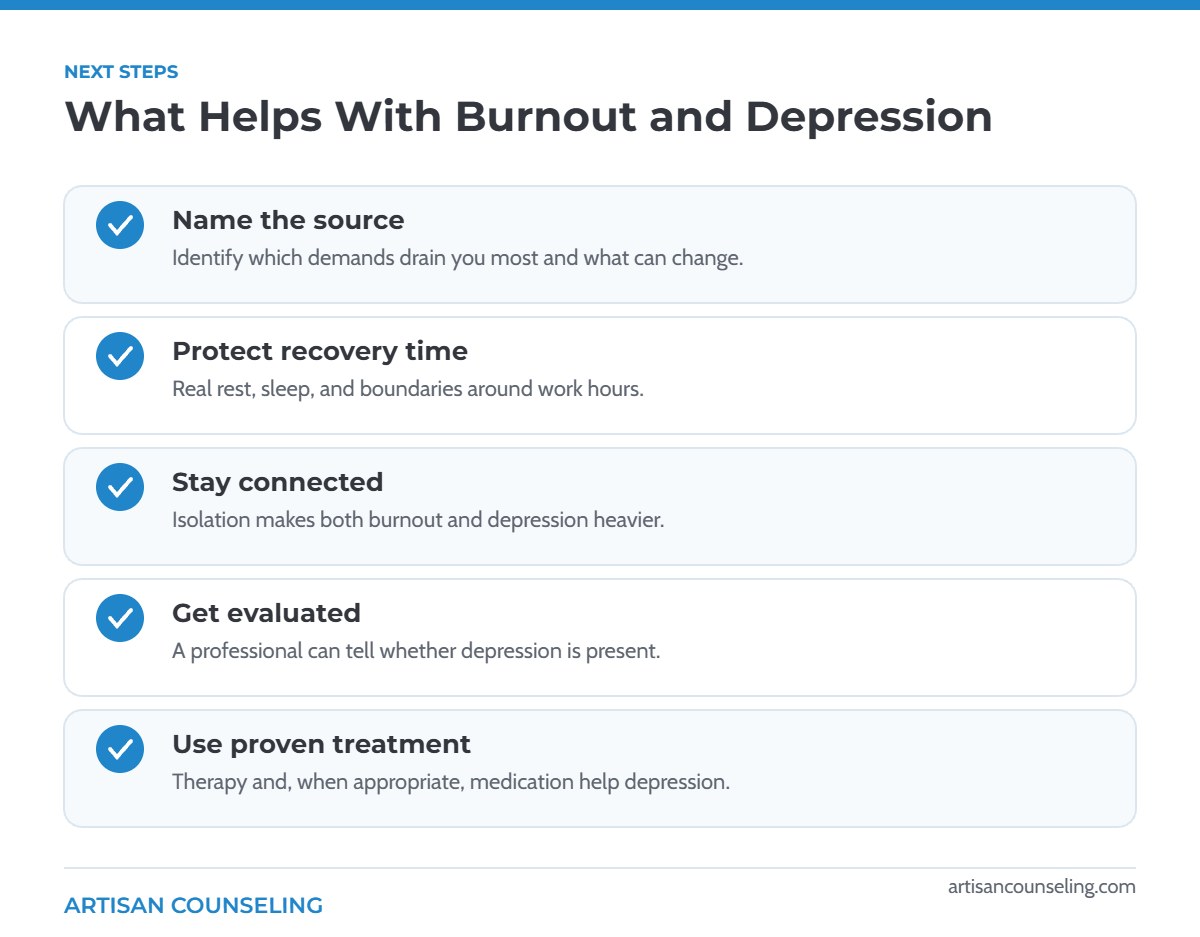
Some strategies help both, while others are more specific.
Helpful for Burnout
- Identify the biggest drains and what is within your control to change
- Set boundaries around work hours, email, and availability
- Take real breaks and protect sleep
- Talk with your manager about workload, or consider larger changes if the environment is not sustainable
- Reconnect with activities that have nothing to do with productivity
Helpful for Depression
- Get a professional evaluation from a counselor or physician
- Consider evidence-based therapy such as cognitive behavioral therapy
- Talk with a prescriber about whether medication might help
- Use behavioral activation: schedule small, meaningful activities even when motivation is low
- Stay connected to supportive people, even in small ways
A helpful self-check: imagine two weeks away from your main source of stress. If you believe you would feel noticeably better, burnout may be the bigger factor. If you suspect you would feel the same, depression may be worth exploring with a professional.
When to Talk With a Counselor
Reach out for support if your symptoms last more than two weeks, affect your work or relationships, or come with hopelessness or thoughts of self-harm. You do not need to be sure what you are experiencing before asking for help. Sorting that out is part of what a counselor does.
If you are in crisis: call or text 988 to reach the 988 Suicide & Crisis Lifeline any time, day or night, or call 911 in an emergency.
Frequently Asked Questions
Can burnout turn into depression?
It can. Long-term, unmanaged stress is a risk factor for depression. Addressing burnout early, through rest, boundaries, and support, can help reduce that risk.
Is burnout a mental health diagnosis?
No. The World Health Organization classifies burnout as an occupational phenomenon in the ICD-11, not a medical condition. However, its effects are real, and counseling can help you recover.
How long does it take to recover from burnout?
Recovery time varies widely depending on how long the stress lasted and whether the source changes. Some people feel better within weeks of meaningful changes, while others need several months.
Should I see a doctor or a counselor for depression?
Both can help. A counselor can assess symptoms and provide therapy, and a physician or psychiatric provider can check for medical causes and discuss medication. Many people benefit from both.
Getting Support at Artisan Counseling
Whether you are running on empty from burnout or struggling with depression, you deserve support that fits. Our counselors offer individual counseling in Newport News and Suffolk and flexible telehealth sessions across Virginia. You can browse our counselors or contact us to get started.