Key Takeaways
- Grief does not move through neat, predictable stages or end on a schedule.
- Waves of grief, continuing bonds with a loved one, and good and bad days are all normal.
- Pressure to “move on” can add shame to an already painful experience.
- Grief that stays intense and disrupts daily life for a long time may benefit from professional support.
When you lose someone or something important, people may offer well-meaning advice about how long grief should last. You might even ask yourself, “Shouldn’t I be over this by now?”
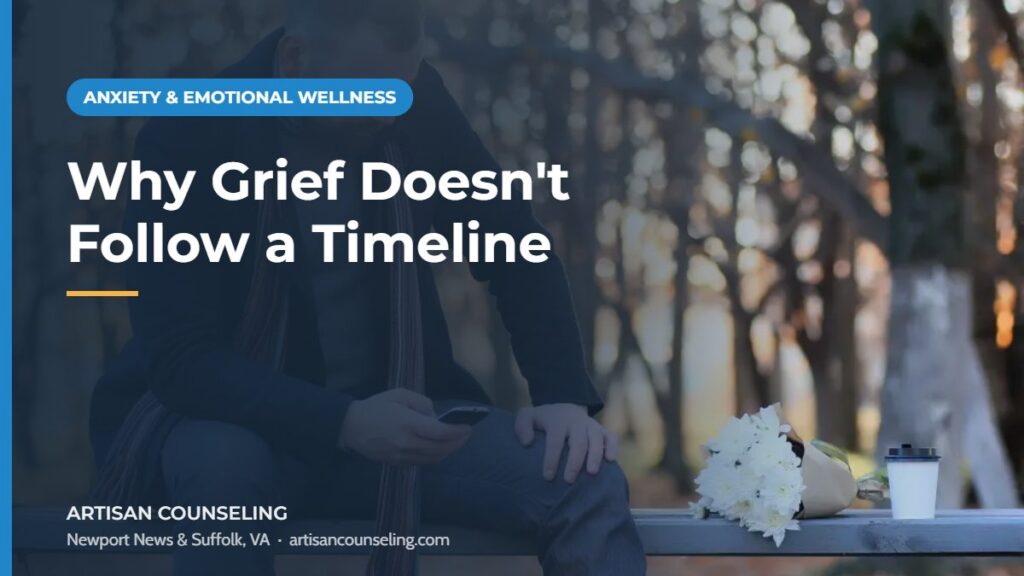
The truth is that grief does not follow a timeline. It moves in its own way, shaped by your relationship with what you lost, your circumstances, and your support. There is no correct pace.
In this article, you will learn where the idea of a grief timeline came from, what grief really looks like, why timeline thinking can hurt, practical ways to cope, and when grief counseling can help.
Where Did the Idea of a Grief Timeline Come From?
Many people know the five stages of grief: denial, anger, bargaining, depression, and acceptance. Elisabeth Kübler-Ross originally described these stages in the context of people facing their own terminal illness. Over time, they became widely applied to grief in general.
The stages can be helpful as a way to name feelings. However, they were never meant to be a checklist completed in order. Many grief experts now emphasize that grief is far more individual and fluid.
What Does Grief Actually Look Like?
Real grief is rarely tidy. The overview below captures some of the patterns people commonly experience.
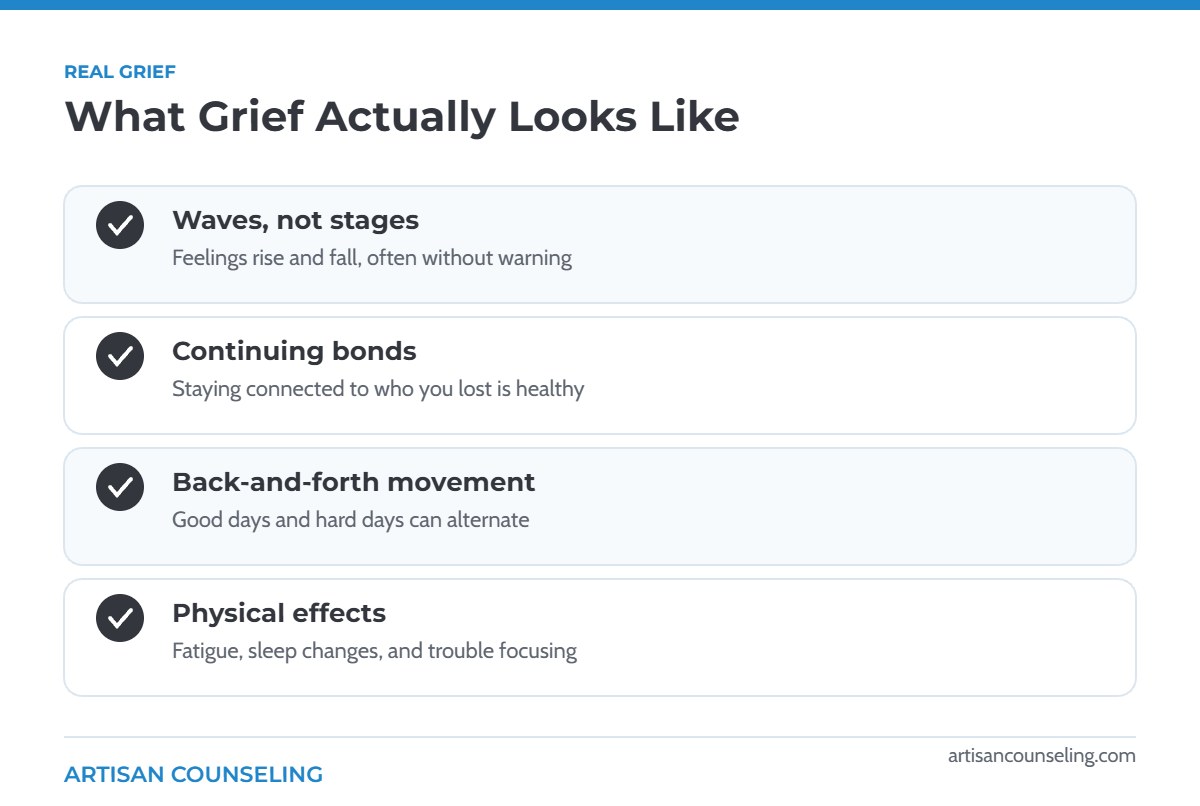
Waves Rather Than Stages
Grief often comes in waves. You may feel fine one moment and overwhelmed the next, triggered by a song, a smell, or an ordinary moment. Over time, waves usually become less frequent, though they may still arrive unexpectedly.
Continuing Bonds
Healthy grieving does not require letting go completely. Many people keep a sense of connection by talking to their loved one, keeping meaningful objects, or carrying on traditions.
Nonlinear Movement
You might feel better for weeks, then find yourself in deep sadness again. This back-and-forth is normal and does not mean you are going backward. Our article on why healing isn’t linear explores this pattern.
Physical Effects
Grief affects the body, too. Fatigue, changes in sleep and appetite, trouble concentrating, and aches are all common.
Many Kinds of Loss
Grief is not only about death. Divorce, job loss, a health diagnosis, infertility, or a move can all bring real grief.
Why the Timeline Idea Can Hurt
Shame About Ongoing Feelings
When you believe grief should be finished by a certain point, lingering sadness can feel like failure. That shame can lead you to hide your pain instead of getting support.
Pressure to Move On
Friends, family, or workplaces may expect you to return to normal quickly. This pressure can cause people to push feelings down, which often makes them resurface later.
Missed Signs of Prolonged Grief
On the other hand, assuming that grief is always “just normal” can mean missing signs that someone needs more help. The DSM-5-TR includes prolonged grief disorder, which describes intense, persistent grief that significantly disrupts life for an extended period, typically at least a year after a death for adults.
How to Cope With Grief Day to Day
There is no way to skip grief, but there are ways to carry it with more support and less self-judgment.
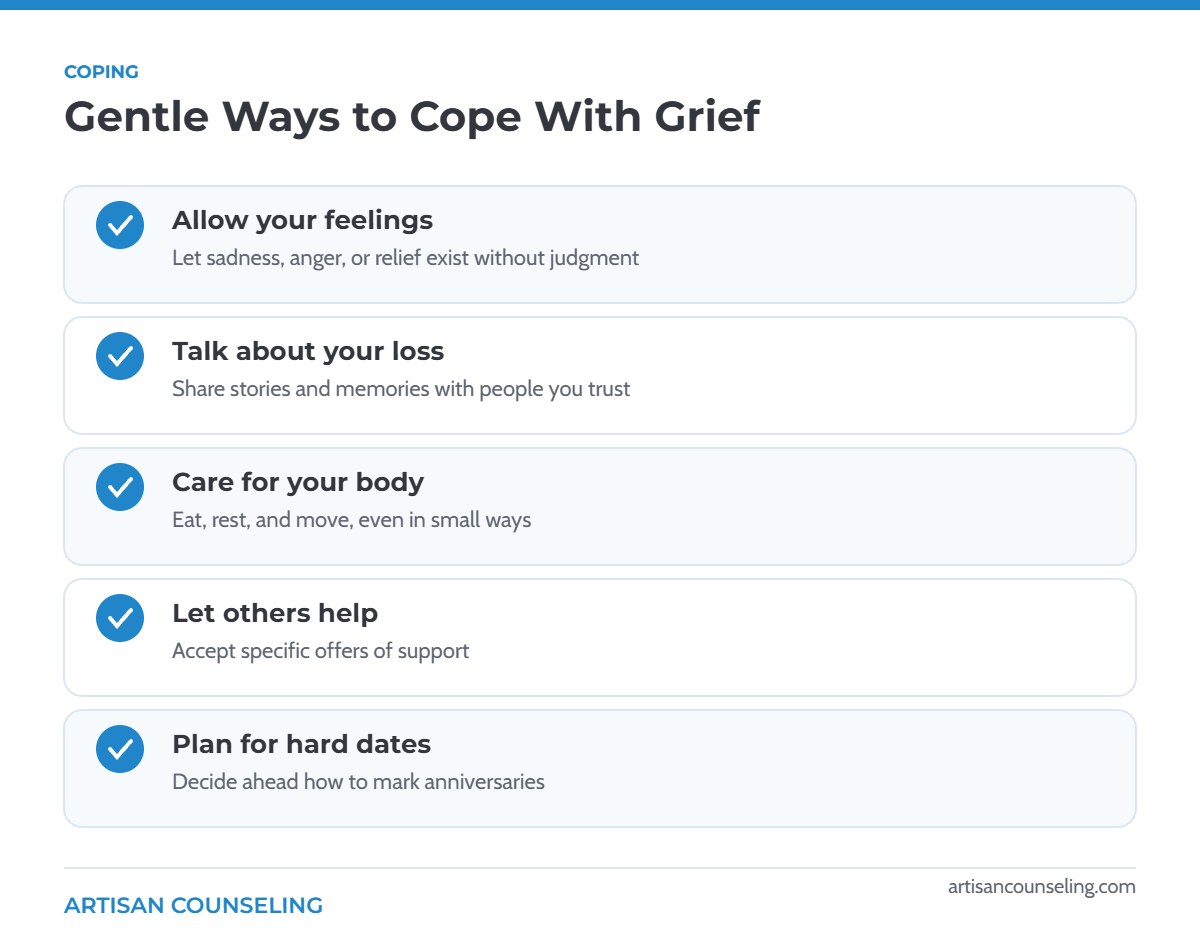
Give Yourself Permission to Feel
Sadness, anger, guilt, numbness, and even relief can all be part of grief. Let your feelings exist without labeling them right or wrong.
Talk About the Person or the Loss
Sharing stories and saying their name can be healing. Find people who are comfortable listening.
Take Care of Your Body
Try to eat regular meals, rest when you can, and move gently. Basic care supports emotional resilience.
Let Others Help
People often want to help but do not know how. Accept specific offers, such as a meal or help with errands.
Watch Alcohol and Screen Use
Numbing out can feel like relief but often delays healing and disrupts sleep.
Plan for Anniversaries
Birthdays, holidays, and anniversaries can be especially hard. Planning ahead how you want to spend those days can make them feel more manageable.
Tip: If you are not sure what to say when someone asks how you are, it is okay to be honest: “Today is a hard day.” Simple honesty invites real support.
When Grief Counseling Can Help
Grief counseling is not only for “complicated” grief. Many people find it helpful to have a dedicated space to talk. Consider reaching out if:
- Grief feels as intense months later as it did at first
- You cannot function at work or home
- You feel numb, stuck, or unable to accept the loss
- You are relying on alcohol or other substances to cope
- You feel hopeless or have thoughts of wanting to die
If you are in crisis: call or text 988 to reach the 988 Suicide & Crisis Lifeline, or call 911 in an emergency.
Frequently Asked Questions
How long does grief usually last?
There is no set timeframe. Many people find the intensity eases over months or years, though grief can resurface around anniversaries and life events. What matters most is whether you can gradually re-engage with daily life.
Is it normal to feel worse months after a loss?
Yes. Once the initial support fades and reality sets in, many people find grief feels heavier. This is a common experience and a good time to seek support if you need it.
What is prolonged grief disorder?
Prolonged grief disorder is a diagnosis in the DSM-5-TR for intense, persistent grief that significantly interferes with life for an extended period after a death. A licensed clinician can assess whether it applies.
Can grief cause physical symptoms?
Yes. Fatigue, sleep problems, appetite changes, and difficulty concentrating are common. Check in with a medical provider about any ongoing physical concerns.
Grief Support at Artisan Counseling
Your grief is as unique as your loss. Our licensed counselors offer compassionate individual counseling and family counseling for loss, helping you find your own way forward without rushing.
Meet with us in Newport News or Suffolk, or through telehealth across Virginia. Meet our counselors or contact us to talk about support. You may also find our article on why life transitions feel overwhelming helpful.