Key Takeaways
- PTSD is a common, treatable response to combat, military sexual trauma, and other overwhelming experiences during service.
- Symptoms that last longer than a month, or that strain your sleep, work, or relationships, are a signal to reach out.
- Evidence-based treatments such as Cognitive Processing Therapy, Prolonged Exposure, and EMDR can reduce symptoms significantly.
- Asking for help is a practical step, not a sign of weakness, and support is available in person and by telehealth.
For many veterans, coming home is not the end of the mission. It is the start of a different chapter, one that can bring its own challenges. Post-traumatic stress after military service is common, and the good news is that it responds well to treatment.
Still, the road to getting help is rarely straightforward. Military culture prizes self-reliance, and many veterans wait years before talking to anyone. Knowing what PTSD actually looks like, and what professional support offers, can shorten the time between struggling and feeling like yourself again.
In this article, you will learn the most common signs of PTSD in veterans, why reaching out can feel so hard, which treatments have the strongest evidence, and how to tell when it is time to talk with a counselor. If you are a veteran or someone who loves one, this is written for you.
What Does PTSD Look Like in Veterans?
Post-traumatic stress disorder can develop after exposure to combat, witnessing death or serious injury, military sexual trauma, training accidents, or any experience that overwhelmed your ability to cope. It is not a character flaw. It is the brain and body staying in a protective mode long after the danger has passed.
The core features are similar across many situations. They include intrusive memories, avoidance of reminders, negative changes in mood and thinking, and changes in arousal and reactivity, such as being easily startled. A diagnosis is considered when these symptoms last more than a month and cause real distress or difficulty functioning.
PTSD does not always appear right away. Some veterans notice symptoms within weeks of returning home. Others feel fine for years, then find symptoms surfacing after retirement, a loss, a new stressor, or even news coverage of a conflict.
Common PTSD Symptoms to Watch For
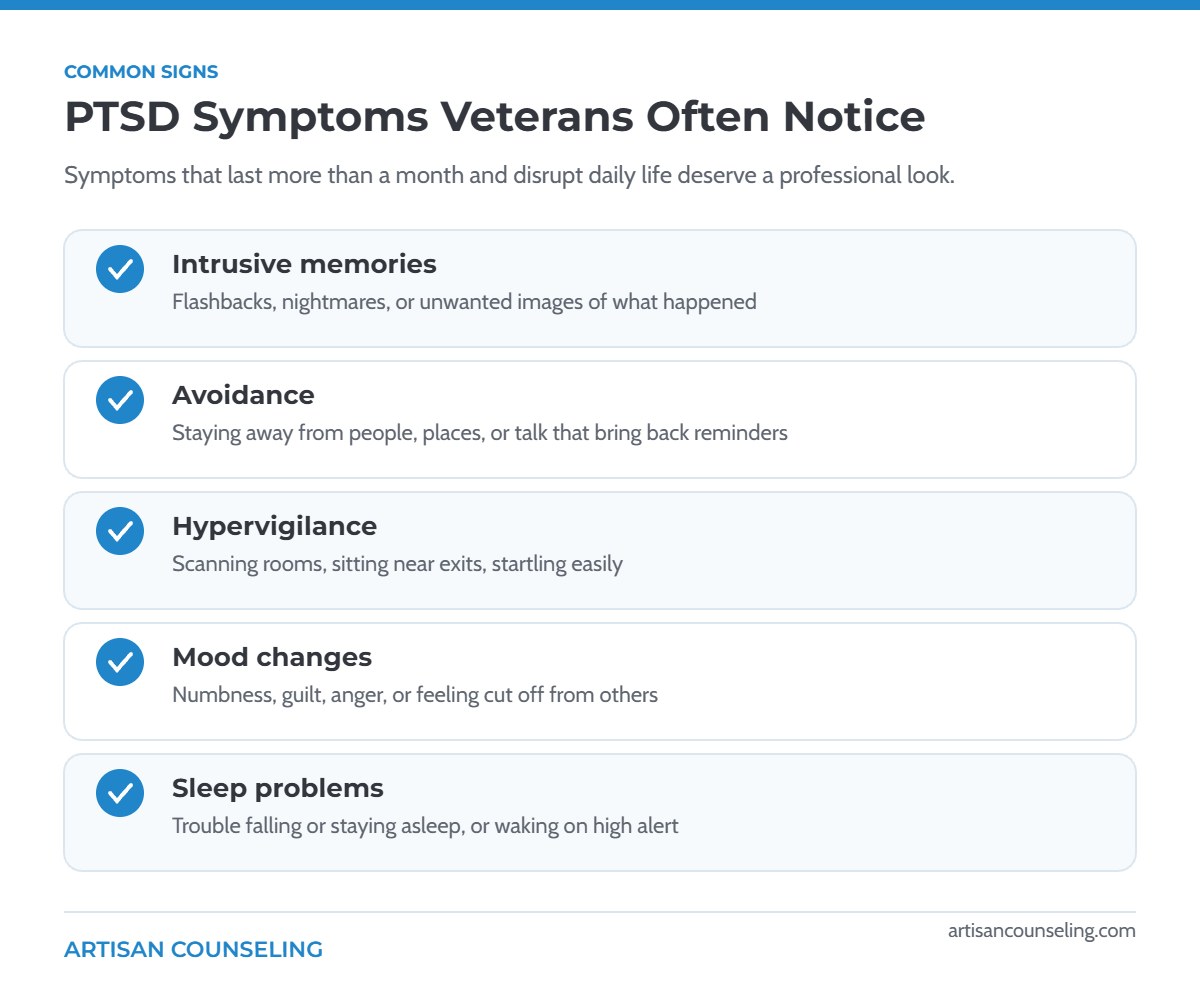
Every veteran’s experience is different, but certain patterns show up again and again. The overview below highlights the signs that most often lead people to seek support.
Sleep Problems
Trouble falling asleep, staying asleep, or waking up on high alert is one of the most common complaints. Nightmares about service or related themes may leave you exhausted, which then makes every other symptom harder to manage.
Hypervigilance
You might sit with your back to the wall, check exits, or feel uneasy in crowds and traffic. That alertness was useful in a combat zone. At home, it can keep your nervous system running at a level that wears you down.
Emotional Numbing
Some veterans describe feeling flat, detached, or unable to feel joy or closeness, even with people they love. Numbing can be a way the mind protects itself from painful emotions, but it also blocks the good ones.
Intrusive Memories or Flashbacks
Unwanted memories may arrive without warning, triggered by sounds, smells, weather, or anniversaries. In a flashback, it can feel as though the event is happening again rather than being remembered.
Anger and Irritability
Short fuses, road rage, or snapping at family are common. Irritability is often a sign of a nervous system that is stuck on alert, not a sign that you are a bad partner or parent.
Avoidance and Withdrawal
Turning down invitations, avoiding certain places, or refusing to talk about service can feel protective. Over time, avoidance tends to shrink your life and keep symptoms in place.
Substance Use
Alcohol or other substances may seem to help with sleep or calm, but they usually worsen sleep quality, mood, and anxiety. Increased drinking is often a quiet sign that something underneath needs attention.
Relationship Strain
Partners and children often feel the effects first: distance, conflict, or walking on eggshells. These struggles are understandable, and they are also something counseling can help repair. Our article on how trauma affects adult relationships explores this dynamic further.
Why Is It So Hard for Veterans to Ask for Help?
If reaching out feels difficult, you are far from alone. Several barriers come up again and again:
- Self-reliance: You were trained to push through pain and take care of the mission first.
- Stigma: Worries about being seen as weak, or concerns about career or security clearance, can keep people silent.
- Feeling misunderstood: Many veterans fear a civilian counselor will not understand military life.
- Comparison: Thinking “others had it worse” can make your own pain seem like it does not count.
- Logistics: Work schedules, family duties, and distance from care can all get in the way.
Each of these is understandable. None of them means you have to keep carrying this alone.
Tip: When you first contact a counseling practice, it is fair to ask whether a counselor has experience with trauma and military-connected clients. A good fit matters, and asking is part of finding it.
What Does PTSD Treatment Actually Involve?
Treatment for PTSD has been studied extensively, and several approaches have strong evidence behind them. Most are structured, time-limited, and focused on helping you live more fully now rather than reliving the past indefinitely.
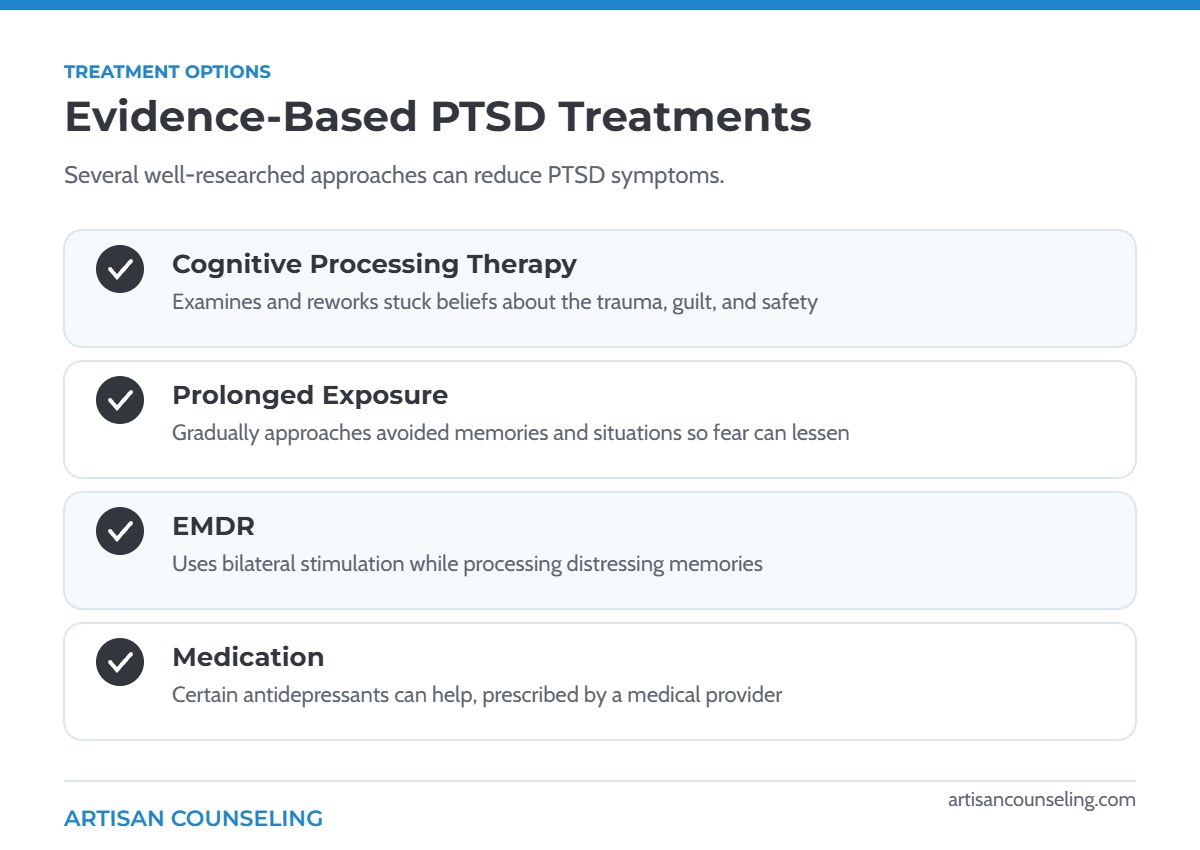
Cognitive Processing Therapy (CPT)
CPT helps you identify and gently challenge “stuck points,” beliefs such as “It was my fault” or “I can never be safe.” Changing these beliefs can ease guilt, shame, and fear.
Prolonged Exposure (PE)
PE helps you gradually approach memories and situations you have been avoiding, in a safe and planned way. Over time, the fear response tends to lessen and your world can open back up.
EMDR Therapy
Eye Movement Desensitization and Reprocessing uses bilateral stimulation, such as eye movements or tapping, while you focus on a distressing memory. Many people find memories feel less charged afterward. Learn more on our EMDR therapy page.
Group Support
Connecting with others who understand can reduce isolation and shame. Many veterans find that hearing someone else describe the same struggles is a turning point.
Medication
Some medications, including certain antidepressants, can help with PTSD symptoms. A physician or psychiatric provider can talk with you about whether medication makes sense alongside counseling.
When Should a Veteran Seek Professional Support?
There is no need to wait for things to get “bad enough.” Consider reaching out if any of the following are true:
- Symptoms have lasted more than a month or keep returning.
- Sleep, work, or relationships are suffering.
- You are drinking or using substances more to cope.
- People close to you have expressed concern.
- You feel numb, hopeless, or disconnected from the life you want.
If you are in crisis: call or text 988, then press 1 to reach the Veterans Crisis Line, or call 911 in an emergency. Support is free, confidential, and available 24/7.
Counseling can also help with challenges that often travel alongside PTSD, such as depression, anxiety, and a nervous system stuck in survival mode.
How Families Can Support a Veteran With PTSD
Loved ones play an important role. You do not need to be an expert to help.
- Learn about PTSD so symptoms feel less personal and confusing.
- Offer steady, low-pressure invitations to connect rather than demands to talk.
- Encourage professional support without ultimatums.
- Take care of your own well-being, too. Caregiver stress is real.
Couples or family counseling can give everyone tools to communicate and reconnect while the veteran works on their own healing.
Frequently Asked Questions
Can PTSD show up years after military service?
Yes. Some veterans notice symptoms soon after returning home, while others experience delayed onset years later, often triggered by retirement, loss, or new stress. Late-appearing symptoms are just as valid and just as treatable.
Do I have to talk about every detail of my trauma in therapy?
No. You set the pace. Some approaches, like CPT, focus more on beliefs and meaning than detailed retelling. A good counselor will explain options and never pressure you to share more than you are ready to.
Is PTSD treatment effective for veterans?
Evidence-based treatments such as CPT, Prolonged Exposure, and EMDR have helped many veterans reduce symptoms and improve daily life. Results vary from person to person, which is why working with a trained clinician matters.
Can I do PTSD counseling through telehealth?
Many people find telehealth effective and more convenient, especially with busy schedules or long drives. Your counselor can help you decide whether online or in-person sessions fit you best.
Finding PTSD Support at Artisan Counseling
You served. Getting support now is part of taking care of yourself and the people who count on you. Our licensed counselors offer trauma-informed therapy with approaches such as EMDR, CBT, and brainspotting, at a pace that respects your story.
You can meet with us in person at our Newport News counseling office, close to many military communities in Hampton Roads, or from home through telehealth anywhere in Virginia. Browse our counselors or contact us to schedule a first conversation.