Key Takeaways
- Feeling anxious when nothing seems wrong is common and usually has understandable causes, such as a nervous system that learned to stay on alert.
- Sleep, caffeine, stress buildup, and unprocessed emotions can all keep background anxiety running.
- Small daily habits, like slowing your breathing and naming what you feel, can lower the baseline over time.
- If anxiety lasts for weeks or gets in the way of daily life, a licensed counselor can help you find the source and build lasting tools.
You finish your work, the bills are paid, and everyone you love is safe. Yet your chest still feels tight and your mind keeps scanning for something to worry about. If you have ever asked yourself, “Why am I always anxious even when nothing is wrong?”, you are far from alone.
Background anxiety can feel confusing because there is no clear trigger to point to. That does not mean it is imaginary or that something is wrong with you. Most of the time, your body and brain are responding to patterns, habits, and stress that have built up quietly.
In this article, you will learn what constant, low-level anxiety actually is, the most common reasons it shows up, the signs to watch for, practical steps that help, and when it makes sense to talk with a counselor.
What Is Background Anxiety?
Background anxiety is a steady sense of unease that hums along even when life looks calm on the surface. It may not be intense enough to feel like panic, but it rarely switches off completely.
Anxiety itself is a normal survival response. Your brain is designed to notice threats and prepare your body to deal with them. The problem starts when that alarm system stays switched on without a real danger in front of you.
What It Can Feel Like
- A low hum of dread or “waiting for the other shoe to drop”
- Tight shoulders, a clenched jaw, or a fluttery stomach
- Trouble relaxing, even on weekends or vacation
- A mind that jumps from one “what if” to the next
Some people describe it as feeling “on” all the time. Others say they only notice it when they finally stop moving and the worry rushes in.
Why Do I Feel Anxious for No Reason?
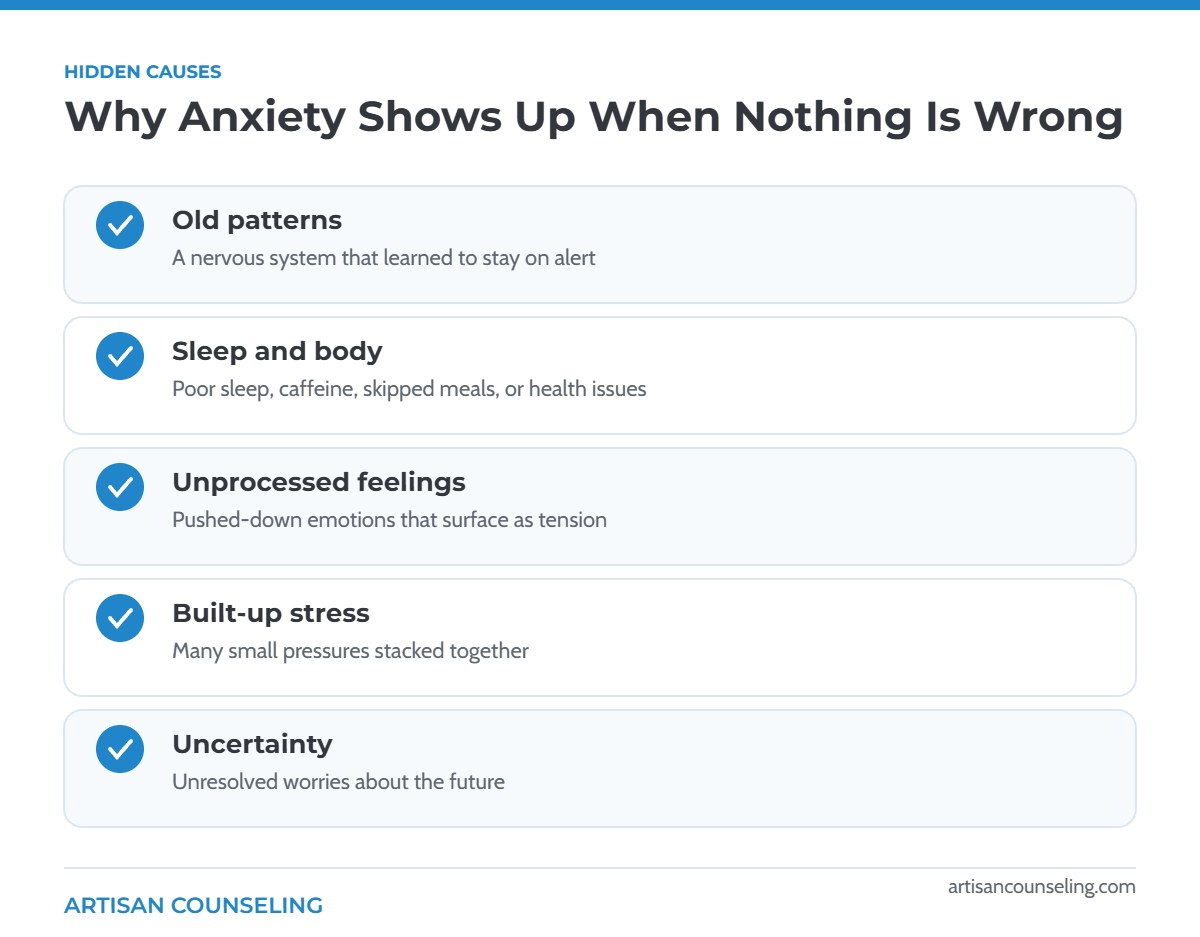
There is almost always a reason, even if it is not obvious in the moment. Several common factors can keep anxiety running in the background, and they often overlap.
Old Patterns Running on Autopilot
If you grew up in an unpredictable home or went through a stressful period, your nervous system may have learned that staying alert keeps you safe. That pattern can continue long after life becomes stable. You can read more about this in our article on signs your nervous system is stuck in survival mode.
Sleep, Caffeine, and Physical Health
Poor sleep makes the brain more reactive to stress. Caffeine, alcohol, skipped meals, and dehydration can all create physical sensations that your brain reads as danger. Some medical conditions, such as thyroid problems, can also cause anxiety-like symptoms, so a checkup with your doctor is a smart step.
Suppressed or Unprocessed Feelings
When you push down sadness, anger, or grief to keep going, those feelings do not simply disappear. They can show up as restlessness or unexplained tension instead.
Stress That Has Quietly Built Up
Even good changes, like a new job or a move, add to your stress load. Many small pressures stacked together can keep your system on edge even when no single one feels like a big deal.
Uncertainty About the Bigger Picture
Worries about health, money, relationships, or the future can hum in the background without becoming a clear thought. Your brain keeps trying to solve problems that do not have an answer yet.
Signs You May Be Dealing With Chronic Anxiety
Constant anxiety does not always look like visible nervousness. Many people who live with it appear calm and capable on the outside. This is sometimes called high-functioning anxiety.
- You overthink conversations long after they end.
- You struggle to fall asleep or wake up with your mind already racing.
- You feel irritable or easily startled.
- You have frequent headaches, stomach upset, or muscle tension.
- You avoid things that might cause discomfort, even small ones.
- You find it hard to enjoy good moments because you are bracing for something bad.
If several of these sound familiar and have lasted for weeks or months, it is worth paying attention. Only a licensed professional can tell you whether what you are experiencing fits an anxiety disorder, but you do not need a diagnosis to deserve support.
What Actually Helps Calm Constant Anxiety?
There is no single fix, but small, consistent steps can lower your baseline over time. The goal is not to never feel anxious. It is to help your body learn that it is safe enough to settle.
Calm the Body First
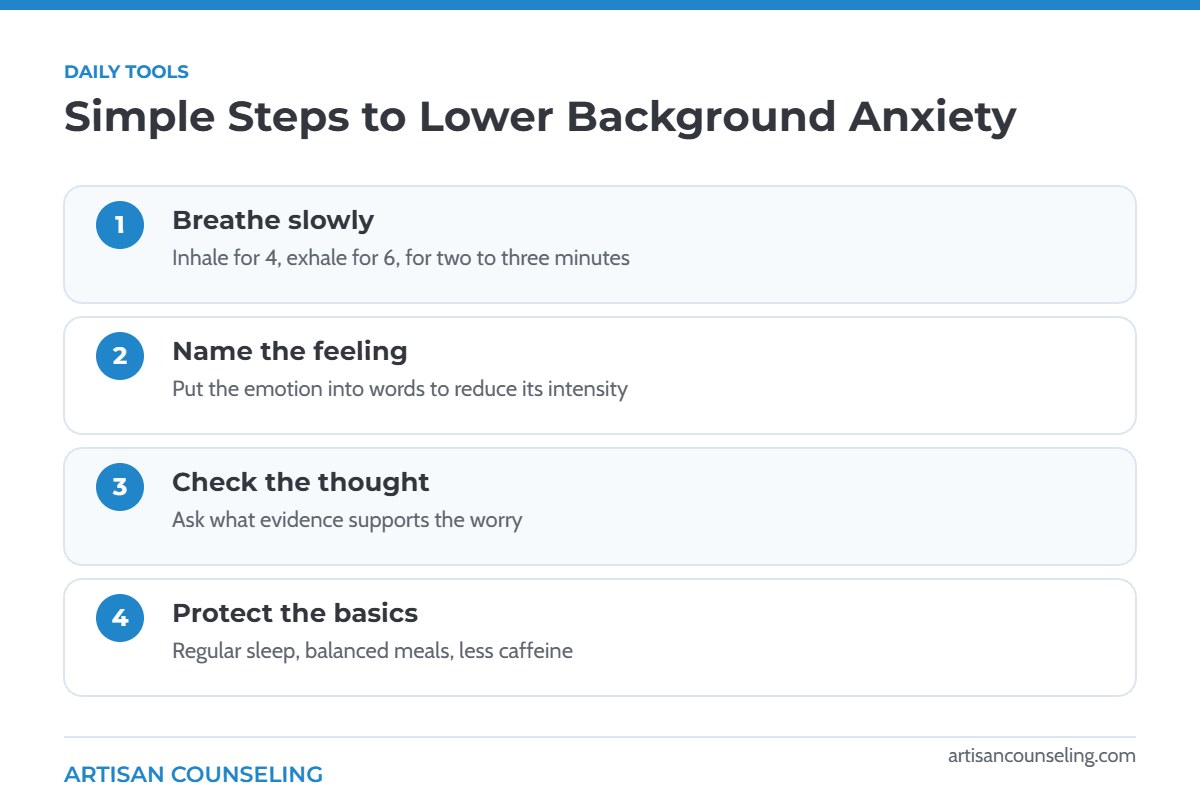
Slow breathing, especially with a longer exhale than inhale, signals safety to your nervous system. Try breathing in for four counts and out for six, for two to three minutes. Gentle movement, like a short walk, also helps burn off stress energy.
Name What You Feel
Putting words to emotions, such as “I feel tense and uneasy right now,” can reduce their intensity. It shifts you from being caught in the feeling to observing it.
Notice Your Thought Loops
Anxious thoughts often repeat the same worst-case stories. Writing them down and asking, “What evidence do I have for this?” can loosen their grip. Our article on why negative thoughts keep repeating explains this pattern in more depth.
Protect the Basics
Aim for a regular sleep schedule, eat balanced meals, and notice how caffeine and alcohol affect you. These basics make a bigger difference than most people expect.
Try this: Set a daily 10-minute “worry window.” When a worry pops up outside that time, jot it down and save it for later. Many people find their worries feel smaller by the time the window arrives.
When Should You Talk to a Counselor About Anxiety?
Self-help tools are valuable, but they are not always enough on their own. Consider reaching out for professional support if:
- Anxiety has lasted most days for several weeks or longer
- It affects your sleep, work, relationships, or health
- You are avoiding places, people, or tasks because of it
- You have panic attacks or feel overwhelmed often
- You are using alcohol or other substances to cope
A counselor can help you uncover what is driving the anxiety and teach evidence-based skills. Approaches such as cognitive behavioral therapy (CBT) are widely used for anxiety, and many people also benefit from body-based or trauma-informed work when the roots go deeper.
Frequently Asked Questions
Is it normal to feel anxious all the time?
Feeling anxious occasionally is a normal part of life. Feeling anxious most of the time, without a clear reason, is common but not something you have to accept. It often means your stress response is stuck on and could use some support.
Can anxiety cause physical symptoms even when I feel fine mentally?
Yes. Anxiety can show up as muscle tension, headaches, stomach trouble, a racing heart, or fatigue, sometimes before you notice any worried thoughts. It is still a good idea to see a doctor to rule out other medical causes.
Will background anxiety go away on its own?
Sometimes it eases when stress lightens or sleep improves. If it has lasted for months, though, it usually helps to address the underlying patterns with practical tools or counseling.
What type of therapy helps with constant anxiety?
CBT is one of the most studied approaches for anxiety. Depending on your needs, a counselor may also use mindfulness-based skills, acceptance and commitment therapy, or trauma-focused methods.
Finding Support for Anxiety at Artisan Counseling
You do not have to keep living with a constant hum of worry. Our licensed counselors offer individual counseling to help you understand where your anxiety comes from and how to calm it.
You can meet our counselors, visit us in person at our Newport News counseling office, or connect from home through telehealth anywhere in Virginia. When you are ready, reach out to schedule an appointment.