Art therapy gets a lot of misconceptions thrown at it. People think it is a crafts class, or a workshop for people who are already artists, or something only meant for kids. None of that is right. It is a form of counseling that uses art making as part of the work, and it is built for the same range of concerns any other type of counseling covers.
You Don’t Need to Be an Artist
This is the part to settle right away. Art therapy is not about making something pretty. It is not graded. Nobody is going to compare your drawing to anyone else’s. The art is a tool, not a product.
A board certified art therapist is trained to use art making as a way to access feelings and memories that are hard to reach with words alone. Some of the work happens through the image you create. Some of it happens through the act of making something, which gives your body and brain a different way to process what is going on.
If your stick figures look like stick figures, that is fine. If you cannot draw a straight line, that is fine. The point is the process, not the picture.
How a Session Usually Flows
Most art therapy sessions have a rhythm to them. The exact shape varies by counselor and by what you are working on, but the pieces are usually the same.
Checking In
A session starts the way most counseling sessions do. You talk for a bit. Your counselor asks how the week went, what has been on your mind, what is bringing you in today. This part might be five minutes or twenty, depending on what you bring.
This is also where you and your counselor pick a direction for the art making. Sometimes that is your counselor offering a prompt. Sometimes you come in with your own idea. Sometimes you just start without a plan and see what shows up.
The Art Making Part
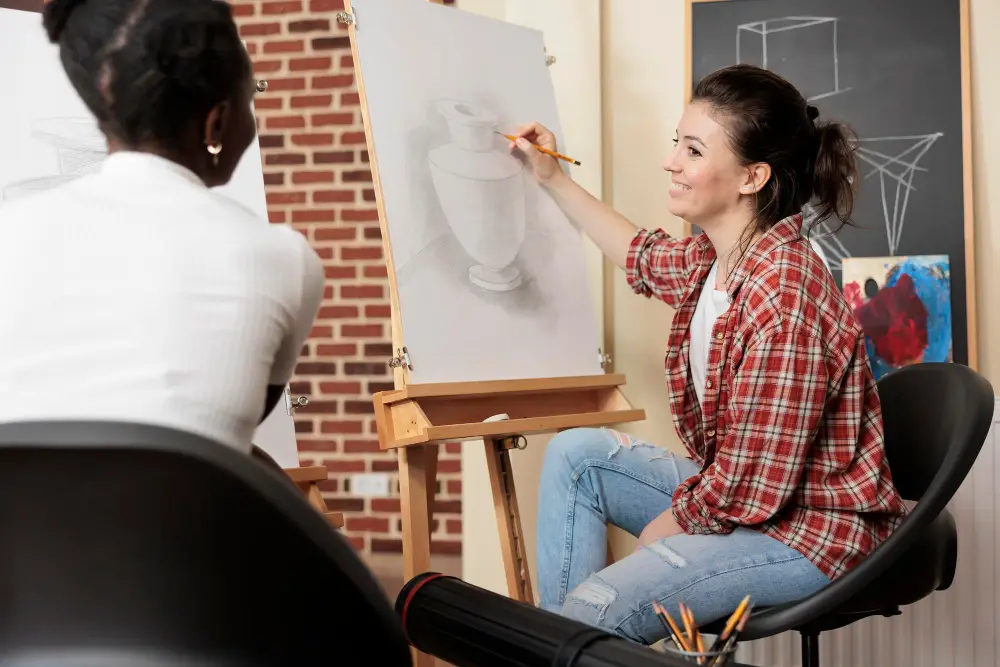
The middle of the session is the art making itself. This can take anywhere from fifteen to forty minutes. You might be sitting at a table with paints, or working with clay, or making a collage on the floor. Your counselor is usually in the room with you, sometimes making something of their own, sometimes just sitting quietly while you work.
You can talk while you make, or you can be silent. Many people find that the talking eases up and the making takes over. Things come up that you were not planning to bring in. Colors get chosen for reasons you did not expect. Shapes appear that mean something you cannot put into words yet.
Talking About What You Made
The last part of the session is where you and your counselor look at what you made together. Your counselor will ask questions that open up the work without telling you what it means. What do you notice about it? Where did your eye go first? If a part of the image could speak, what would it say? Is there a part you want to add or change?
This is where the conversation can go deep. The image holds something that was hard to say out loud, and now both of you can look at it and talk about it from a slight distance. That distance is part of what makes the work powerful.
What Kinds of Materials Get Used
Art therapists use a wide range of supplies. Pencils and markers and crayons cover the basics. Watercolor, acrylic paint, and oil pastels show up a lot. Clay gives you something to push and shape with your hands, which helps when emotions are stuck in the body.
Collage materials, fabric, found objects, and digital tools all have a place too. Some sessions use sand trays with small figures, which lets you build a small world that mirrors something happening in your life.
Your counselor will usually pick the materials based on what the session calls for. If you are dealing with anger, clay might be a good choice because of how it pushes back. If you are working on memory or identity, collage might help because of how you can layer images.
What Art Therapy Helps With
Art therapy has been studied with people dealing with trauma, grief, anxiety, depression, eating concerns, chronic illness, and dementia. It is used in hospitals, schools, prisons, and private practices. It works with kids, teens, adults, and older folks.
It can be helpful when words feel like a wall. People who have been in talk therapy for years and feel stuck sometimes find that art opens up something new. People who have a hard time naming feelings can show them through color and shape first and learn to name them later.
For kids, art therapy is often the first door in. Children do not always have the vocabulary or attention span for traditional talk therapy, and the art gives them a way to communicate that matches how they already think.
Who Runs These Sessions
A real art therapist has graduate level training in both counseling and art therapy. Look for the credential ATR or ATR-BC, which means board certified. They are trained to read the art carefully without imposing meaning, to keep you safe in the room, and to know when to push and when to hold back.
This is different from someone who just uses coloring sheets in their sessions. Coloring can be calming, but it is not art therapy. The training behind the work is what makes it counseling and not arts and crafts.
What to Expect From Your First Time
Your first session will probably be more talking than making. Your counselor needs to get to know you, your history, and what is bringing you in. They will explain how the work goes and let you ask questions.
By the second or third session, you will likely have done some art making and started to get a feel for the rhythm. The work tends to feel less awkward over time. Many people end up looking forward to the making part. It becomes a kind of conversation that happens alongside the spoken one, and over time it can say things that words alone cannot.