Key Takeaways
- Emotional exhaustion is a state of feeling worn out and depleted from prolonged stress or emotional demands.
- Common causes include chronic stress, caregiving, difficult relationships, unprocessed grief or trauma, and physical health factors.
- Signs include numbness, irritability, trouble concentrating, poor sleep, and withdrawing from people.
- Recovery involves finding what drains you, protecting real rest, setting limits, and getting support.
- Ongoing exhaustion can overlap with burnout, anxiety, or depression, so a professional evaluation is worthwhile if it does not lift.
You sleep but wake up tired. Small tasks feel huge. People ask what is wrong and you are not sure how to answer, because nothing dramatic happened. You just feel empty.
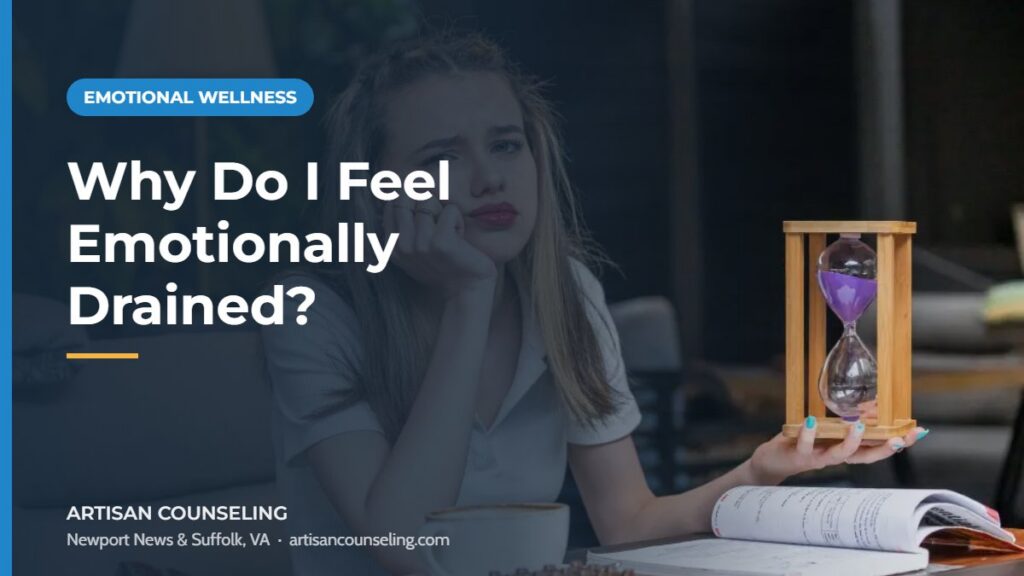
Feeling emotionally drained all the time is more common than many people realize, and it is a signal worth listening to. Emotional energy is a real resource, and when it runs low for too long, every part of life feels harder.
In this article, you will learn what emotional exhaustion feels like, the most common causes, signs that your emotional tank is empty, practical ways to recharge, and when it is time to talk with a counselor.
What Does Emotional Exhaustion Feel Like?
Emotional exhaustion is a state of feeling depleted after prolonged stress or emotional demands. It is different from ordinary tiredness because rest alone does not seem to fix it.
People often describe it as running on fumes, feeling numb or flat, being easily overwhelmed, or having nothing left to give. You may still get through your responsibilities, but it takes much more effort than it used to.
What Causes You to Feel Emotionally Drained?
Emotional exhaustion usually builds slowly from several sources at once.
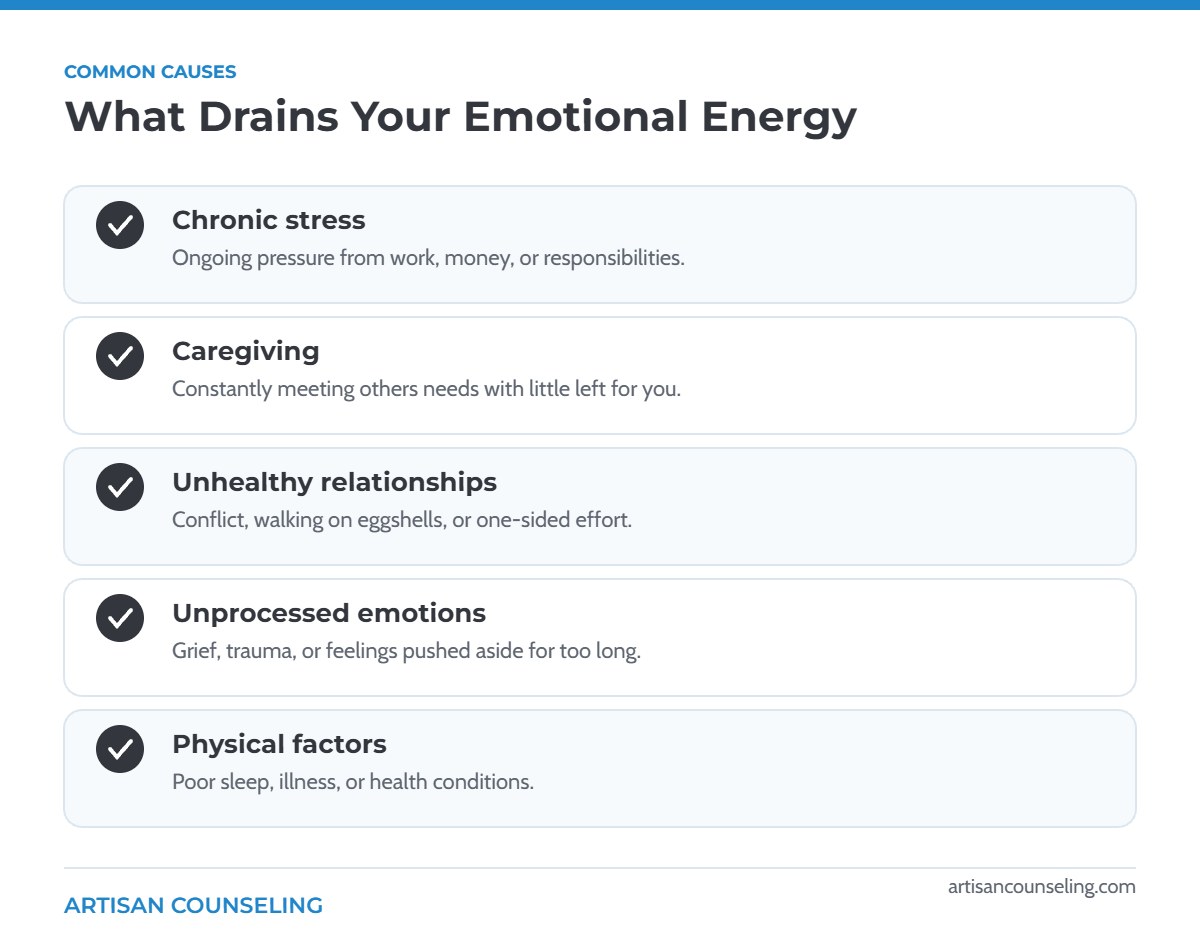
Chronic Stress
Ongoing pressure from work, finances, health concerns, or major life changes keeps your stress response switched on. Over time, that constant alertness wears you down. Our article on why life transitions can feel emotionally overwhelming explores this further.
Caregiving and Emotional Labor
Caring for children, aging parents, a partner with health needs, or people at work can leave little energy for yourself, especially if you are the person everyone leans on.
Difficult Relationships
Frequent conflict, walking on eggshells, or relationships where you give far more than you receive are deeply draining. Signs of emotional neglect in relationships can be easy to overlook.
Unprocessed Emotions
Grief, trauma, or feelings you have pushed aside do not simply disappear. Holding them in takes energy, even when you are not consciously thinking about them.
Physical Factors
Poor sleep, illness, hormonal changes, and conditions such as thyroid problems or anemia can also cause fatigue. If exhaustion is persistent, it is a good idea to see your doctor to rule out medical causes.
Signs Your Emotional Tank Is Empty
- Feeling numb, detached, or “flat”
- Getting irritated or tearful more easily than usual
- Struggling to concentrate or remember things
- Trouble falling or staying asleep, or sleeping more than usual
- Pulling away from friends and activities you used to enjoy
- Dreading tasks that once felt manageable
- Headaches, muscle tension, or stomach problems
Many of these overlap with burnout and depression. If you are trying to sort out which you might be dealing with, read burnout vs. depression: what is the difference.
How to Recover When You Feel Emotionally Drained
Recovery is less about doing more self-care and more about reducing what drains you while adding what genuinely restores you.
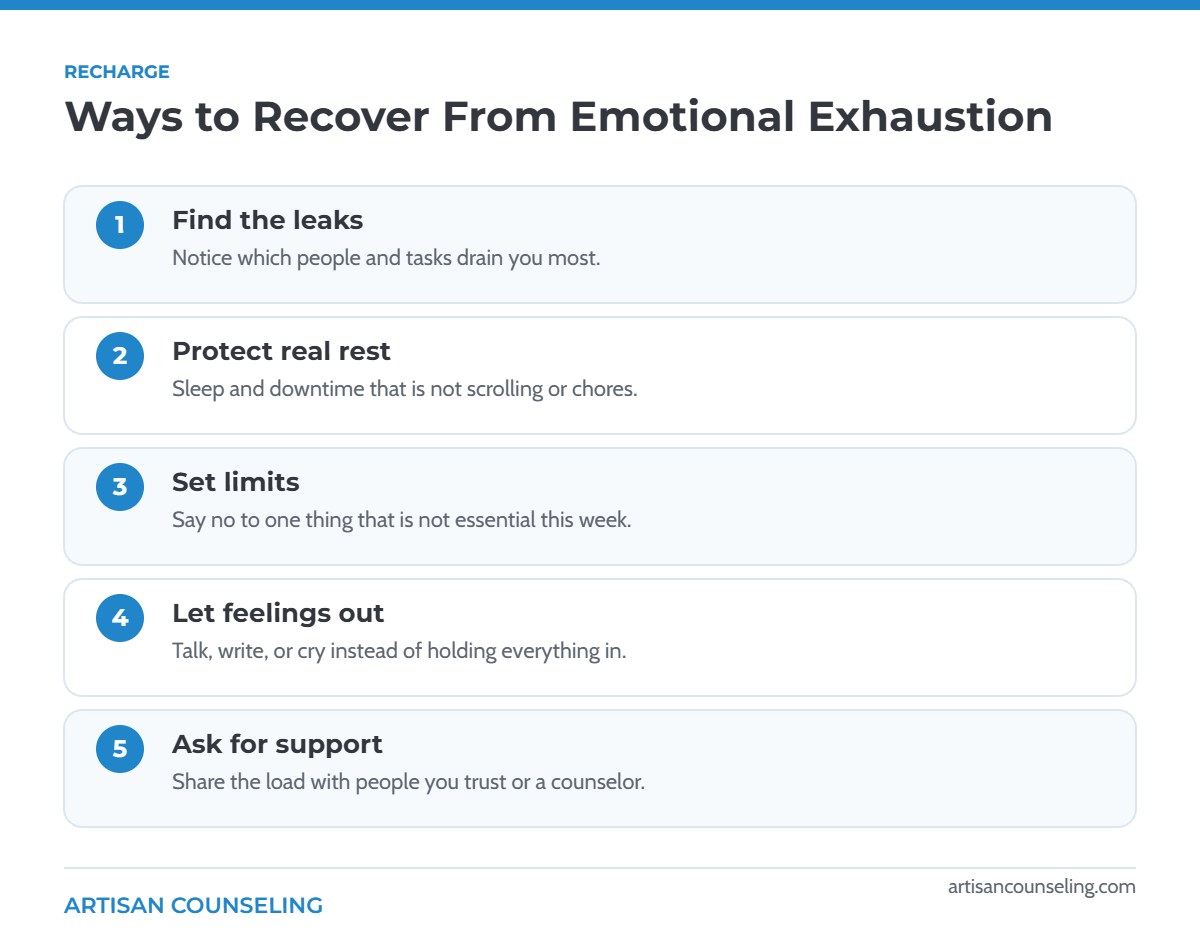
Find the Leaks
For a week, notice which people, tasks, and situations leave you feeling depleted, and which leave you feeling a little better. Patterns usually become clear quickly.
Protect Real Rest
Scrolling and catching up on chores are not true rest. Aim for consistent sleep and some time each day that is truly restful, such as a walk, quiet time, or something creative.
Set Limits
Choose one non-essential commitment to drop or delay this week. Saying no is often uncomfortable at first, but it is one of the most direct ways to conserve energy.
Let Your Feelings Out
Talking with someone you trust, journaling, or allowing yourself to cry can release some of the pressure of holding everything in.
Ask for Support
Share specific tasks with family or coworkers. Asking for help is a sign of good judgment, not weakness.
Start smaller than you think you need to. When you are exhausted, even helpful changes can feel like one more task. One small, consistent change is more sustainable than a complete overhaul.
When Is Counseling Worth It?
Consider reaching out if exhaustion has lasted several weeks, is affecting your work or relationships, or comes with persistent sadness, hopelessness, or anxiety. A counselor can help you identify what is draining you, process feelings you have been carrying, and build boundaries that protect your energy.
If you ever have thoughts of harming yourself, please reach out for help right away.
If you are in crisis: call or text 988 to reach the 988 Suicide & Crisis Lifeline any time, day or night, or call 911 in an emergency.
Frequently Asked Questions
Is feeling emotionally drained the same as depression?
Not necessarily. Emotional exhaustion can come from stress, caregiving, or difficult relationships without depression being present. However, ongoing exhaustion can overlap with or lead to depression, so it is worth talking with a professional if it does not improve.
How long does it take to recover from emotional exhaustion?
It depends on the causes and how long you have been depleted. Some people feel better within a few weeks of reducing stress and improving rest, while others need longer, especially if the source of stress continues.
Can emotional exhaustion cause physical symptoms?
Yes. Prolonged stress can contribute to headaches, muscle tension, stomach issues, sleep problems, and getting sick more often. It is a good idea to check with a doctor to rule out other medical causes.
What is the fastest way to feel less emotionally drained?
There is no instant fix, but improving sleep, removing one major stressor, and talking honestly with someone you trust often bring some relief fairly quickly.
Support for Emotional Exhaustion at Artisan Counseling
If you have been running on empty for too long, our counselors can help you understand why and find a sustainable way forward. We offer individual counseling in Newport News and Suffolk and telehealth across Virginia. Contact us to schedule a first session.