
Key Takeaways
- Emotional neglect is an ongoing lack of attention, interest, and responsiveness to a partner’s feelings and needs.
- Signs include feeling lonely in the relationship, having your feelings dismissed, and lacking support during hard times.
- Neglect often comes from stress, avoidance, or patterns learned in childhood rather than intentional cruelty.
- Couples can rebuild connection by naming needs, turning toward small bids, and getting support from a counselor.
Emotional neglect can be hard to name because nothing dramatic happens. There may be no yelling and no obvious betrayal. Instead, there is an absence: of curiosity, comfort, and feeling truly seen.
If this is affecting your relationship, couples counseling at our Newport News and Suffolk offices can help you and your partner work through it together.
Over time, that absence can hurt as much as more visible problems. In this article, you will learn what emotional neglect is, the signs to watch for, why it happens, how it can affect you, and practical steps to rebuild connection.
What Is Emotional Neglect in a Relationship?
Emotional neglect is a consistent failure to notice, respond to, or care for a partner’s emotional needs. It is defined more by what does not happen than by what does.
Every couple goes through distant seasons, such as a new baby, a demanding job, or a family crisis. Neglect is different because the pattern persists and one or both partners feel chronically unseen.
For example, imagine telling your partner you had a hard day at work. They nod, keep scrolling on their phone, and ask what is for dinner. Nothing cruel happened, yet you walk away feeling unseen. When moments like that become the pattern rather than the exception, emotional neglect may be taking root.
How Is Emotional Neglect Different From Emotional Abuse?
Emotional abuse involves active harm, such as insults, threats, or control. Emotional neglect is a lack of engagement. Both can be painful, and they can occur together. If you are experiencing threats, intimidation, or control, please see the crisis resources later in this article.
What Are the Signs of Emotional Neglect?
These signs are worth paying attention to, especially if they have lasted for months.
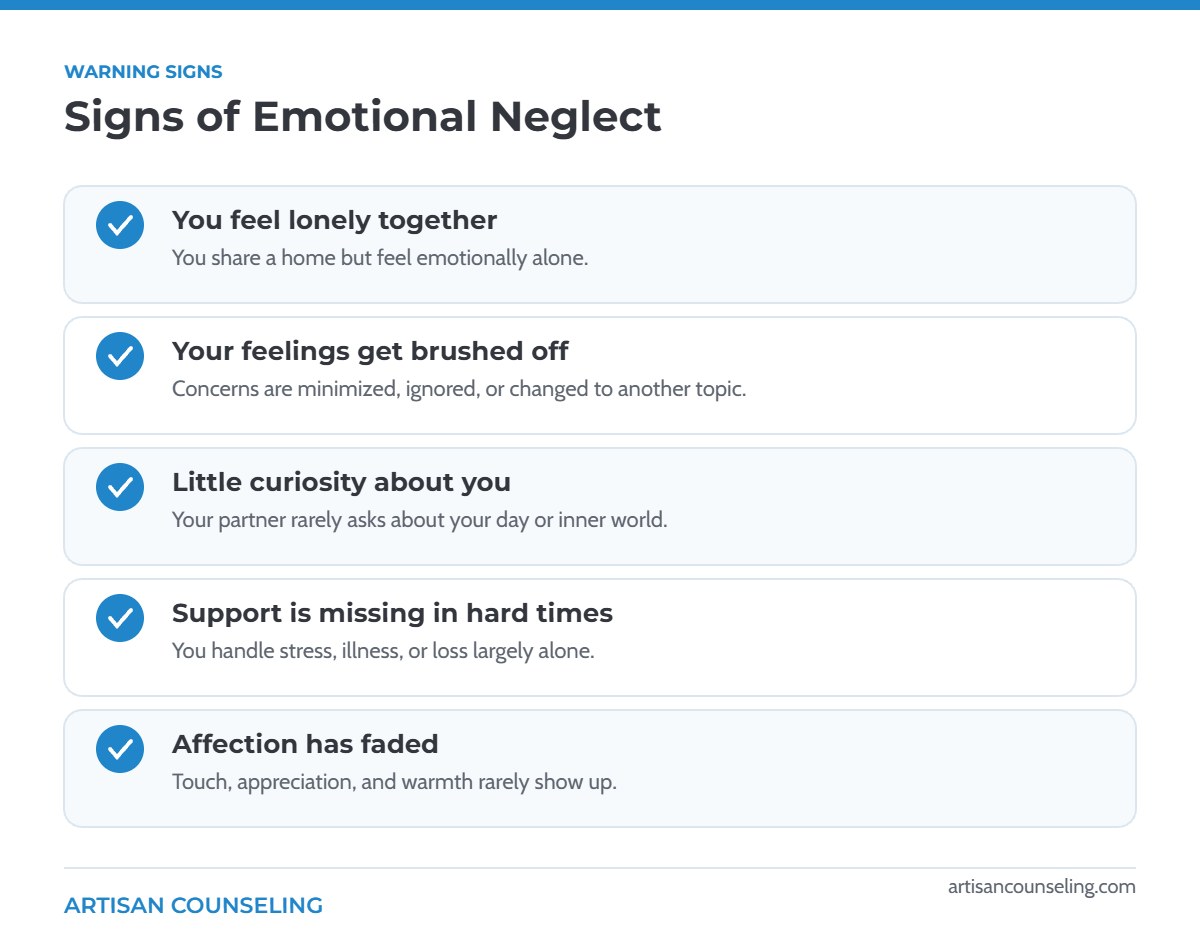
You Feel Lonely in the Relationship
You share a home, a schedule, maybe a family, yet you feel emotionally alone. Loneliness inside a relationship is one of the clearest signs of neglect.
Your Feelings Are Dismissed
When you share something important, you hear “you’re overreacting” or the topic changes quickly. Eventually, you stop sharing.
There Is Little Curiosity About Your Inner World
Your partner rarely asks about your day, your worries, or your goals. Conversations stay on logistics like bills and schedules.
You Handle Hard Times Alone
During illness, grief, or stress at work, you do not feel comforted or supported. You may have learned not to ask.
Affection and Appreciation Have Faded
Physical warmth, compliments, and gratitude have become rare, and attempts to reconnect are often missed.
A Quick Self-Check
It can help to step back and ask yourself a few honest questions:
- When something good or bad happens, is my partner one of the first people I want to tell? If not, why not?
- Do I feel like I have to earn my partner’s attention?
- When I share a feeling, do I usually feel more understood or more alone afterward?
- Have I stopped asking for things because I already expect the answer?
Answering yes to some of these does not prove your relationship is neglectful, but it is useful information about what you may need.
Why Does Emotional Neglect Happen?
Neglect is rarely about not caring. Common causes include:
- Chronic stress or burnout: exhaustion leaves little energy for emotional connection. Read about feeling emotionally drained.
- Conflict avoidance: some partners pull away to avoid arguments, which can feel like indifference.
- Childhood patterns: people who grew up in homes where feelings were not discussed may not know how to respond to emotions.
- Mental health concerns: depression or anxiety can make it hard to engage emotionally.
- Unresolved resentment: past hurts can lead someone to withhold warmth.
How Does Emotional Neglect Affect You?
Living with ongoing neglect can take a real toll. Many people describe feeling invisible, questioning whether their needs are “too much,” or losing confidence. Others notice symptoms of anxiety or low mood, irritability, or a growing sense of resentment.
Neglect can also create a cycle. The neglected partner may become critical or withdraw, which leads the other partner to pull back further. Our article on why communication breaks down explains how these cycles form.
Over time, many people notice they start to shrink their needs to avoid disappointment. You might tell yourself you are “too sensitive” or that you should not need so much. That self-doubt is often a sign of the neglect itself, not proof that your needs are unreasonable.
How Can You Address Emotional Neglect?
Rebuilding connection is possible, especially when both partners are willing to try.
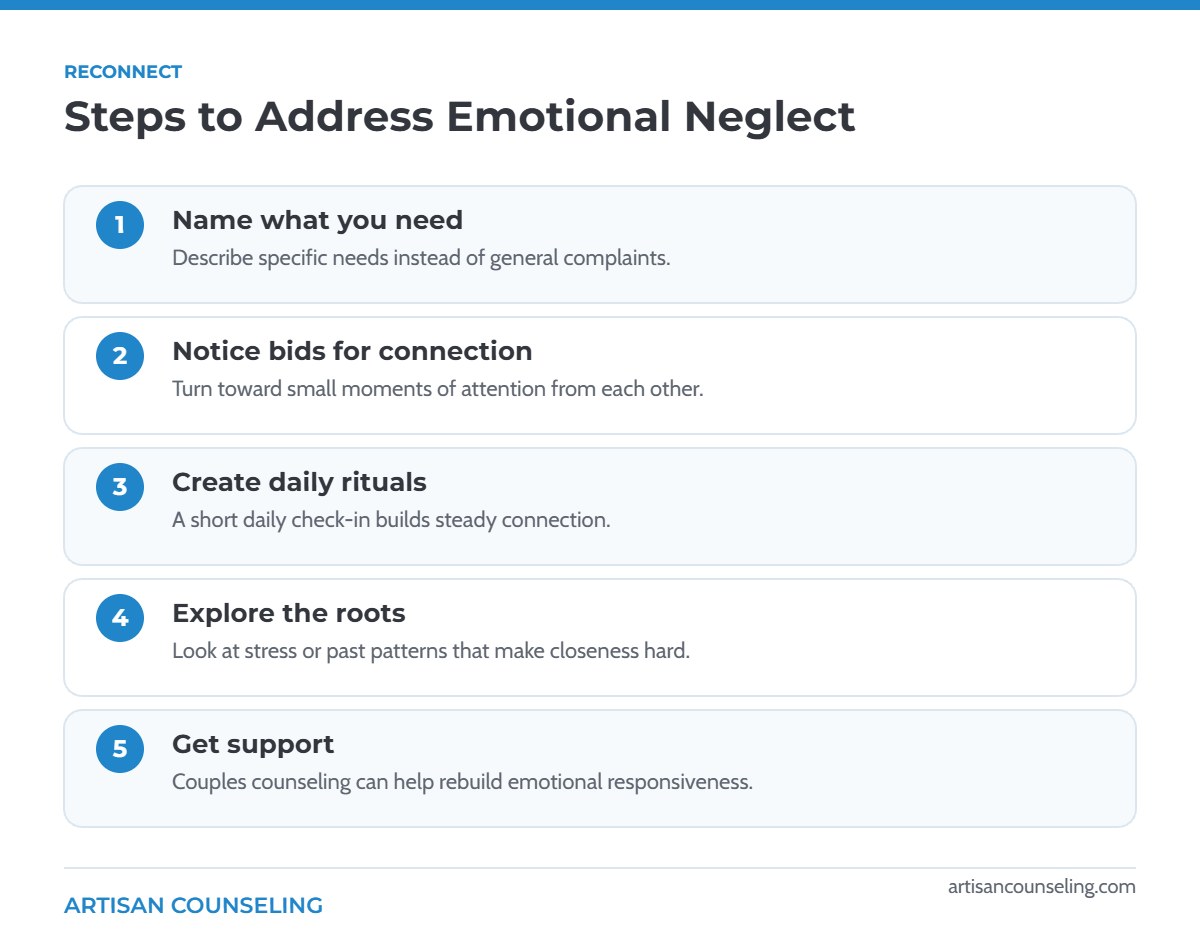
Name Specific Needs
Instead of “you never pay attention to me,” try “It would mean a lot if we put our phones away during dinner and talked about our days.”
Instead of “You never pay attention to me,” try something like: “I miss feeling close to you. Could we put our phones away for twenty minutes after dinner and just talk?” A clear, specific request gives your partner something they can actually do.
Turn Toward Small Bids for Connection
Bids are small moments where a partner reaches out, like sharing a funny story or sighing after a hard call. Responding with interest builds closeness over time.
Create Simple Daily Rituals
A 10-minute check-in, a walk after dinner, or a goodnight conversation can restore steady connection.
Explore What Makes Closeness Hard
Ask each other gently what gets in the way. Stress, old patterns, or fear of conflict often play a role.
Remember: Wanting emotional connection is not needy. Responsiveness is a normal and healthy expectation in a committed relationship.
What If You Are the One Pulling Away?
Sometimes people reading about emotional neglect recognize themselves in the partner who has gone quiet. That does not make you a bad person. Stress, depression, burnout, or growing up in a home where feelings were not discussed can all make emotional presence hard. Noticing it is a meaningful first step. Try asking your partner one open question a day, such as “What was the best and hardest part of your day?” and listen without fixing. If you find it hard to feel or express emotion at all, an individual counselor can help you understand why.
When Is It Time to Get Help?
If conversations about connection go nowhere, or you feel hopeless about being seen, counseling can help. Couples counseling offers a structured space to understand each partner’s needs and practice responsiveness. If your partner is not ready, individual counseling can help you clarify your needs and options. You may also find it helpful to read why people stay in unhealthy relationships.
If you are in crisis: call or text 988 to reach the 988 Suicide & Crisis Lifeline, available 24/7. If you are in immediate danger, call 911. For domestic violence support, you can also contact the National Domestic Violence Hotline at 1-800-799-7233.
What Counseling for Emotional Neglect Can Look Like
In couples counseling, a counselor helps both partners slow down and notice the moments where connection is missed. You might practice sharing a need and responding to it right there in session, with support. Approaches such as the Gottman Method focus on building friendship, turning toward bids, and handling conflict more gently. In individual counseling, you can explore your own needs, rebuild confidence in them, and decide what you want going forward.
Frequently Asked Questions
Can emotional neglect be unintentional?
Yes. Many partners who neglect emotional needs are not trying to hurt anyone. They may be overwhelmed, avoidant, or never learned how to respond to feelings. The impact still matters and is worth addressing.
Can a relationship recover from emotional neglect?
Many relationships do recover when both partners commit to change. Learning to notice and respond to each other’s needs, often with a counselor’s help, can rebuild closeness.
What does emotional neglect feel like?
People often describe feeling lonely, invisible, or like a roommate rather than a partner. You may stop sharing feelings because it seems pointless.
How do I bring up emotional neglect with my partner?
Choose a calm time, speak from your own experience, and describe specific needs. Focus on wanting more connection rather than listing everything that has gone wrong.
Is it emotional neglect if my partner is just busy?
Busy seasons happen, and a partner who is temporarily stretched thin is not necessarily neglectful. The difference is usually whether there is still warmth, interest, and repair when things calm down. If the distance continues long after the busy period ends, it is worth talking about.
Should I stay if my relationship feels emotionally neglectful?
Only you can decide that, and you do not have to decide right away. Many couples rebuild closeness once both partners understand the problem and commit to change. If your efforts are repeatedly ignored, an individual counselor can help you sort through your options.
Getting Support at Artisan Counseling
You deserve to feel seen in your relationship. Our licensed counselors work with couples and individuals in Newport News, Suffolk, and through telehealth. Contact us to take the next step.