Key Takeaways
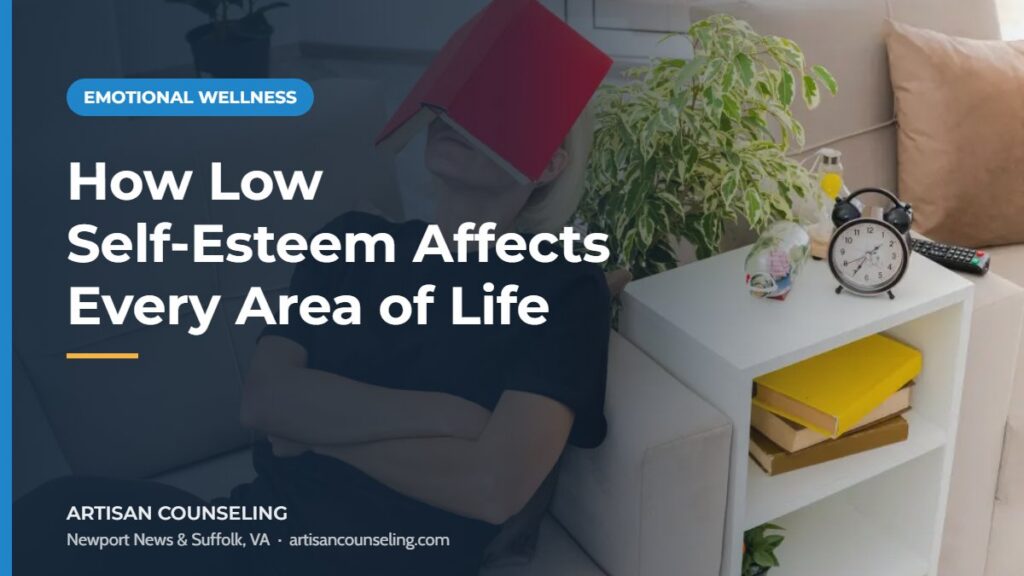
- Low self-esteem is a persistent, negative view of your own worth, and it tends to affect much more than confidence.
- It can show up in relationships, work, physical health, self-talk, decision making, and your ability to enjoy life.
- It usually develops from early experiences, critical environments, bullying, trauma, or ongoing stress, not personal failure.
- Self-esteem can be rebuilt through noticing self-talk, building competence, setting limits, and supportive relationships.
- Counseling, including CBT and compassion-focused approaches, can help when the critical voice feels too loud to manage alone.
Low self-esteem rarely announces itself. More often it hides behind habits that look like personality traits: always saying yes, apologizing constantly, avoiding opportunities, or brushing off compliments. Over time, these patterns can shape almost every part of your life.
The good news is that self-esteem is not fixed. The way you see yourself was learned, and with the right tools and support, it can be relearned.
In this article, you will learn what low self-esteem actually is, how it affects relationships, work, health, and decisions, where it tends to come from, and practical steps to start rebuilding a kinder, steadier sense of your own worth.
What Is Low Self-Esteem?
Self-esteem is your overall sense of your own value. Low self-esteem means you tend to see yourself as less capable, less deserving, or less worthy than others, often regardless of the evidence.
It is different from occasional self-doubt, which everyone feels. Low self-esteem is a persistent lens. It filters out positive feedback, magnifies mistakes, and makes criticism feel like confirmation of something you already believed.
Low self-esteem is not a mental health diagnosis on its own, but it often travels with anxiety, depression, and relationship difficulties. If it feels heavy and constant, it is worth talking with a professional.
How Low Self-Esteem Shows Up in Everyday Life
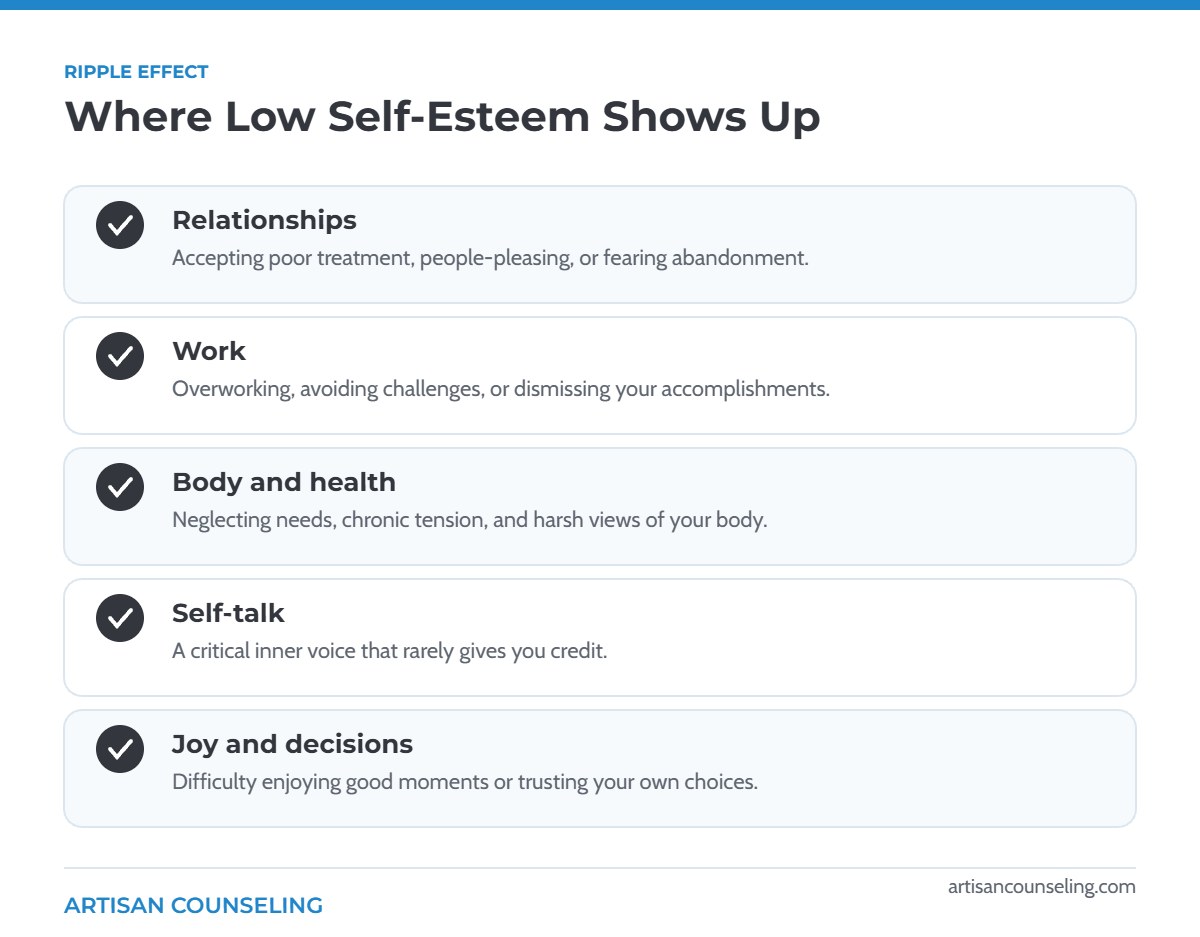
Because self-esteem shapes how you interpret everything, its effects ripple outward into many areas at once.
In Relationships
You may tolerate disrespect, stay in relationships that hurt you, or work hard to keep everyone happy so they will not leave. Some people go the other way and keep others at a distance to avoid rejection. If this resonates, our article on why people stay in unhealthy relationships may be helpful.
At Work
Low self-esteem can lead to overworking to prove your value, avoiding promotions or new challenges, or crediting luck for your successes. Fear of making mistakes can also make it hard to speak up in meetings.
In Your Body and Health
When you do not feel worthy of care, it becomes easy to skip rest, meals, medical appointments, or movement. Chronic stress from constant self-criticism can also show up as tension, fatigue, or trouble sleeping.
In How You Talk to Yourself
Many people with low self-esteem have an inner critic that sounds harsh: “You always mess things up” or “Who would want to hear from you?” This voice often feels like the truth simply because it is so familiar.
In Your Ability to Enjoy Life
Good moments can feel undeserved or fragile, so you brace for something to go wrong instead of enjoying them.
In Decision Making
If you do not trust your own judgment, even small decisions can feel overwhelming. You may defer to others, seek constant reassurance, or avoid deciding at all.
Where Does Low Self-Esteem Come From?
Low self-esteem is usually learned, not chosen. Common contributors include:
- Growing up with frequent criticism, harsh comparisons, or conditional approval
- Emotional neglect, where your feelings and needs were overlooked
- Bullying, exclusion, or discrimination
- Trauma or abusive relationships
- Ongoing struggles such as academic difficulties, chronic illness, or job loss
- Living with anxiety or depression, which can distort how you see yourself
Understanding the roots is not about blame. It helps you recognize that the critical voice was shaped by experiences, which means it can be reshaped too. You can read more in how childhood trauma can affect you decades later.
How to Start Rebuilding Self-Esteem
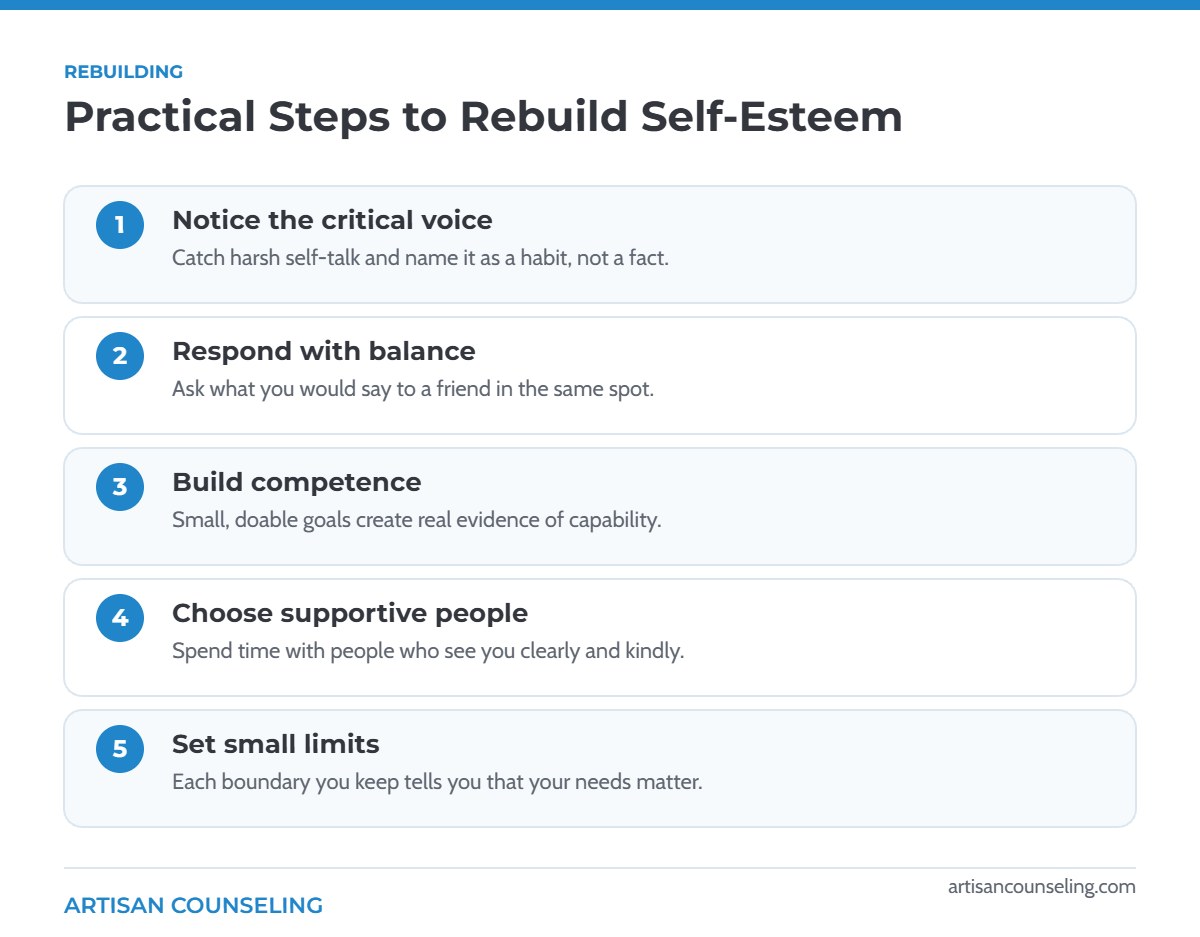
Rebuilding self-esteem is a gradual process. These steps work best when practiced consistently over time.
Notice the Critical Voice
Start by simply catching self-critical thoughts. You might label them: “There is the critic again.” Naming the voice creates a little distance, so it feels less like an objective truth.
Talk Back With Balance
You do not need to replace criticism with forced positivity. Instead, aim for balance. Ask yourself, “What would I say to a friend in this situation?” or “What is the evidence for and against this thought?”
Do Things That Build Competence
Confidence grows from experience. Set small, achievable goals, such as finishing a short project or learning a new skill, and acknowledge yourself when you complete them.
Spend Time With People Who See You Clearly
Notice who leaves you feeling respected and who leaves you feeling smaller. Investing in supportive relationships gives you a more accurate mirror.
Set Small Limits
Every time you say no to something that drains you, you send yourself the message that your needs matter. Start small, such as declining one extra commitment this week. Our list of signs of unhealthy boundaries can help you see where to begin.
Try keeping a short “evidence log.” Each evening, write down one thing you handled well, one kind thing you did, or one piece of positive feedback. Over a few weeks, it becomes harder for the inner critic to claim you never do anything right.
When Counseling Can Help
If low self-esteem is affecting your relationships, career, or mood, or if your inner critic feels relentless, counseling can help. A counselor can help you trace where your beliefs came from and practice new ways of relating to yourself.
Approaches such as cognitive behavioral therapy help you identify and challenge distorted thoughts, while compassion-focused approaches help soften harsh self-criticism. If you also notice persistent sadness, hopelessness, or loss of interest, a professional evaluation can check for depression or anxiety.
Frequently Asked Questions
What are the signs of low self-esteem?
Common signs include harsh self-criticism, difficulty accepting compliments, people-pleasing, fear of failure, avoiding challenges, constant comparison to others, and trouble making decisions without reassurance.
Can low self-esteem cause anxiety or depression?
Low self-esteem and conditions like anxiety and depression often reinforce each other. Negative beliefs about yourself can increase worry and low mood, and those conditions can in turn make you see yourself more harshly. A licensed professional can help sort out what is going on.
Can self-esteem really change in adulthood?
Yes. Self-esteem is shaped by experience, so new experiences, healthier relationships, and therapy can change it at any age. Progress is usually gradual, but it is very real.
What type of therapy is best for low self-esteem?
Cognitive behavioral therapy is commonly used because it targets negative thought patterns directly. Compassion-focused therapy, person-centered therapy, and trauma-informed approaches can also help, depending on what is underneath the low self-esteem.
Rebuilding Self-Worth With Artisan Counseling
You deserve to see yourself with the same fairness and kindness you offer others. Our counselors provide individual counseling in Newport News and Suffolk, Virginia, as well as telehealth sessions anywhere in the state. When you are ready, contact us to get started.