Key Takeaways
- People stay in unhealthy relationships for complex reasons, including hope, fear, love, finances, children, and safety concerns.
- Cycles of hurt followed by affection can create strong emotional attachment that is hard to break.
- Staying does not mean someone is weak; leaving can be emotionally, practically, and sometimes physically risky.
- Support from trusted people and a counselor can help you see clearly and plan next steps safely.
From the outside, it can seem obvious: if a relationship is hurting you, leave. From the inside, it is almost never that simple. Love, hope, fear, shared history, and practical realities all pull in different directions.
If this is affecting your relationship, couples counseling at our Newport News and Suffolk offices can help you and your partner work through it together.
If you are in a relationship that does not feel healthy, or you care about someone who is, this article can help. You will learn why people stay, signs you may feel stuck, what actually helps, and how counseling can support you whatever you decide.
Why Isn’t Leaving an Unhealthy Relationship Simple?
Unhealthy relationships are rarely bad all the time. There are often real moments of closeness, laughter, and care. Those moments make it hard to see the pattern clearly, and they make leaving feel like losing something valuable.
Unhealthy dynamics also tend to erode self-confidence over time. When you doubt yourself, big decisions feel even harder. And for some people, leaving may increase the risk of harm, which makes careful planning essential.
What Are the Most Common Reasons People Stay?
There is usually more than one reason. These are some of the most common.
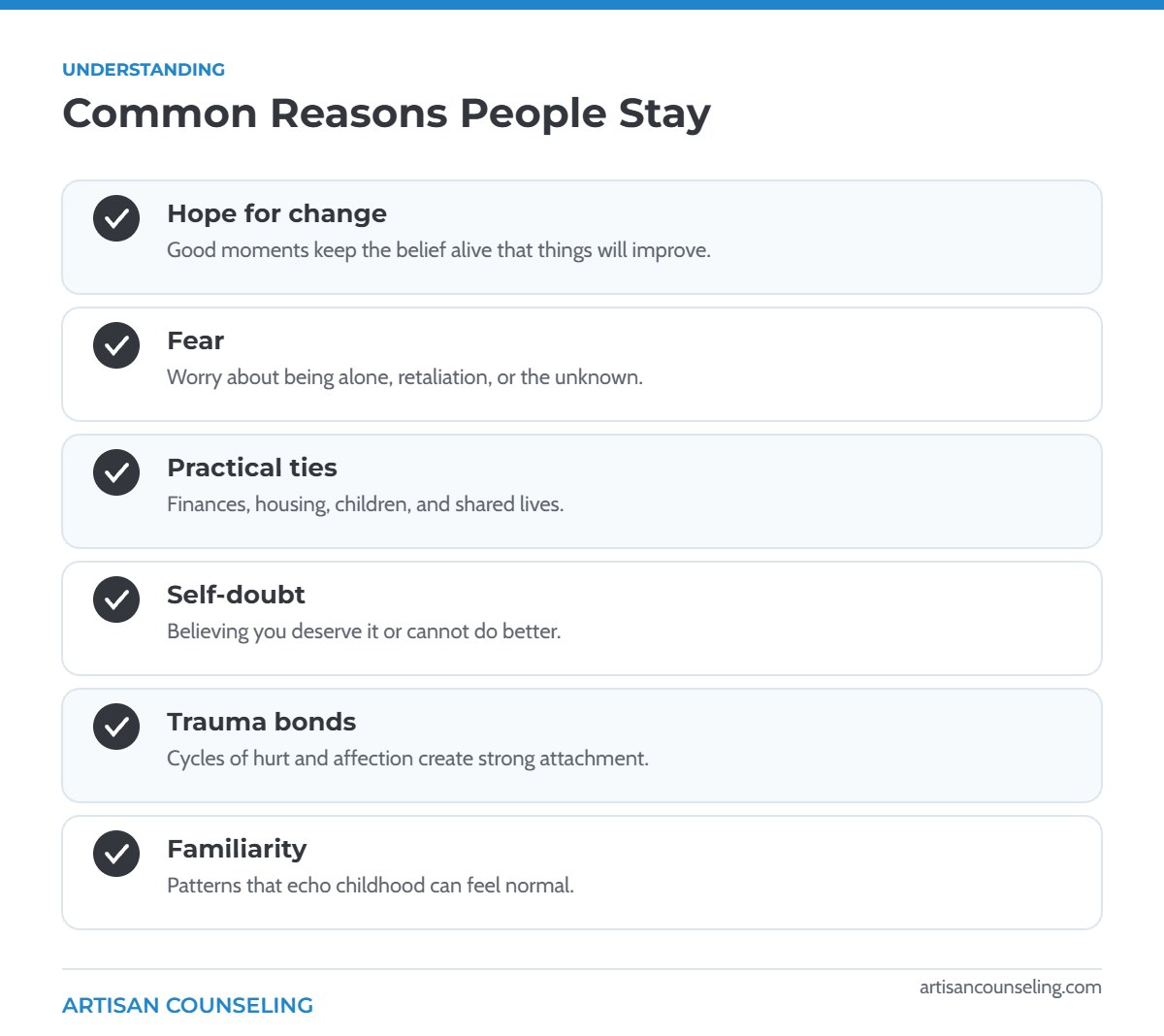
Hope That Things Will Change
Promises to change, apologies, and good stretches keep hope alive. Many people stay because they remember who their partner was at the beginning.
For example, after a painful argument, a partner may apologize, bring flowers, and be loving for a week or two. Those good stretches feel like proof that the relationship can work, which makes it harder to trust your own sense that something is wrong.
Fear of Being Alone or of the Unknown
Starting over can feel overwhelming, especially after a long relationship. Some people also fear their partner’s reaction if they try to leave.
Practical and Financial Barriers
Shared finances, housing, immigration status, health insurance, and children can make leaving complicated. These are real constraints, not excuses.
Practical barriers are real. Shared leases, joint finances, children, pets, health insurance, or immigration concerns can all make leaving feel impossible in the short term. Acknowledging these barriers honestly is part of planning, not a sign of weakness.
Low Self-Worth
Repeated criticism can leave someone believing they do not deserve better or that no one else would want them.
Trauma Bonding
When hurt is followed by intense affection or relief, it can create a powerful emotional attachment. This cycle can make a relationship feel impossible to leave even when you know it is harmful.
Familiar Patterns
If you grew up around similar dynamics, an unhealthy relationship can feel normal. Our article on how childhood trauma affects adult relationships explores this connection.
Trauma bonds can feel confusing because the attachment is often strongest right after the most painful moments. If you find yourself defending your partner to friends while privately feeling afraid or drained, that inner conflict deserves attention and compassion.
What Are the Signs You May Feel Stuck?
- You feel anxious, drained, or on edge much of the time.
- You hide parts of the relationship from friends and family.
- You have lost touch with hobbies, friendships, or goals.
- You make excuses for your partner’s behavior.
- You frequently doubt your own judgment or memory.
- You have thought about leaving many times but feel unable to act.
Some of these can also point to emotional neglect or manipulation. Our guides on signs of emotional neglect and recognizing emotional manipulation may help you put words to your experience.
Questions to Ask Yourself
These reflection questions can help you get clearer about your situation:
- Do I feel more like myself or less like myself in this relationship?
- Do I hide parts of my relationship from people who care about me?
- When things are good, am I relaxed, or am I waiting for the next problem?
- If a friend described my relationship to me, what would I tell them?
- What would I want if I knew I would be okay either way?
You do not need to answer them all at once. Writing your answers down over a few days can help you notice patterns.
What Actually Helps You Move Forward?
Change usually happens in steps, not one dramatic moment. These actions can help, whether you ultimately stay and work on the relationship or decide to leave.
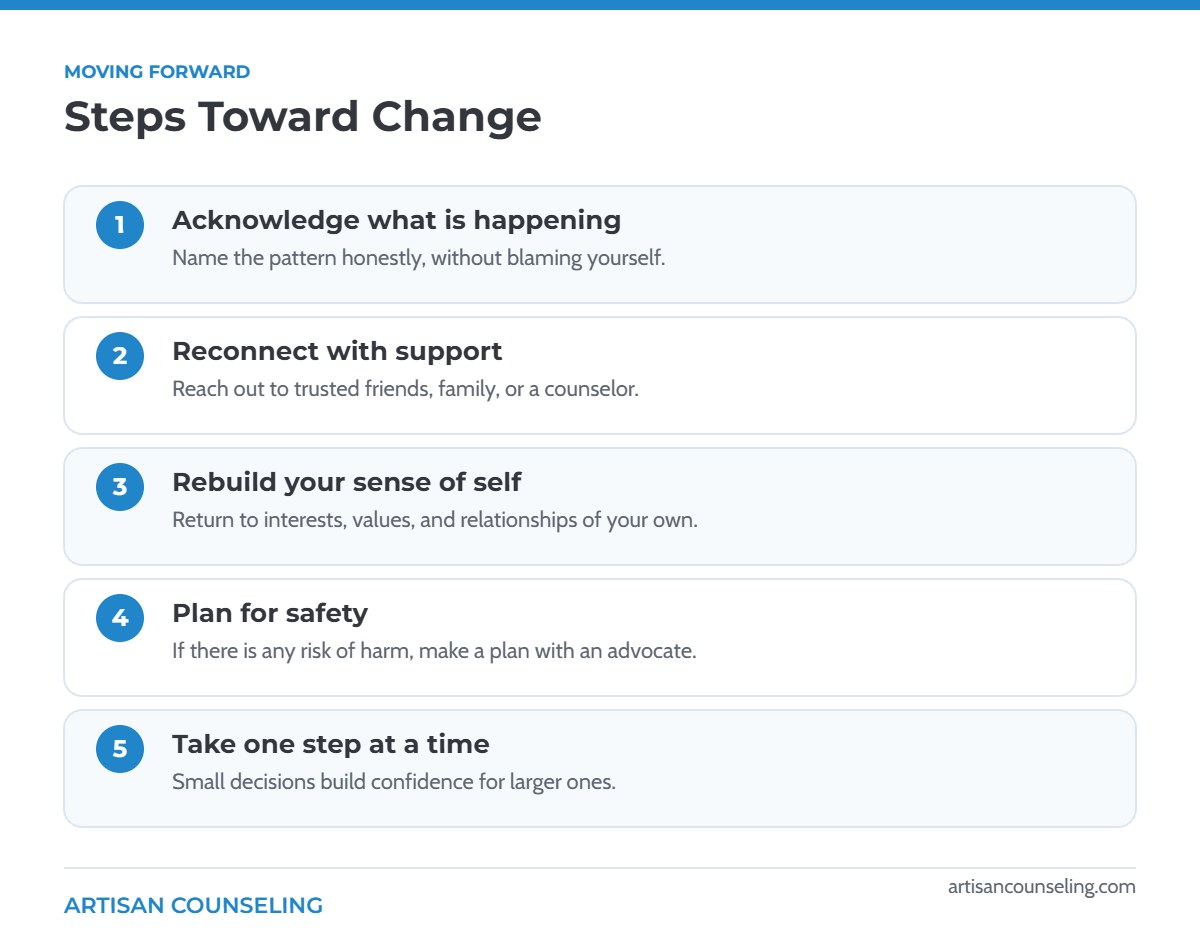
Name What Is Happening Without Self-Blame
Acknowledging a pattern is not the same as blaming yourself for it. Being honest with yourself is a strong first step.
Reconnect With People Who Support You
Isolation makes unhealthy relationships harder to see. Reaching out to even one trusted person can restore perspective.
Reaching out can start small. You might text a friend you have lost touch with: “I have missed you. Could we grab coffee this week?” You do not have to explain everything right away. Simply being around people who know and value you can help you see your situation more clearly.
Rebuild Your Sense of Self
Small things, like returning to a hobby or spending time with friends, remind you of who you are outside the relationship.
Plan for Safety if There Is Any Risk
If your partner has threatened, controlled, or hurt you, leaving can be a dangerous time. A domestic violence advocate can help you build a safety plan confidentially.
If you are in crisis: call or text 988 to reach the 988 Suicide & Crisis Lifeline, available 24/7. If you are in immediate danger, call 911. For domestic violence support, you can also contact the National Domestic Violence Hotline at 1-800-799-7233.
If you are supporting someone else: Listen without judgment, avoid ultimatums, and remind them you are there no matter what they decide. Pressure often pushes people back toward the relationship.
If you are in crisis: call or text 988 to reach the 988 Suicide & Crisis Lifeline, or call 911 in an emergency. If you are experiencing abuse, the National Domestic Violence Hotline is available 24/7 at 1-800-799-7233.
How Can Counseling Help?
Individual counseling gives you a confidential space to sort through mixed feelings, rebuild confidence, and consider your options without pressure. A counselor will not tell you what to do. Instead, they help you clarify what you want and how to get there safely.
If both partners are committed to change and there is no abuse, couples counseling can help address unhealthy patterns. When there is control, intimidation, or violence, individual support and safety planning are usually recommended first. If the relationship involves trauma, trauma-informed therapy can help you heal.
What Counseling Can Look Like
In individual counseling, you set the pace. Early sessions often focus on understanding what is happening and feeling less alone with it. Over time, you might explore the patterns that make it hard to leave or set limits, rebuild confidence in your own judgment, and plan practical next steps. If trauma is part of your story, approaches such as trauma-informed therapy can help you heal at a pace that feels safe. Your counselor will not tell you what to do; they help you get clear on what you want.
Frequently Asked Questions
Why do I keep going back to an unhealthy relationship?
Returning is very common. Strong emotional bonds, hope for change, fear, and practical needs can all pull you back. Understanding these forces without judging yourself is an important step toward lasting change.
What is a trauma bond?
A trauma bond is a strong emotional attachment that forms through repeated cycles of hurt followed by affection or relief. It can make it feel very hard to leave, even when you recognize the relationship is harmful.
How do I know if my relationship is unhealthy or just going through a rough patch?
Rough patches are temporary and both partners usually work to repair. Unhealthy relationships involve ongoing patterns like disrespect, control, or fear. A counselor can help you look at your situation objectively.
Can counseling help me decide whether to stay or leave?
Yes. Counseling does not push you toward a decision, but it can help you understand your feelings, identify what you need, and plan next steps safely.
Why do I miss someone who treated me badly?
Missing a partner after an unhealthy relationship is very common. You may miss the good moments, the routine, or the hope of who they could be. Missing them does not mean you made the wrong choice, and support can help you work through the grief.
How can I support a friend who stays in an unhealthy relationship?
Stay connected and avoid ultimatums or criticism of their partner, which can push them away. Listen without judgment, remind them of their strengths, and let them know you are there whenever they are ready. If you are worried about their safety, share hotline information gently.
Finding Support at Artisan Counseling
Whatever you decide, you do not have to figure it out alone. Our compassionate counselors offer support in Newport News, Suffolk, and via telehealth. Contact us to schedule a confidential session.