
Key Takeaways
- PTSD can develop after one traumatic event or several, while complex PTSD (CPTSD) usually follows prolonged or repeated trauma, often with no way to escape.
- CPTSD includes the core PTSD symptoms plus ongoing problems with emotion regulation, self-worth, and relationships.
- CPTSD is recognized in the ICD-11 but is not a separate diagnosis in the DSM-5-TR.
- Both are treatable, and CPTSD treatment often begins with building safety and coping skills.
If you have been through trauma, you may have seen the terms PTSD and CPTSD and wondered which one fits your experience. The two are closely related, but they are not the same, and the difference can affect how treatment is approached.
Understanding these conditions can also bring relief. Many people with complex trauma have spent years feeling that something is wrong with them, when in fact they are experiencing understandable responses to what they lived through.
In this article, you will learn what PTSD and CPTSD are, how they differ, the signs to notice, why the distinction matters, and what treatment typically looks like.
What Is PTSD?
Post-traumatic stress disorder can develop after experiencing or witnessing an event involving actual or threatened death, serious injury, or sexual violence. Examples include accidents, assaults, combat, disasters, or sudden loss.
In the DSM-5-TR, PTSD symptoms fall into four groups:
- Intrusion: unwanted memories, nightmares, or flashbacks
- Avoidance: staying away from reminders, thoughts, or feelings
- Negative changes in thinking and mood: guilt, blame, detachment, or numbness
- Changes in arousal and reactivity: irritability, hypervigilance, startling easily, trouble sleeping
Symptoms must last more than a month and cause significant distress or impairment for a diagnosis.
What Is Complex PTSD (CPTSD)?
Complex PTSD typically develops after prolonged or repeated trauma, especially when escape felt impossible. Common examples include ongoing childhood abuse or neglect, long-term domestic violence, trafficking, or captivity.
The World Health Organization’s ICD-11 recognizes CPTSD as a distinct diagnosis. It includes the core PTSD symptoms plus three additional areas, often called disturbances in self-organization. The American Psychiatric Association’s DSM-5-TR does not list CPTSD separately, so in the United States these experiences may be diagnosed as PTSD or another related condition.
What Are the Main Differences Between PTSD and CPTSD?
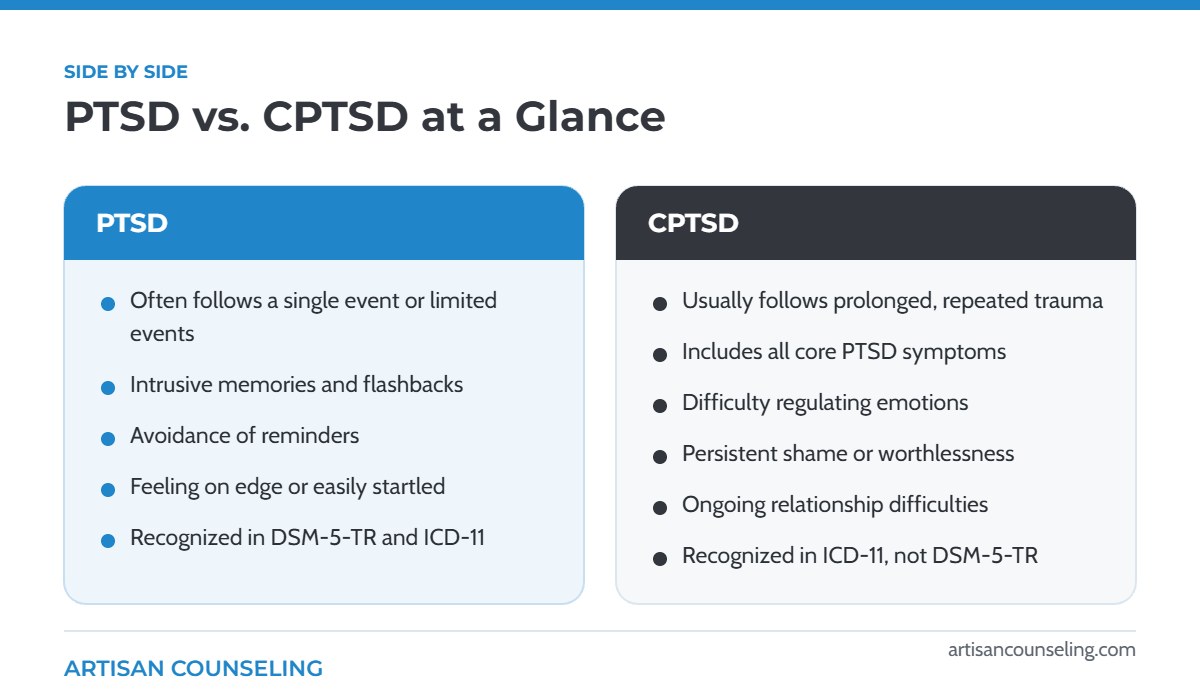
The chart below summarizes how the two compare. The sections that follow explain each area in more detail.
Emotional Regulation
People with CPTSD often experience intense emotions that are hard to calm, or they may feel numb and shut down. Small triggers can lead to big reactions that feel out of proportion.
Sense of Self
Persistent feelings of shame, guilt, or worthlessness are central to CPTSD. Many people describe feeling fundamentally broken or different from others.
Relationships With Others
Trust can feel dangerous when the people who caused harm were supposed to provide care. CPTSD often involves difficulty feeling close to others, or patterns of unstable or unhealthy relationships. Read more in how childhood trauma can affect you decades later.
Triggers and Memory
With PTSD, triggers are often linked to a specific event. With CPTSD, triggers can be more diffuse, tied to emotions, relationships, or a general sense of danger. Some people experience emotional flashbacks, where old feelings flood in without a clear memory.
Time Frame of the Trauma
PTSD can follow a single incident. CPTSD typically reflects trauma that lasted months or years, often during childhood when the brain and sense of self were still developing.
Signs You May Be Dealing With Complex Trauma
- You feel on guard or unsafe, even in safe situations.
- Your emotions feel overwhelming or shut off entirely.
- You carry deep shame or believe you are unworthy.
- Relationships feel confusing, frightening, or exhausting.
- You feel disconnected from your body or surroundings at times.
Only a licensed clinician can provide a diagnosis, but noticing these patterns can be a helpful starting point for a conversation.
If you are in crisis: call or text 988 to reach the 988 Suicide & Crisis Lifeline, or call 911 in an emergency. Trauma symptoms can feel overwhelming, and help is available right now.
Why the Distinction Matters
Knowing whether you are dealing with single-incident or complex trauma helps guide treatment. People with CPTSD often benefit from more time spent on safety, stabilization, and emotional skills before working directly with traumatic memories.
The distinction can also reduce self-blame. Recognizing that your struggles with emotions, self-worth, and relationships are common responses to prolonged trauma can make them feel less like personal flaws.
How Are PTSD and CPTSD Treated?
Both conditions are treatable. Treatment is often tailored to your history, symptoms, and readiness.
Stabilization and Safety
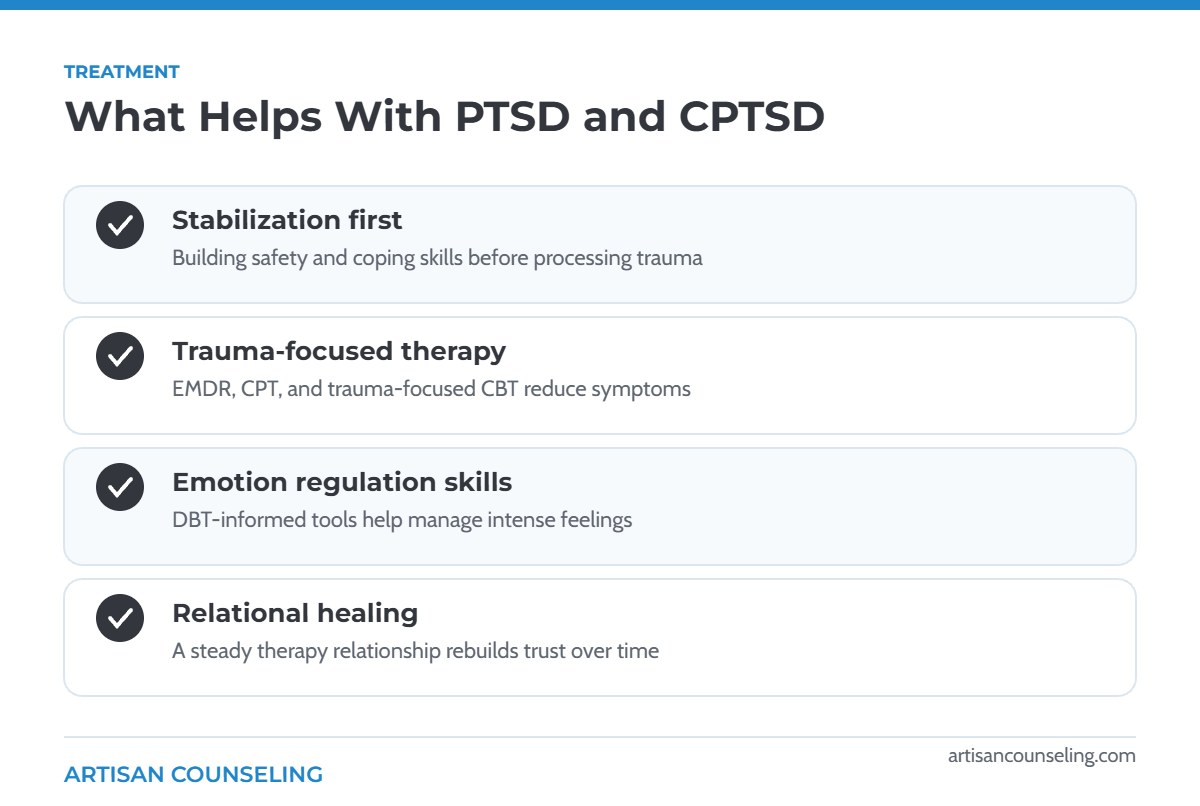
Especially with CPTSD, therapy often starts by building coping skills, grounding techniques, and a sense of safety. Our article on a nervous system stuck in survival mode describes some of these tools.
Trauma-Focused Therapies
Evidence-based approaches include EMDR therapy, Cognitive Processing Therapy, Prolonged Exposure, and trauma-focused CBT. These help reduce the intensity of traumatic memories and change unhelpful beliefs.
Emotion Regulation and Relational Work
Skills from DBT can help with intense emotions. Approaches such as Internal Family Systems and somatic therapy can address shame and body-based responses. The therapy relationship itself also becomes a place to practice trust.
Frequently Asked Questions
Is CPTSD worse than PTSD?
Not necessarily worse, but often more pervasive, because it affects emotions, self-image, and relationships in addition to core trauma symptoms. Treatment may take longer, and recovery is very possible.
Is CPTSD a real diagnosis?
Yes. Complex PTSD is an official diagnosis in the World Health Organization’s ICD-11. It is not listed separately in the DSM-5-TR, which is why U.S. clinicians may use a PTSD diagnosis to describe similar symptoms.
Can CPTSD be mistaken for other conditions?
Yes. CPTSD can overlap with depression, anxiety, and borderline personality disorder. A thorough evaluation by a trained clinician helps clarify what is going on.
How long does CPTSD treatment take?
It varies widely. Many people notice meaningful improvement within months, while deeper healing of long-standing patterns can take longer. Your counselor will review progress with you along the way.
Trauma Therapy at Artisan Counseling
Whether your trauma came from a single event or years of hardship, you deserve care that understands both. Our licensed counselors offer trauma-informed therapy with EMDR, brainspotting, IFS, and more.
We see clients in person in Newport News and Suffolk, and through telehealth across Virginia. Contact our team to find the right counselor for you.