Key Takeaways
- Trauma can make the brain’s alarm system more sensitive and the calm, reasoning parts of the brain less active under stress.
- The body may stay in a stress state, affecting sleep, digestion, pain, and immune health.
- These changes are adaptations to danger, not signs of weakness.
- The brain can change throughout life, and trauma-focused therapy helps it relearn safety.
After a traumatic experience, many people wonder why they cannot just move on. You may know logically that you are safe, yet your body reacts as if danger is still close.
That gap between knowing and feeling makes sense once you understand what trauma does to the brain and body. Trauma is not only an emotional event. It changes how your nervous system detects threat, stores memories, and manages stress.
In this article, you will learn what trauma is, how it affects key areas of the brain, how it shows up in the body, the signs to watch for, and what helps the brain and body heal.
What Is Trauma?
Trauma is the lasting impact of an experience that overwhelmed your ability to cope. It may come from a single event, such as an accident or assault, or from ongoing experiences, such as childhood neglect or an abusive relationship.
What makes something traumatic is not only the event itself but how it affected you. Two people can go through the same situation and respond differently, and both responses are valid.
What Happens in the Brain After Trauma?
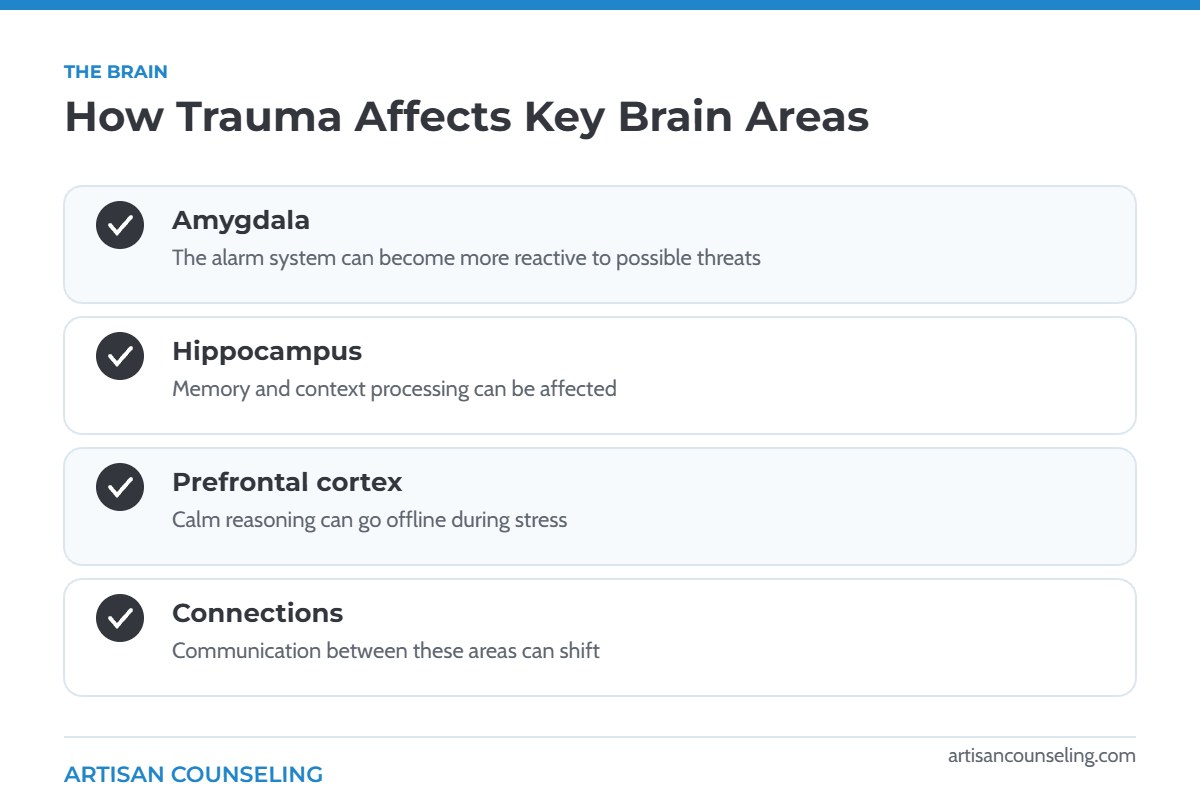
Brain imaging research, especially in people with PTSD, has identified several areas that are commonly affected. These changes help explain symptoms such as hypervigilance, memory problems, and strong emotional reactions.
The Amygdala Becomes More Reactive
The amygdala acts as your brain’s smoke detector. After trauma, it can become more sensitive, setting off alarms in response to reminders, sounds, or situations that are not actually dangerous.
The Hippocampus Can Be Affected
The hippocampus helps form memories and place them in time and context. Studies have found differences in hippocampal size and function in some people with PTSD. This may explain why traumatic memories can feel like they are happening now rather than in the past.
The Prefrontal Cortex Goes Quiet Under Stress
The prefrontal cortex supports reasoning, planning, and calming emotional reactions. When the alarm system fires, this area can become less active, making it harder to think clearly in the moment.
Brain Connections Shift
Communication between these regions can change, so the alarm system has a louder voice than the parts of the brain that say, “You are safe now.”
What Happens in the Body After Trauma?
The Nervous System Stays Activated
The body’s stress response may stay switched on, leading to a racing heart, tense muscles, or feeling jumpy. Others experience the opposite: shutdown, numbness, or exhaustion. Learn more in signs your nervous system is stuck in survival mode.
Stress Hormones and Immune Health
Ongoing stress affects hormones such as cortisol. Over time, chronic stress has been linked to inflammation and changes in immune function, which may make you feel run-down more often.
Sleep and Digestion Suffer
Nightmares, trouble falling asleep, and waking on alert are common. Because stress diverts energy away from digestion, stomach problems are also frequent.
Chronic Pain and Muscle Tension
Many trauma survivors carry tension in the neck, shoulders, jaw, or back. Headaches and chronic pain can be part of the picture. Always check physical symptoms with a medical provider, too.
Signs Trauma May Be Showing Up in Your Life
- Feeling on edge, easily startled, or always scanning for danger
- Intrusive memories, nightmares, or flashbacks
- Avoiding people, places, or topics that bring up reminders
- Numbness, detachment, or difficulty feeling joy
- Irritability or emotional reactions that feel bigger than the situation
- Ongoing sleep, digestive, or pain problems without a clear cause
If several of these feel familiar, it may be worth talking with a professional. Our article on PTSD vs. CPTSD can help you understand different trauma responses.
If you are in crisis: call or text 988 to reach the 988 Suicide & Crisis Lifeline, or call 911 in an emergency.
Can the Brain and Body Heal From Trauma?
Yes. The brain has a lifelong capacity to change, called neuroplasticity. With the right support, the alarm system can become less reactive and the calming parts of the brain can strengthen.
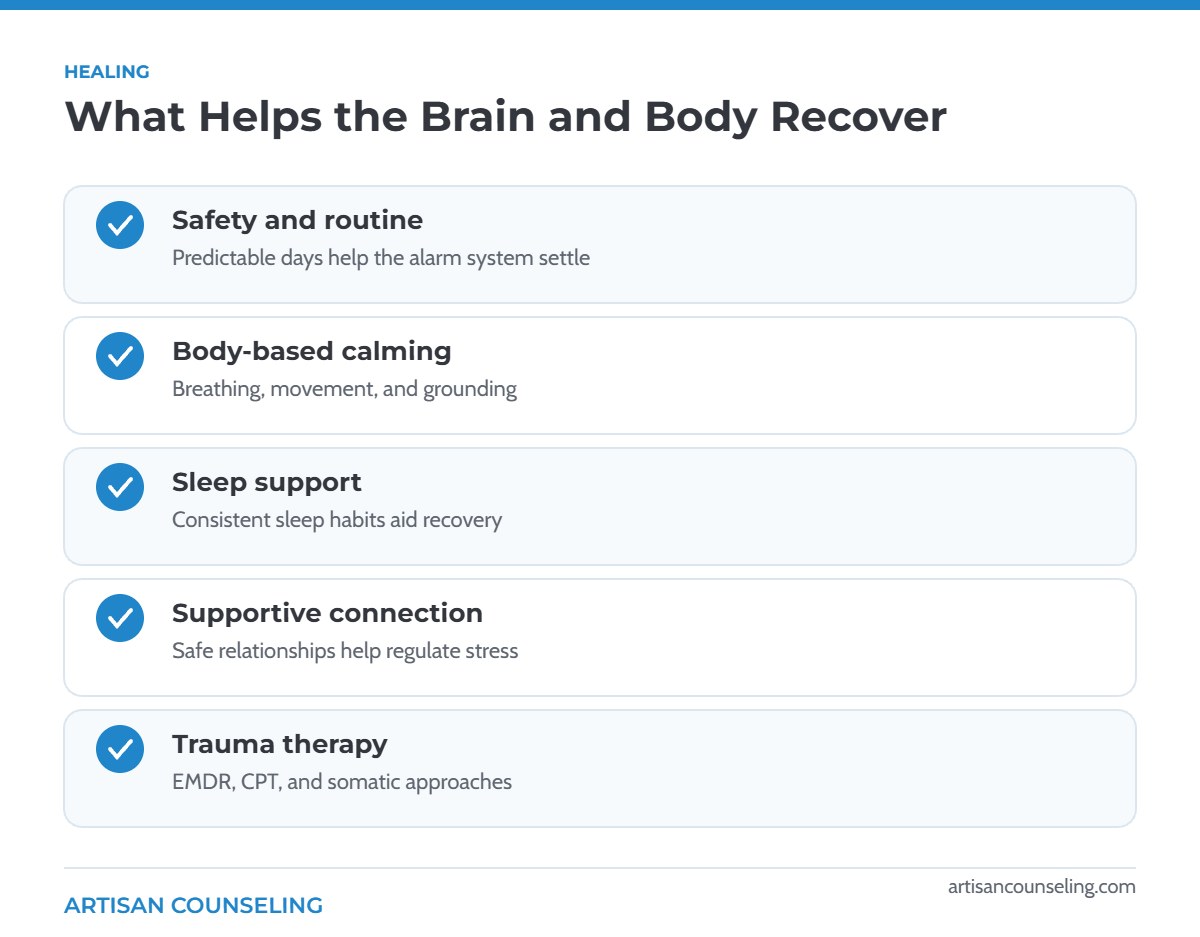
Create Safety and Routine
Predictable daily rhythms tell your nervous system that life is stable. Small routines matter more than big changes.
Calm the Body First
Slow breathing, gentle movement, and grounding help bring the body out of alarm. These tools make it easier to think and reflect afterward.
Protect Your Sleep
Consistent sleep and wake times, a wind-down routine, and limiting alcohol all support recovery.
Stay Connected
Safe relationships are one of the most powerful buffers against stress. Even small moments of connection help.
Work With a Trauma Therapist
Approaches such as EMDR therapy, Cognitive Processing Therapy, brainspotting, and somatic therapy help the brain process memories so they feel less threatening.
Tip: When you feel triggered, try naming it out loud: “My alarm system is going off.” Labeling the reaction can help engage the thinking part of your brain.
Frequently Asked Questions
Can trauma cause permanent brain damage?
Trauma can change how the brain functions, but these changes are not necessarily permanent. Research suggests that effective treatment can help the brain adapt and recover.
Why does my body react when I know I am safe?
The alarm system in the brain reacts faster than conscious thought. It responds to reminders automatically, before the reasoning part of your brain can confirm you are safe.
Can trauma cause physical symptoms?
Yes. Trauma and chronic stress can contribute to sleep problems, digestive issues, muscle tension, and pain. A medical provider should evaluate physical symptoms as well.
What is the best therapy for trauma?
EMDR, Cognitive Processing Therapy, Prolonged Exposure, and trauma-focused CBT are well-supported. Somatic and brainspotting approaches also help many people. The best choice depends on you.
Trauma Healing at Artisan Counseling
Your reactions make sense, and they can change. Our licensed counselors provide trauma-informed therapy that works with both mind and body.
Visit our offices in Newport News or Suffolk, or meet online through telehealth across Virginia. Explore our counselors or contact us when you are ready.