Key Takeaways
- Childhood trauma includes abuse, neglect, household instability, and other experiences that overwhelmed a child’s sense of safety.
- Research on adverse childhood experiences (ACEs) links early adversity to higher risks for physical and mental health problems later in life.
- Effects can appear decades later in relationships, self-worth, work, and parenting.
- Healing is possible at any age, and trauma-focused therapy can help.
Many adults are surprised to find that experiences from childhood still shape their lives decades later. You might wonder why you react so strongly to criticism, struggle to trust people, or feel anxious even when things are going well.
Childhood trauma does not simply fade with time. The ways a child adapts to survive difficult circumstances often become habits of the body and mind that carry into adulthood. Understanding these connections can bring relief, and it can open the door to change.
In this article, you will learn what counts as childhood trauma, what research shows about its long-term effects, why those effects can show up years later, and practical steps toward healing.
What Counts as Childhood Trauma?
Childhood trauma is not limited to dramatic events. It includes any experience that overwhelmed a child’s ability to cope and feel safe. Examples include:
- Physical, emotional, or sexual abuse
- Physical or emotional neglect
- Witnessing domestic violence
- A parent with addiction or untreated mental illness
- Divorce, abandonment, or the loss of a caregiver
- Chronic instability, poverty, or community violence
- Bullying or medical trauma
What makes an experience traumatic is often not just what happened, but whether the child had a safe, supportive adult to help them through it.
What Does Research Show About Long-Term Effects?
The well-known Adverse Childhood Experiences (ACEs) research, conducted by the CDC and Kaiser Permanente, found that adults who experienced more childhood adversity had higher risks of many health and mental health problems later in life. The more types of adversity someone experienced, the higher the risk tended to be.
It is important to remember that ACEs describe risk, not destiny. Many people with high ACE scores live healthy, connected lives, especially when they have supportive relationships and access to care.
How Childhood Trauma Can Affect You as an Adult
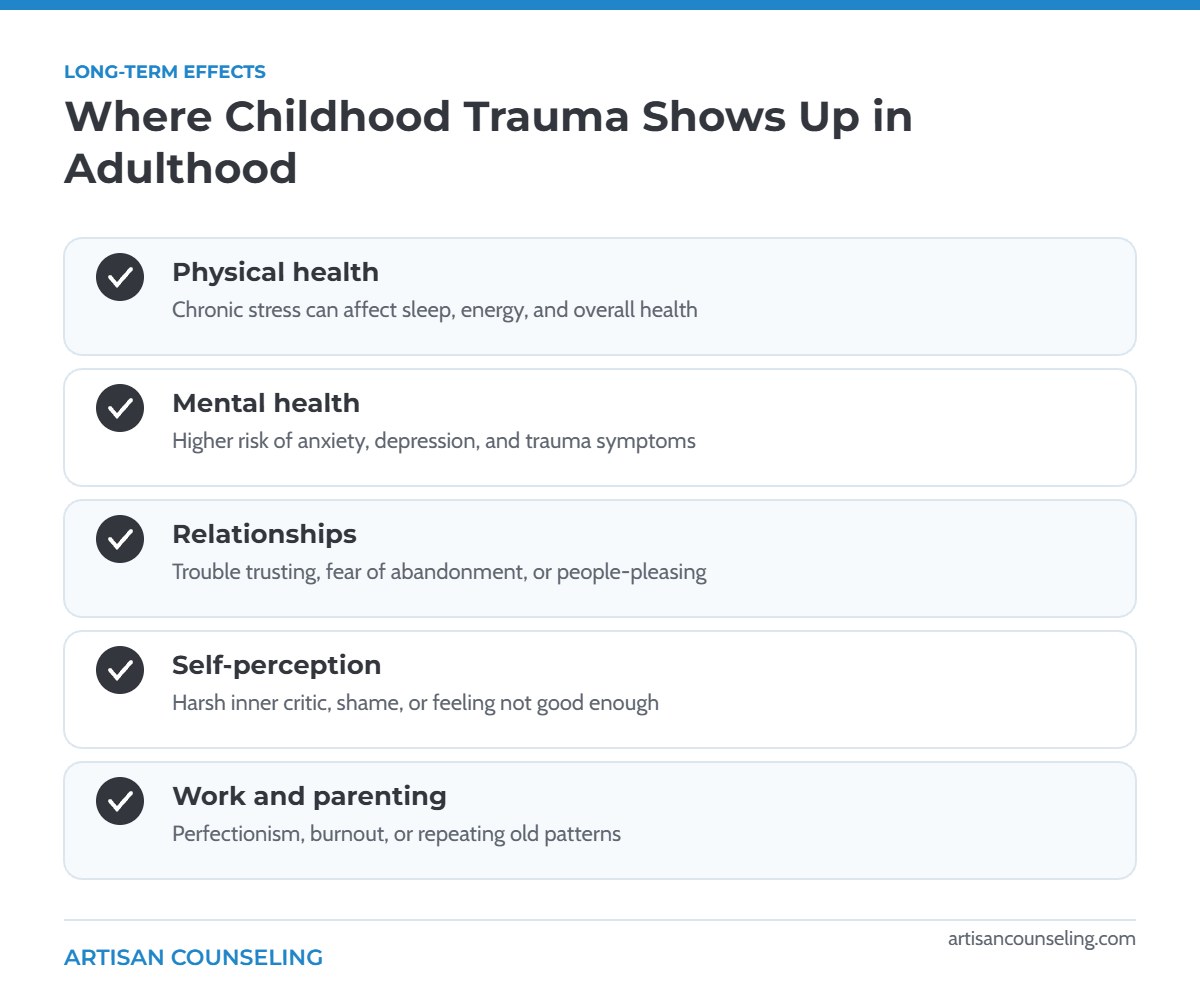
The effects of early trauma can touch nearly every area of life. Here are some of the most common places it shows up.
Physical Health
Growing up under chronic stress can keep the body’s stress response activated. Over time, this may contribute to sleep problems, fatigue, chronic pain, and other health concerns.
Mental Health
Childhood trauma is associated with higher rates of anxiety, depression, substance use, and post-traumatic stress. Some people develop complex trauma symptoms, which our article on PTSD vs. CPTSD explains.
Relationships
If caregivers were unpredictable or unsafe, closeness may feel risky. You might fear abandonment, avoid intimacy, people-please, or find yourself drawn to familiar but unhealthy dynamics. Learn more in how childhood trauma affects adult relationships.
Self-Perception
Children often blame themselves for what happens around them. As adults, this can become a harsh inner critic, chronic shame, or a sense of never being good enough.
Work Patterns
Perfectionism, overworking, fear of mistakes, or difficulty with authority figures can all trace back to early experiences of needing to stay safe or earn approval.
Parenting Struggles
Becoming a parent can bring old memories and feelings to the surface. You may notice yourself reacting the way your parents did, even when you promised you would not. Our post on parenting through big emotions without yelling offers practical support.
Why Do the Effects Show Up Decades Later?
Coping strategies that helped a child survive, such as staying quiet, staying alert, or shutting down feelings, can work for years. They often stop working when adult life brings new pressures.
Common triggers include starting a serious relationship, having children, losing a parent, a health scare, or simply slowing down enough to notice what has been there all along. These moments can bring buried feelings to the surface.
Tip: When you have a reaction that feels bigger than the situation, try asking, “How old do I feel right now?” Strong, outsized reactions are often a clue that an old wound has been touched.
How to Begin Healing From Childhood Trauma
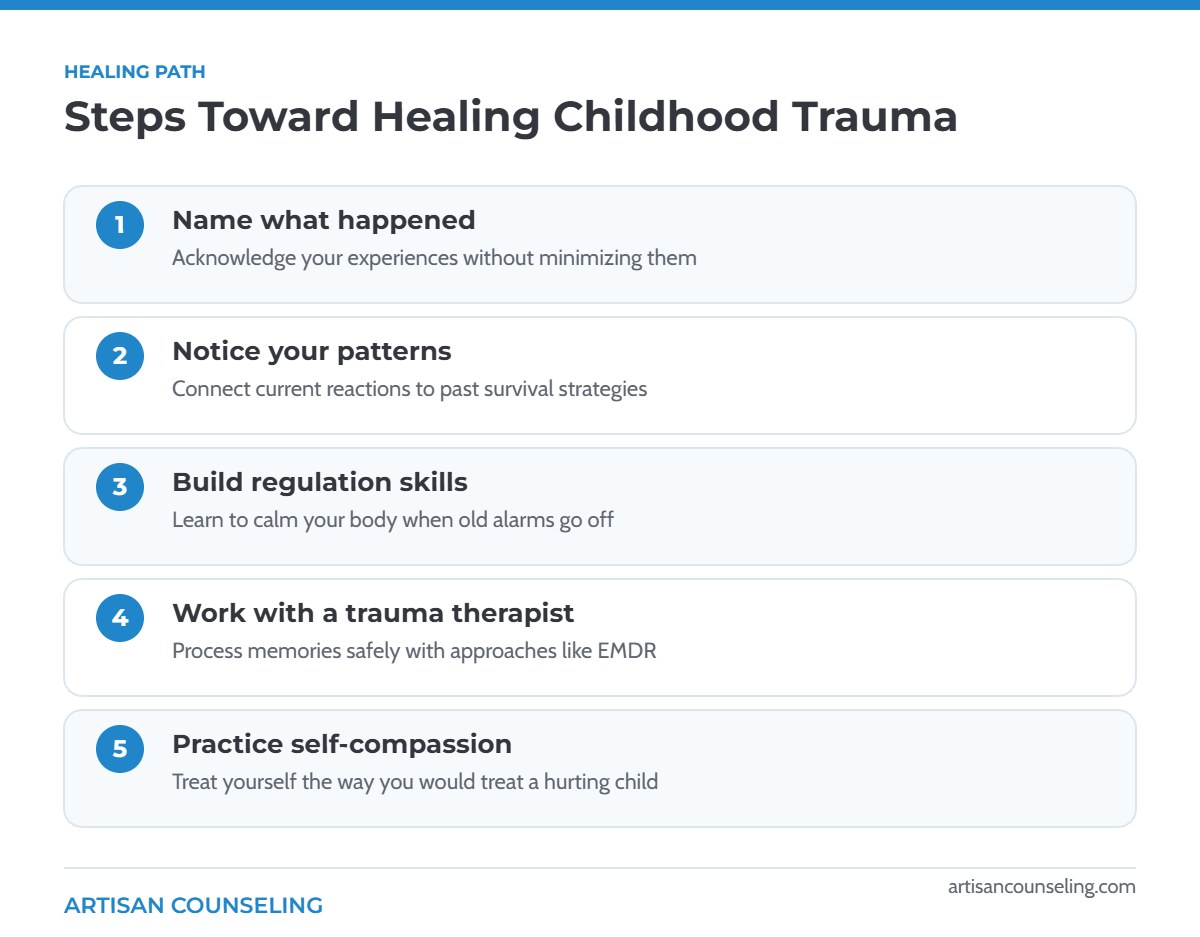
The brain remains capable of change throughout life. Healing does not mean forgetting what happened. It means the past has less control over your present.
Acknowledge What Happened
Many people minimize their experiences by saying “others had it worse.” Your experience matters, and naming it is often the first step.
Notice Your Patterns With Curiosity
Instead of judging your reactions, get curious about what they protected you from. This shift alone can soften shame.
Build Regulation Skills
Breathing, grounding, and body-based practices help calm a nervous system that learned to stay on alert. If this sounds familiar, read signs your nervous system is stuck in survival mode.
Work With a Trauma-Informed Therapist
Approaches such as EMDR therapy, Internal Family Systems, brainspotting, and somatic therapy can help process memories safely and reduce their emotional charge.
If you are in crisis: call or text 988 to reach the 988 Suicide & Crisis Lifeline, or call 911 in an emergency. If memories of childhood abuse feel overwhelming, please reach out for support right away.
Frequently Asked Questions
Can you have childhood trauma and not remember it?
Some people have limited or fragmented memories of difficult periods in childhood. A therapist will not try to uncover memories that are not there, but can help you work with the feelings and patterns you notice today.
Is it too late to heal childhood trauma as an adult?
No. People heal from childhood trauma at every age. The brain stays adaptable throughout life, and therapy can help you build new patterns of safety and connection.
What type of therapy is best for childhood trauma?
Trauma-focused approaches such as EMDR, trauma-focused CBT, IFS, and somatic therapies are commonly used. The best fit depends on your needs, and a counselor can help you choose.
How do I know if my childhood was traumatic?
If experiences left you feeling unsafe, unseen, or alone, and they still affect how you feel or relate to others, they are worth exploring. A licensed counselor can help you make sense of your history without labels or judgment.
Healing Childhood Trauma With Artisan Counseling
Your past shaped you, but it does not have to define your future. Our licensed counselors provide trauma-informed therapy in a warm, steady environment where you set the pace.
We see clients at our Newport News and Suffolk offices and through telehealth across Virginia. Meet our counselors or contact us to schedule your first session.