Key Takeaways
- A meltdown is a sign that your child’s developing brain is overwhelmed, not a sign of bad parenting or a “bad kid.”
- Yelling may stop behavior in the moment, but it raises stress and teaches kids that big feelings lead to loss of control.
- Calming yourself first, then connecting, naming feelings, and setting a clear limit works better than escalating.
- Repairing after you lose your temper teaches accountability and strengthens your relationship.
Your child is screaming on the floor because the cup is the wrong color. Your teen slams a door after you say no. You have asked five times for shoes to go on, and you are already late. Before you know it, you are yelling, and then you feel guilty for the rest of the day.
If this sounds familiar, you are not alone, and you are not a bad parent. Yelling is a very common stress response. The good news is that there are concrete ways to stay steadier. In this article, you will learn what happens in your child’s brain during a meltdown, what happens in yours, why yelling backfires, a step-by-step approach for calmer responses, and how to repair when things go wrong.
What Happens When a Child Melts Down
The part of the brain that handles planning, impulse control, and reasoning, the prefrontal cortex, keeps developing through childhood and into the mid-twenties. When a child is tired, hungry, frustrated, or overstimulated, their stress response can take over, and their ability to think clearly drops.
In that moment, your child is not choosing to be difficult. They are overwhelmed and do not yet have the skills to calm themselves. This is why lecturing during a meltdown rarely works: the thinking part of the brain is temporarily offline.
Children learn to manage emotions through co-regulation, meaning they borrow calm from a steady adult until they can do it on their own. To understand this skill better, read what emotional regulation really means.
What Happens in You
Your child’s distress can trigger your own stress response. Your heart races, your patience disappears, and you may react from instinct rather than intention. This is more likely when you are:
- Exhausted, rushed, or juggling too much.
- Worried about what others will think, such as during a public meltdown.
- Carrying your own stress, anxiety, or burnout.
- Reminded, consciously or not, of how you were parented.
Know Your Personal Triggers
It helps to notice your own pattern. For a week, jot down the moments you felt close to yelling. Look for themes: certain times of day, specific behaviors like whining or not listening, or situations like getting out the door in the morning. Many parents discover that most of their hardest moments happen at the same few pressure points, which makes them easier to plan for.
If you grew up in a home where yelling was normal, it may feel automatic. That is not a flaw. It is a learned pattern, and learned patterns can change.
Why Yelling Backfires
Yelling can stop a behavior in the moment, which is why it is tempting. Over time, though, it tends to:
- Increase a child’s stress, making meltdowns longer or more frequent.
- Teach that big feelings lead to losing control.
- Lead kids to tune out, hide mistakes, or yell back.
- Strain the relationship that makes kids want to cooperate in the first place.
The goal is not to never feel angry. Anger is a normal feeling. The goal is to express it without frightening or shaming your child.
How to Respond to Big Emotions Without Yelling
When emotions are running high, try this sequence. It will not work perfectly every time, but practice makes it more natural.
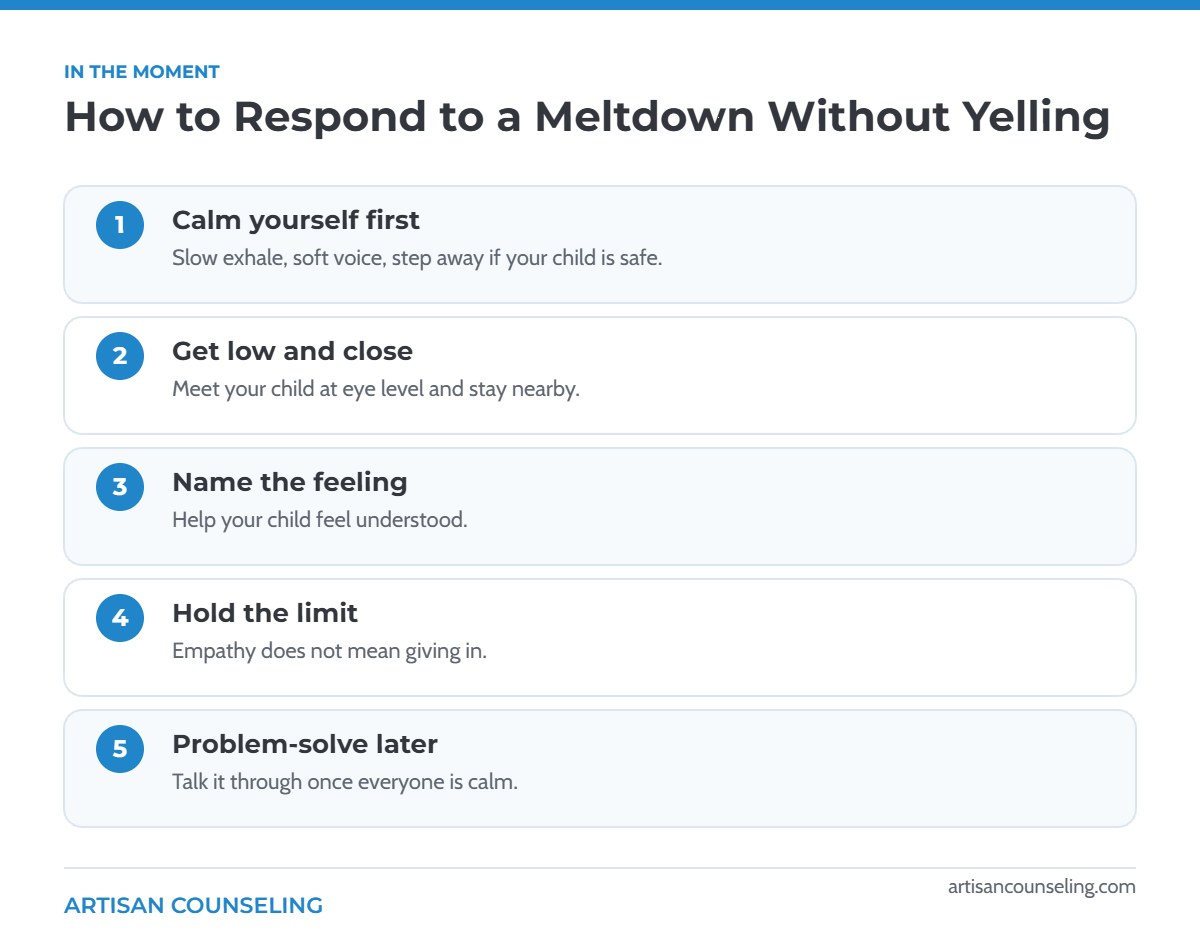
- Calm yourself first. Take a slow breath with a long exhale, unclench your jaw, and lower your voice. If your child is safe, it is okay to step away for a moment.
- Get low and close. Kneel to your child’s level, soften your face, and stay nearby. For older kids and teens, simply being present and quiet helps.
- Name the feeling. “You’re really frustrated that we have to leave the park.” Naming feelings helps kids feel understood and begin to calm down.
- Hold the limit. Empathy does not mean giving in. “It’s okay to be mad. It’s not okay to hit. I won’t let you hit.”
- Wait it out. Fewer words work better. Stay steady until the wave passes.
- Problem-solve later. Once everyone is calm, talk about what happened and what to try next time.
What This Can Look Like in Real Life
For example, your six-year-old throws a toy across the room when you say it is time for bath. Instead of shouting, you take a breath and kneel down. “You’re really mad that playtime is over. I get it. Toys are not for throwing. I’m going to put this one on the shelf.” Your child cries for a few minutes while you stay close and quiet. Once they calm, you head to the bath together. Later, at bedtime, you talk briefly about what they could do next time they feel that mad, like stomping their feet or squeezing a pillow.
It may take longer in the moment than yelling would. But over time, these calmer responses usually lead to shorter, less frequent meltdowns.
Tip: Choose a short phrase to repeat to yourself during hard moments, such as “This is a child having a hard time, not giving me a hard time.” It can create just enough space to respond rather than react.
Preventing Meltdowns Before They Start
You cannot prevent every outburst, but you can reduce how often they happen:
- Protect sleep and snacks. Many meltdowns happen when kids are tired or hungry.
- Give warnings before transitions. “Five more minutes, then we clean up.”
- Offer limited choices. “Red shirt or blue shirt?” gives a sense of control.
- Keep routines predictable. Consistent mornings and bedtimes reduce power struggles.
- Teach calming skills when calm. Practice deep breathing or a cozy calm-down corner before you need it.
- Look after yourself. Rest, support, and breaks make patience easier to find.
Adjusting for Different Ages
Toddlers and Preschoolers
Expect frequent big feelings. Keep words simple, offer comfort, and redirect. Physical closeness often helps most.
School-Age Children
Help them name emotions and come up with their own calming ideas. Use calm moments to talk about what triggers them.
Teens
Teens often need space before they can talk. Avoid lecturing in the heat of the moment. Listen more than you advise, and come back to the issue later. Our article on family counseling for teens covers how outside support can help.
How to Repair After You Yell
Every parent loses their temper sometimes. What matters is what happens next. Repair shows your child that relationships can recover from conflict.
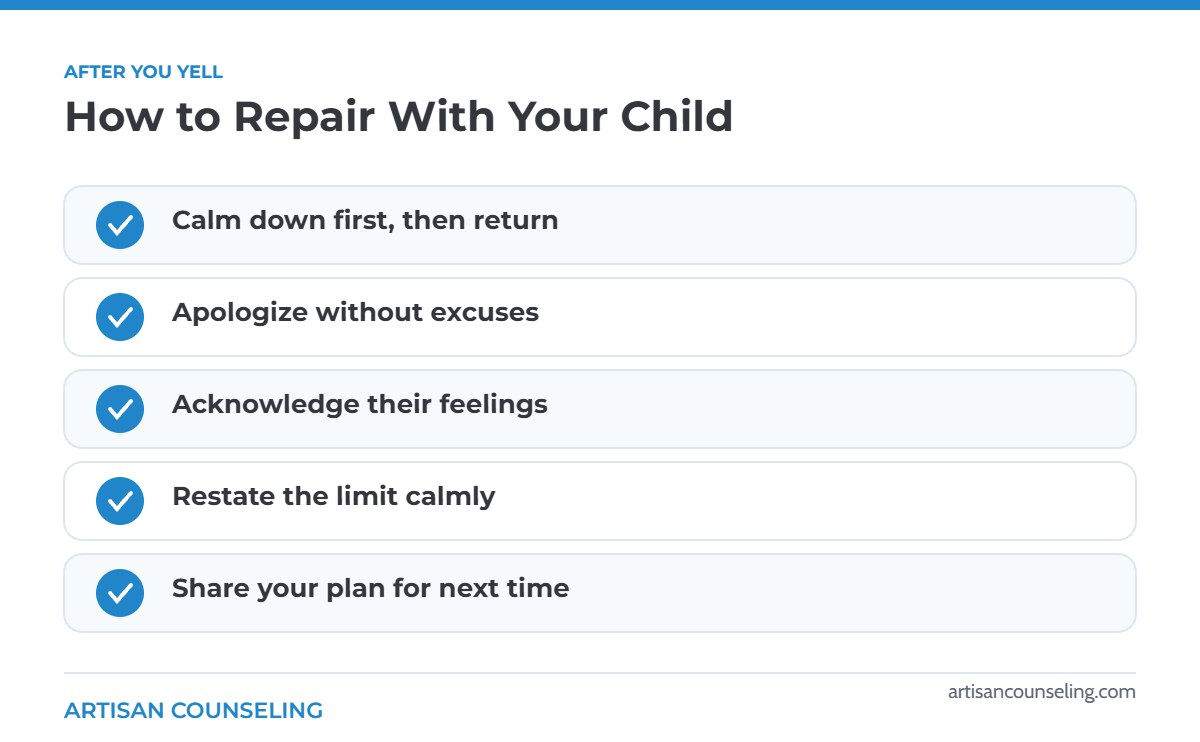
- Calm down first, then return to your child.
- Own your part without excuses: “I’m sorry I yelled. That wasn’t okay.”
- Acknowledge their feelings: “It probably felt scary.”
- Restate the limit calmly if needed.
- Share your plan: “Next time I’m frustrated, I’m going to take a breath first.”
Phrases to Use When You Feel Yourself Escalating
- “I’m getting frustrated. I’m going to take a breath before I talk.”
- “I need a minute. I’ll be right here.”
- “Let’s both calm our bodies, then we’ll figure this out.”
Saying these out loud models exactly the skill you want your child to learn.
When to Seek Extra Support
Consider talking with a professional if your child’s outbursts are very frequent, intense, or dangerous, if they happen in many settings, if your child seems persistently anxious or sad, or if you are often overwhelmed by anger or guilt. In family counseling, you might learn ways to respond to specific triggers, practice calming strategies together, and work on communication so everyone feels heard. Some parents also benefit from individual counseling to manage their own stress or address patterns from their childhood. A pediatrician can rule out physical causes, and a counselor can help the whole family build new skills. Family counseling supports parents and kids together.
Frequently Asked Questions
Is it normal to yell at my kids sometimes?
Yes. Most parents yell at times, especially under stress. What matters most is the overall pattern and whether you repair afterward.
Does validating feelings mean my child gets their way?
No. You can acknowledge a feeling while still holding a firm limit. Validation helps a child calm down, and the limit keeps everyone safe.
At what age can kids calm themselves down?
Self-regulation develops gradually across childhood and adolescence. Young children rely heavily on adults to help them calm down, and even teens still benefit from a steady adult nearby.
Should I use time-outs instead of yelling?
Brief, calm breaks can help some children reset, especially when framed as a chance to calm down rather than a punishment. Many families find a “calm-down corner” that the child can choose helps more than a forced time-out. Whatever you use, a calm tone matters more than the specific technique.
What if my partner and I handle meltdowns differently?
That is common. Talk during a calm time about the approach you both want to try, and agree on a few shared limits. Consistency between caregivers helps children feel secure.
Parenting Support at Artisan Counseling
Parenting is one of the hardest jobs there is, and support can make it lighter. Our counselors help parents and children in Newport News, Suffolk, and online through telehealth. Meet our counselors or reach out to schedule a session.