Key Takeaways
- Survival mode is your nervous system’s protective fight, flight, or freeze response staying switched on after the threat has passed.
- Common signs include constant tension, poor sleep, startling easily, feeling wired but tired, and guilt when resting.
- Chronic stress and trauma are common reasons the nervous system gets stuck.
- Breathing, grounding, movement, routine, and therapy can help your body relearn safety.
You may have heard people talk about being in “survival mode.” The phrase gets used casually to describe a busy week, but for many people it describes something deeper: a body that never seems to fully relax, even when life is calm.
If you feel constantly on edge, exhausted yet unable to rest, or easily overwhelmed by small things, your nervous system may be stuck in a protective state. This is not a personal failing. It is your body trying to keep you safe.
In this article, you will learn what survival mode actually is, how the nervous system gets stuck there, the signs to watch for, and practical steps that help your body settle, along with when professional support can help.
What Is Survival Mode?
Your autonomic nervous system constantly scans for safety and danger. When it senses a threat, it activates the stress response: heart rate rises, muscles tense, digestion slows, and focus narrows. This is often called fight or flight. When a threat feels inescapable, the system may shift into freeze or shutdown instead.
These responses are healthy and lifesaving in short bursts. Once the danger passes, the body is designed to return to a calmer state where rest, digestion, connection, and clear thinking are possible.
How Does the Nervous System Get Stuck?
Problems arise when the stress response is activated so often, or so intensely, that the body stops returning to baseline. Common contributors include:
- Ongoing stress at work, home, or in finances
- Traumatic experiences, recent or from childhood
- Long periods of caregiving or chronic illness
- Unsafe or unpredictable relationships
- Major life transitions with little support
Over time, the nervous system may learn that being on guard is the safest default. Our article on what trauma does to the brain and body explains this process in more depth.
Signs Your Nervous System Is Stuck in Survival Mode
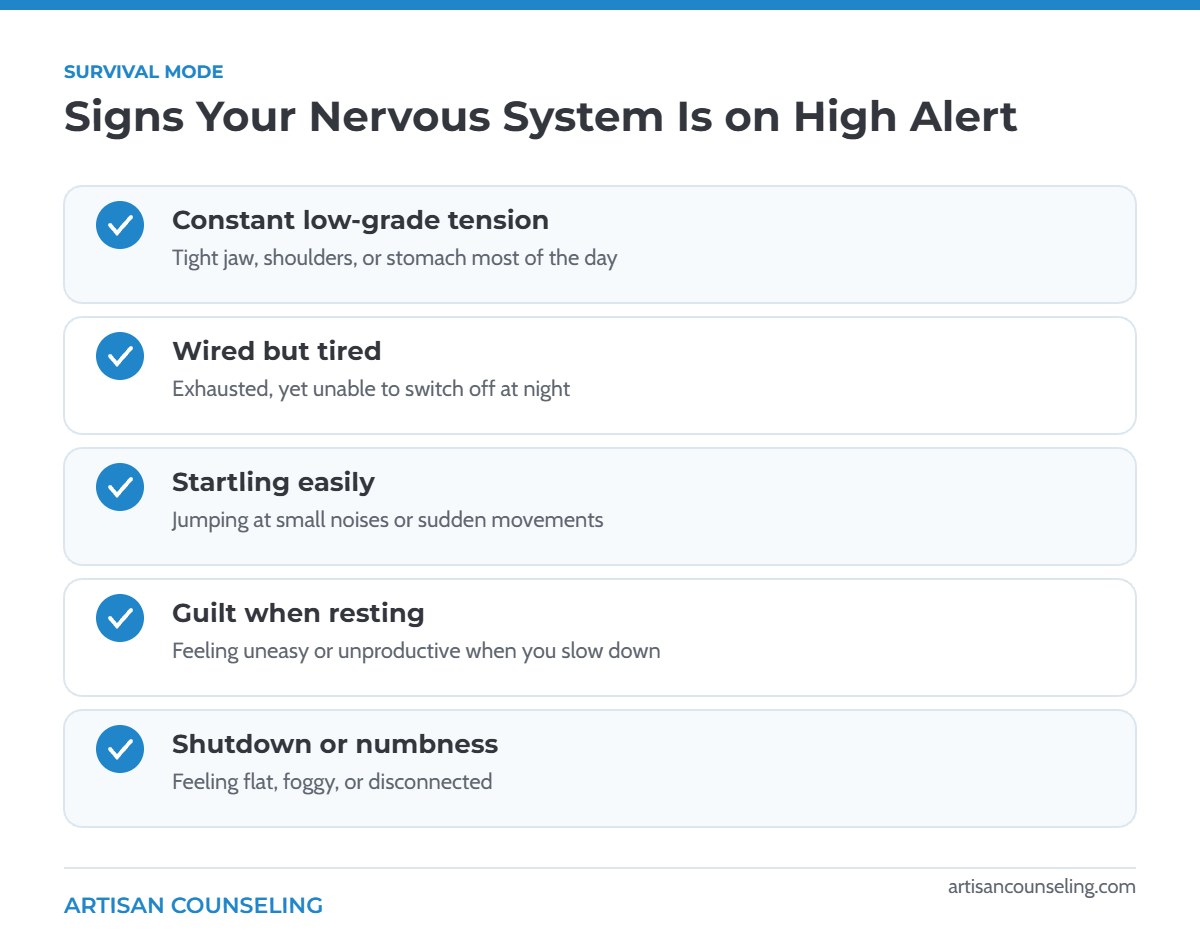
Survival mode can look different for everyone, but many people notice a cluster of physical and emotional signs. Here are the most common ones.
Constant Low-Grade Tension
You may notice a clenched jaw, raised shoulders, a tight stomach, or headaches most days. Your body is braced for something, even when nothing is happening.
Trouble Sleeping
Falling asleep may be hard because your mind races, or you may wake often and feel unrested. A body on alert struggles to let its guard down at night.
Startling Easily
A door closing or a phone buzzing might make you jump. Heightened startle is a classic sign of a nervous system set to detect danger.
Difficulty Resting Without Guilt
Slowing down may feel uncomfortable or even unsafe. You might fill every moment with tasks because stillness brings anxiety.
Feeling Wired and Tired at the Same Time
Many people describe being exhausted but unable to switch off. This mix of fatigue and restlessness is common when stress hormones stay elevated.
Irritability and Overwhelm
Small problems may feel huge, and patience runs short. When your system is already near its limit, there is little room for one more demand.
Numbness, Fog, or Shutdown
Survival mode is not always anxious. Some people feel flat, disconnected, foggy, or unmotivated, which can reflect a freeze response. This can be mistaken for laziness, but it is a protective state.
Digestive and Physical Symptoms
Stomach upset, changes in appetite, and frequent minor illnesses can accompany long-term stress. It is always wise to check physical symptoms with a medical provider, too.
Tip: Try a quick body scan once a day. Notice your jaw, shoulders, hands, and belly. Simply noticing tension, without judging it, is the first step toward releasing it.
Why Survival Mode Is So Exhausting
Staying on alert uses a lot of energy. Over time, chronic stress can affect sleep, mood, concentration, immune function, and relationships. You may feel like you are running on empty, which can make it harder to do the very things that help you recover.
This pattern can overlap with anxiety, depression, and burnout. If you relate to feeling depleted, you may also find our article on feeling emotionally drained all the time helpful.
How to Help Your Nervous System Get Out of Survival Mode
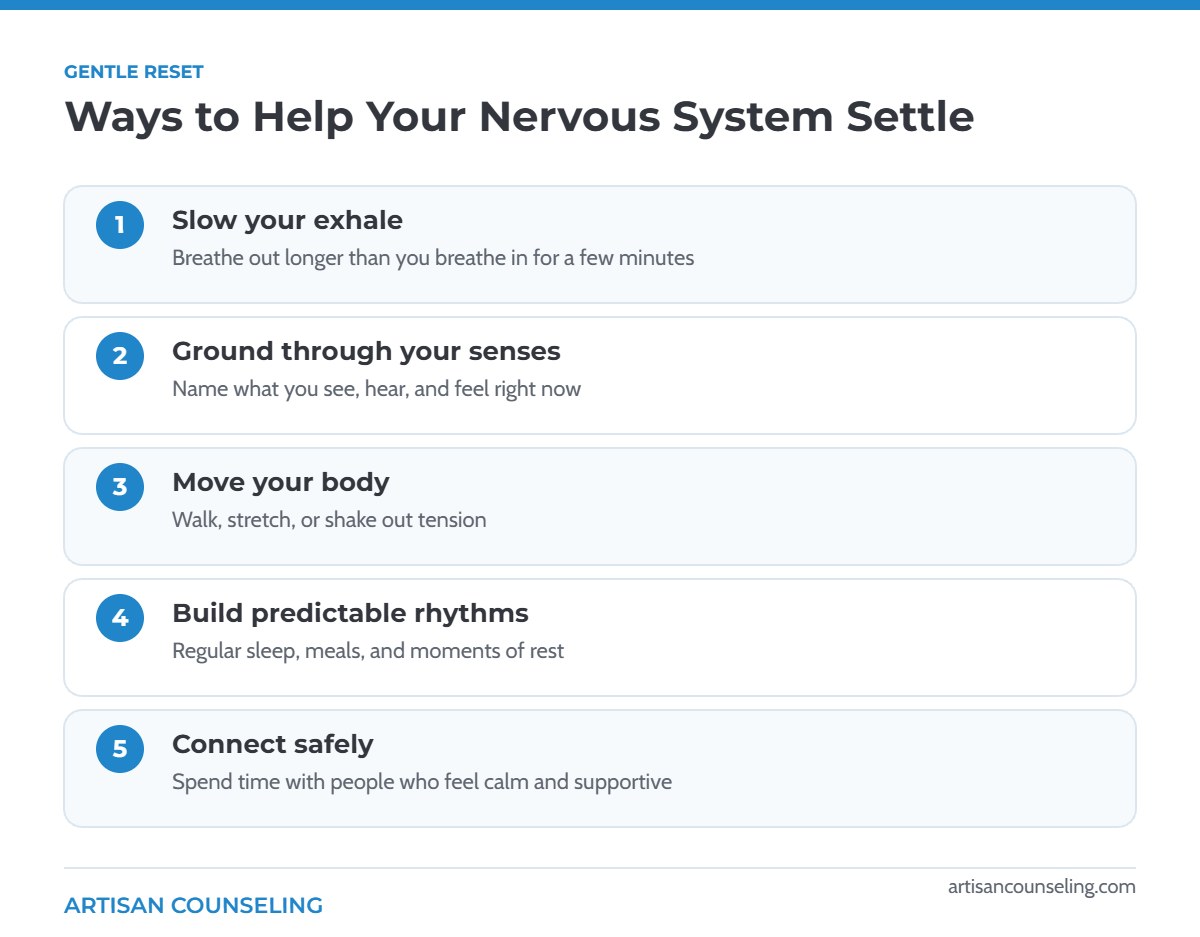
You cannot think your way out of survival mode alone, because it lives in the body. Small, repeated signals of safety help your system recalibrate over time.
Slow Your Breathing
Breathing with a longer exhale than inhale, such as in for four counts and out for six, can activate the body’s calming response. Practice for two to five minutes at a time.
Use Grounding Techniques
Name five things you can see, four you can feel, three you can hear, two you can smell, and one you can taste. Grounding brings attention back to the present moment.
Move Your Body
Walking, stretching, yoga, or shaking out your arms can help discharge stress energy. Gentle, regular movement often works better than intense workouts when you are depleted.
Build Predictable Rhythms
Consistent sleep and wake times, regular meals, and small daily rituals tell your body what to expect, which supports a sense of safety.
Seek Safe Connection
Time with calm, supportive people helps regulate your nervous system. Even a short conversation with someone who feels safe can make a difference.
When Counseling Can Help
If self-care helps only a little, or survival mode is tied to trauma, counseling can address the root causes. Body-aware approaches such as somatic therapy, EMDR, and brainspotting work directly with how stress is held in the body. Talk-based approaches such as CBT help with the thought patterns that keep you on alert.
Consider reaching out if symptoms last for weeks, interfere with work or relationships, or come with panic attacks, persistent low mood, or substance use.
Frequently Asked Questions
How long does it take to get out of survival mode?
It varies. Some people notice changes within weeks of consistent practice, while others, especially with a trauma history, benefit from longer-term support. Progress is often gradual and not perfectly steady.
Can survival mode cause physical symptoms?
Yes. Chronic stress can contribute to muscle tension, headaches, digestive problems, and fatigue. Because physical symptoms have many causes, it is important to check in with a medical provider as well.
Is survival mode the same as anxiety?
They overlap but are not identical. Survival mode describes a prolonged stress response that can include anxiety, shutdown, or both. A licensed clinician can help clarify what you are experiencing.
What is the difference between fight, flight, and freeze?
Fight and flight mobilize energy to confront or escape danger. Freeze is a shutdown response that can feel like numbness or immobility. All three are automatic, protective reactions.
Support for Your Nervous System at Artisan Counseling
You do not have to keep running on high alert. Our licensed counselors use trauma-informed therapy to help your body and mind relearn safety, at a pace that feels manageable.
Meet with one of our counselors in Newport News or Suffolk, or online through telehealth across Virginia. When you are ready, contact us to get started.