Key Takeaways
- Police officers, firefighters, EMTs, paramedics, and dispatchers face repeated exposure to traumatic events that can affect mental health.
- Common challenges include post-traumatic stress, anxiety, depression, sleep problems, substance use, and relationship strain.
- Stigma, confidentiality worries, and demanding schedules often keep first responders from getting help.
- Peer support, trauma-informed counseling, and steady self-care habits can make a real difference.
Police officers, firefighters, EMTs, paramedics, and dispatchers see things most people never encounter in a lifetime. They run toward danger, make split-second decisions, and then often go straight to the next call without time to process what happened.
That kind of repeated exposure adds up. Many first responders handle it well for years, until stress begins to show up in their sleep, mood, health, or relationships. Recognizing these effects early is not a weakness. It is part of staying fit for duty and for life outside the job.
In this article, you will learn the mental health challenges first responders most commonly face, why they so often go unnoticed, the barriers that keep people from getting help, and the practical supports that work.
Why First Responder Work Takes a Toll
First responders encounter what clinicians call critical incidents: serious injuries, deaths, violence, child emergencies, and line-of-duty losses. A single incident can be deeply affecting. For first responders, these events are part of the routine.
On top of that, the job brings shift work, mandatory overtime, high-stakes decision-making, public scrutiny, and the constant possibility of danger. Dispatchers face their own version of this, hearing emergencies unfold without being able to see the outcome. Over time, the nervous system can stay on high alert even during time off.
What Mental Health Challenges Do First Responders Commonly Face?
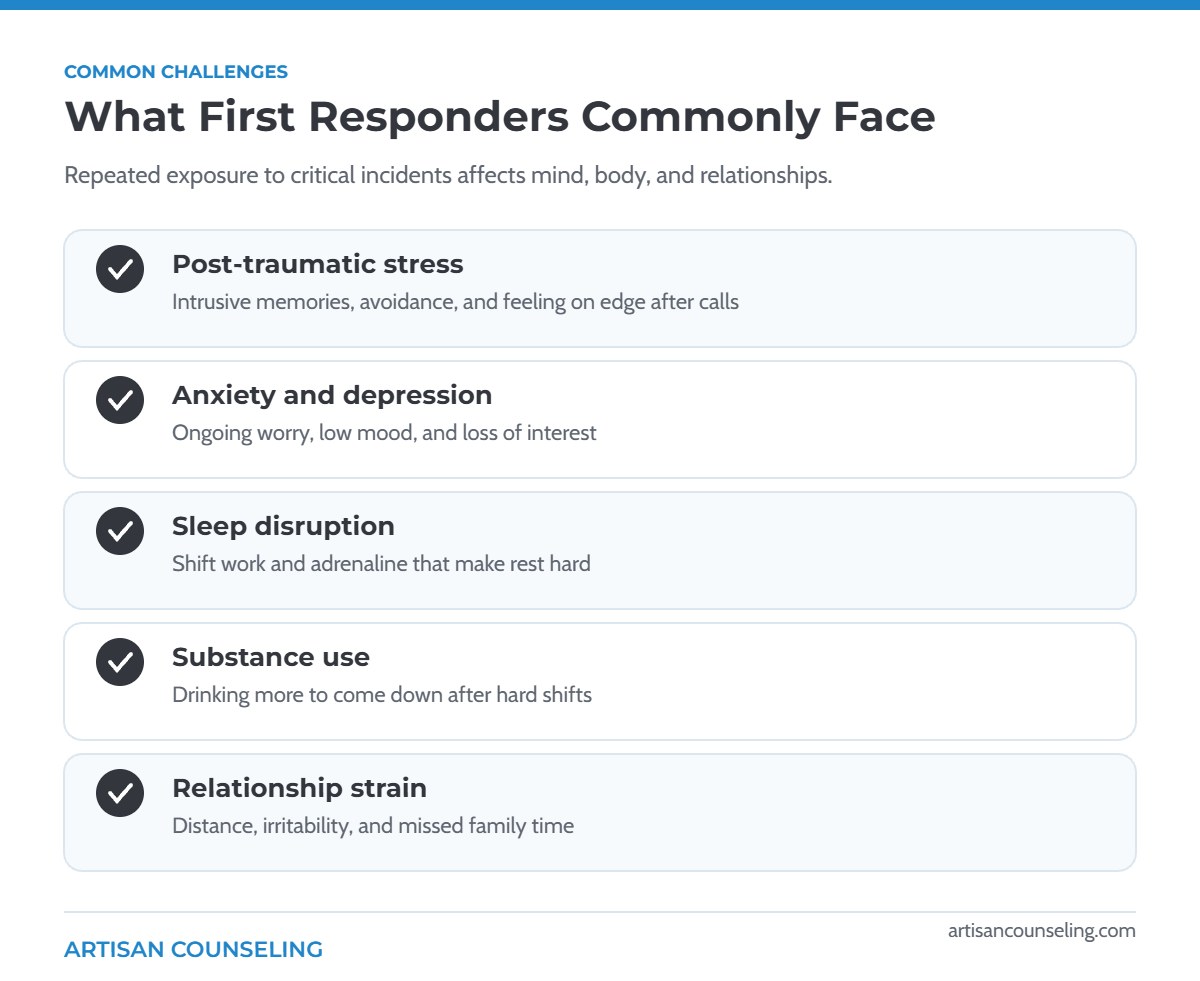
Every person reacts differently, but certain challenges show up often among first responders. The overview below summarizes the most common ones.
Post-Traumatic Stress
Intrusive memories of certain calls, nightmares, avoiding places or reminders, and feeling constantly on edge are all signs of post-traumatic stress. Some people develop full PTSD, while others have a few symptoms that still interfere with daily life. Our guide to what trauma does to the brain and body explains why these reactions happen.
Anxiety
Persistent worry, a racing heart, or a sense of dread can follow you off shift. Hypervigilance that keeps you safe on the job can make it hard to relax at a restaurant or a child’s game.
Depression
Low mood, loss of interest, irritability, fatigue, and feeling disconnected from purpose can develop gradually. Depression in first responders may look more like anger or numbness than sadness.
Substance Use
Alcohol is often part of the culture of decompressing after a hard shift. When drinking becomes the main way to sleep, calm down, or stop thinking about a call, it can quietly turn into a bigger problem.
Sleep Problems
Rotating shifts, overnight calls, and leftover adrenaline disrupt sleep. Poor sleep then worsens mood, concentration, reaction time, and physical health.
Relationship Strain
Missed holidays, emotional distance, and not wanting to bring the job home can leave partners and children feeling shut out. Many first responders protect their families by not talking, which can unintentionally create distance.
Suicide Risk
Accumulated trauma, sleep loss, substance use, and access to means can raise suicide risk. This is a serious concern in the first responder community, and it is one reason early support matters so much.
If you are in crisis: call or text 988 to reach the 988 Suicide & Crisis Lifeline, or call 911 in an emergency. If you are thinking about harming yourself, please reach out now. You do not have to handle this alone.
Why These Challenges Often Go Unnoticed
First responders are trained to stay composed and push feelings aside to get the job done. That skill is essential during a call. Afterward, it can make it hard to notice when stress is building.
Warning signs can also look like normal parts of the job: being tired, a little cynical, short-tempered, or having a few more drinks than usual. Because these changes creep in slowly, family members often notice them before the first responder does.
What Keeps First Responders From Getting Help?
Confidentiality Concerns
Many worry that seeking counseling could affect their job, fitness-for-duty status, or reputation. Licensed counselors are bound by strict confidentiality laws, with limited exceptions such as imminent safety risks, which your counselor will explain at the start.
Stigma
The culture of toughness can make asking for help feel like letting the team down. In reality, addressing stress early helps you stay sharp and effective.
Finding Counselors Who Understand the Culture
It can be frustrating to explain the basics of your job before you can talk about what is really bothering you. Asking a practice about a counselor’s trauma experience is a reasonable first step.
Time
Rotating schedules make weekly appointments tricky. Telehealth counseling can make it easier to fit sessions around shifts.
What Actually Helps First Responders Cope and Heal
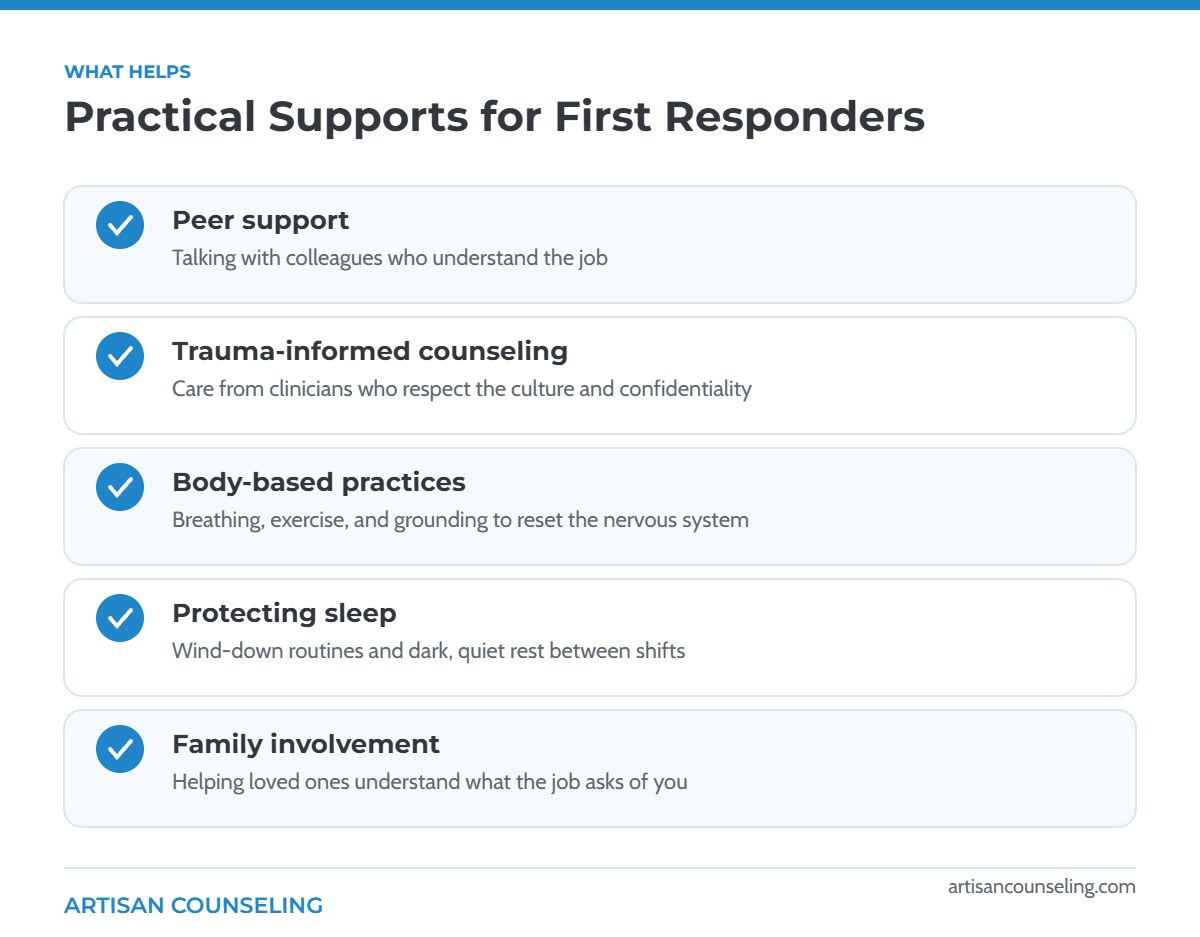
There is no single fix, but a combination of supports tends to work best.
Peer Support
Talking with colleagues who have been there can reduce isolation and normalize reactions to difficult calls.
Trauma-Informed Counseling
Approaches such as EMDR, CBT, and brainspotting can help process difficult incidents so they lose some of their charge. Learn about our trauma-informed therapy approach.
Body-Based Practices
Regular exercise, slow breathing, and grounding techniques help bring the nervous system back down after a call.
Protecting Sleep
Blackout curtains, a consistent wind-down routine, and limiting caffeine late in a shift can improve rest even with irregular hours.
Reducing Alcohol
Cutting back on drinking often improves sleep and mood within weeks, and it makes other coping tools work better.
Family Involvement
Helping loved ones understand the job, without sharing graphic details, can rebuild connection. Couples or family counseling can support that process.
Tip: Try a short “transition ritual” between work and home, such as a few minutes of quiet in the car, a shower, or a walk. It signals to your body that the shift is over.
Frequently Asked Questions
Is counseling confidential for first responders?
Yes. Licensed counselors follow strict confidentiality laws and professional ethics. Limited exceptions exist, such as an immediate risk of harm, and your counselor will review these with you before you begin.
What are the signs of burnout in first responders?
Exhaustion, cynicism, feeling detached from the work, and a drop in effectiveness are common signs. Burnout can overlap with depression, so it helps to talk with a professional. Our article on burnout vs. depression explains the difference.
Can one bad call cause PTSD?
It can. A single severe incident may lead to PTSD, and repeated exposure over time can also build up. If symptoms last more than a month, it is worth getting an evaluation.
How can I support a first responder in my family?
Offer steady, low-pressure connection, learn about stress reactions, and encourage professional support without forcing conversations. Taking care of your own well-being matters, too.
Confidential Support for First Responders at Artisan Counseling
You spend your career helping others. You deserve the same care. Our licensed counselors offer individual counseling grounded in trauma-informed approaches, at a pace that respects your experience.
Sessions are available at our Newport News office, our Suffolk office, or by telehealth across Virginia. Reach out to our team to find a time that works with your schedule.