
Key Takeaways
- Art therapy uses the same core idea for all ages: creative expression helps you communicate and process what is hard to say.
- With children, art therapy often looks like guided play, builds emotional vocabulary, and involves parents in the process.
- With adults, it often helps quiet the inner critic, bypass overthinking, and access emotions linked to stress, grief, or trauma.
- A trained counselor adapts materials, prompts, and pacing to each person’s developmental stage and goals.
Art therapy is sometimes thought of as a children’s approach, and adults may wonder whether it would feel silly for them. Parents, on the other hand, often wonder what their child is actually doing in a session that looks a lot like drawing.
The truth is that art therapy helps both children and adults, but it looks and feels different depending on age. The materials might be similar, while the goals, prompts, and conversations are tailored to where each person is developmentally.
In this article, you will learn how art therapy works for adults, how it works for children, what parents should know, where the two overlap, and how to find the right counselor.
How Does Art Therapy Work for Adults?
Adults often come to art therapy because talking alone has not helped them get unstuck. Many have spent years explaining, analyzing, and rationalizing their feelings. Art offers a different route that does not depend on finding the perfect words.
Why It Can Be Effective for Adults
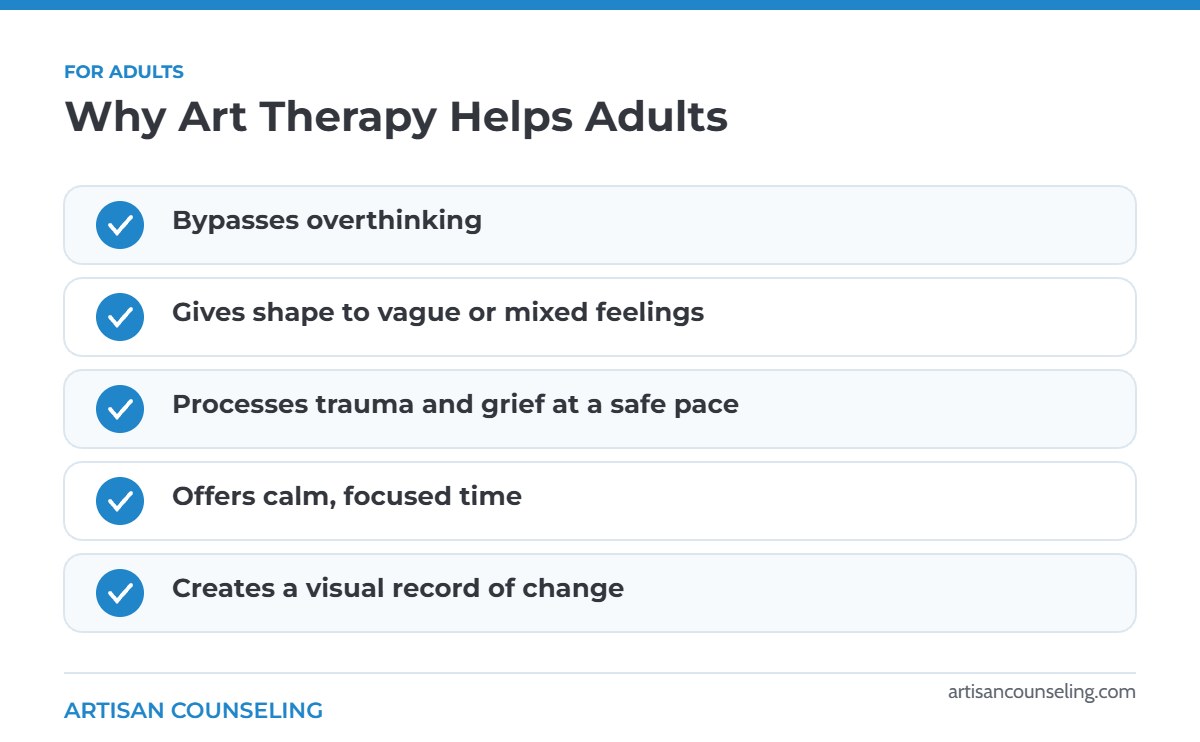
- It bypasses overthinking and intellectualizing.
- It gives shape to feelings that are vague or mixed.
- It can help process trauma or grief at a manageable pace.
- It offers calm, focused time that soothes stress.
- It creates a visual record of change over time.
Working With the Inner Critic
The biggest hurdle for many adults is the voice that says, “I cannot draw,” or “This looks childish.” A counselor helps you notice that judgment without obeying it. Often, that inner critic shows up in other areas of life too, so working with it in art therapy can carry over to self-esteem and perfectionism. If that sounds familiar, do you need art skills for art therapy? may reassure you.
What an Adult Session Might Look Like
For example, an adult dealing with burnout might be invited to draw what their stress feels like, using only colors and shapes. They might create a tangle of dark lines with one small blue circle in the corner. In the conversation that follows, they notice the blue circle stands for the few quiet minutes they get each morning, and that they want more of that in their life. The drawing becomes a starting point for practical changes.
Other common adult activities include collage, painting, working with clay, and creating images of a “safe place” to return to when anxiety rises. Your counselor will explain the purpose of each activity, and you can always say no to a prompt that does not feel right.
How Does Art Therapy Work for Children?
Children naturally communicate through play and creativity long before they can explain complex feelings. Art therapy meets them in that language.
Why It Works for Kids
- It feels natural and less intimidating than sitting and talking.
- It helps children name and express emotions they do not have words for yet.
- It offers a safe way to show worries, conflicts, or frightening experiences.
- It builds confidence, focus, and problem-solving skills.
- It gives children a sense of choice and control.
Developmental Considerations
Counselors adjust activities for age. Younger children may work with clay, finger paint, or simple drawing prompts, while older children and teens might create comics, collages, or more symbolic pieces. Sessions are often shorter and more playful, and counselors pay close attention to what the child does, not only what they say.
What a Child Session Might Look Like
Imagine a seven-year-old who has started having stomachaches before school. In session, the counselor might invite them to make a “worry monster” out of clay. As the child shapes the monster, they might share that it shows up when they think about a classmate who teases them. The counselor can then help the child create a “brave helper” to stand up to the monster, giving them a concrete way to talk about and cope with the worry.
For teens, sessions may feel closer to adult work. A teenager might create a mask showing what others see on the outside and what they feel on the inside, which can open up conversations about identity, pressure, and fitting in.
For parents: Try not to ask “What is it?” or judge how a drawing looks. Instead, say something like, “Tell me about your picture.” This invites your child to share in their own way.
What Should Parents Know About Child Art Therapy?
Parents play an important role. A counselor will usually meet with you to understand your concerns and goals, and will share general themes and progress while protecting the trust your child needs to open up.
You may be asked to support new coping skills at home or join some sessions. When challenges involve the whole household, family counseling can be a helpful complement. Our article on family counseling for teens explains how that can work with older kids.
Signs Your Child Might Benefit From Art Therapy
Every child goes through hard phases, but it may help to talk with a counselor if you notice:
- Frequent meltdowns, anger, or tears that seem bigger than the situation
- Withdrawal from friends, family, or activities they used to enjoy
- Regression, such as bedwetting or baby talk, after a stressful change
- New fears, nightmares, or physical complaints without a medical cause
- Difficulty adjusting to a divorce, move, new sibling, or loss
Before your child’s first session, keep the explanation simple and positive: “You’re going to meet someone whose job is to help kids with big feelings. You’ll get to draw and play while you talk.”
How Do Adult and Child Art Therapy Compare?
| Aspect | Children | Adults |
|---|---|---|
| Main purpose | Express feelings and build emotional language | Bypass overthinking and access deeper feelings |
| Session style | Playful, often shorter, more directive | Reflective, often more open-ended |
| Common challenge | Limited words for feelings | Self-judgment and the inner critic |
| Family role | Parents are usually involved | Individual work, family optional |
Where Do the Approaches Overlap?
Whatever your age, art therapy shares the same foundations:
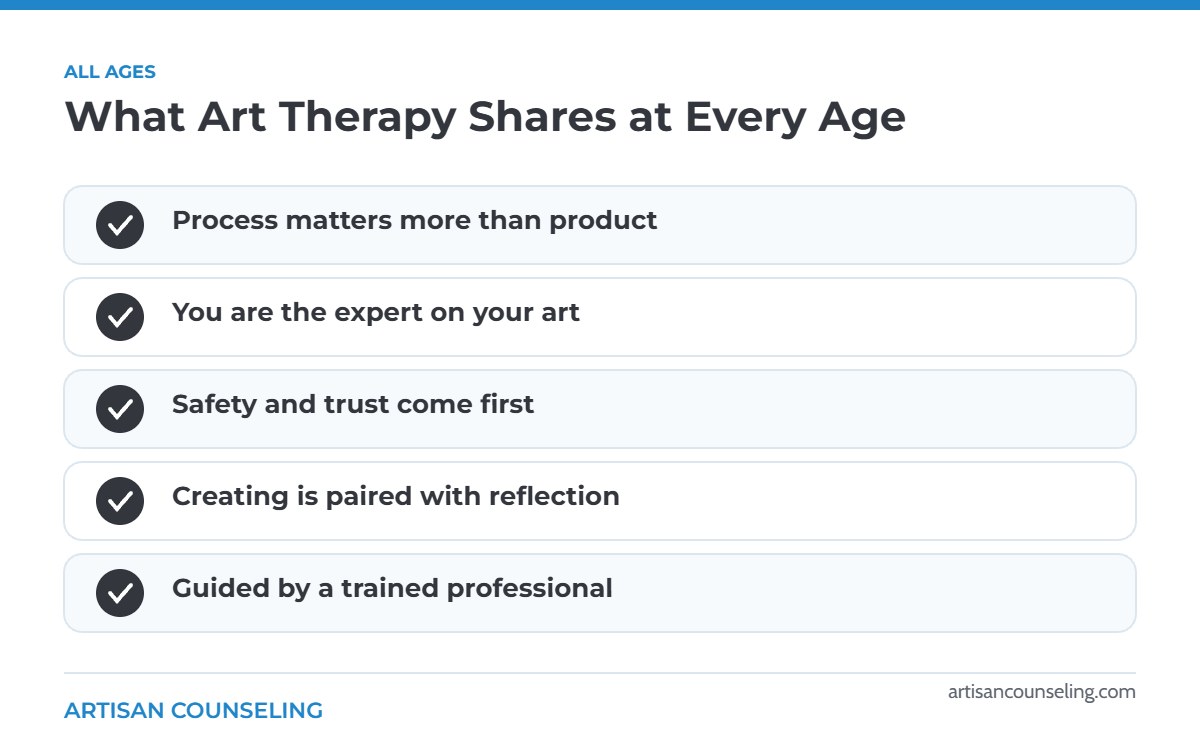
- The process matters more than the final product.
- You are the expert on what your art means.
- Safety and trust come first.
- Creative work is paired with reflection and conversation.
- Sessions are guided by a trained professional with clear goals.
To understand the approach as a whole, read what art therapy is and how it works. If trauma is part of the picture, art therapy for trauma explains how it is adapted for safety.
Signs an Adult Might Benefit From Art Therapy
You do not need to be in crisis to try art therapy. Adults often find it helpful when:
- You know something is wrong but struggle to put it into words
- You tend to intellectualize your feelings in talk therapy
- You are carrying grief, trauma, or a painful memory that feels too big to say out loud
- Perfectionism or a harsh inner critic is holding you back
- You want a calming, hands-on way to manage stress
Art therapy can be used on its own or combined with other approaches in individual counseling, depending on your goals.
How Do You Find a Qualified Art Therapy Counselor?
Look for a licensed mental health professional with specific training in art-based approaches. Ask about their experience with your age group, how they involve parents (for children), and how they handle difficult emotions that come up. A good fit should feel warm, patient, and respectful of your pace.
Frequently Asked Questions
At what age can a child start art therapy?
Art therapy can be adapted for young children, often from preschool age, as well as older children and teens. A counselor will tailor activities to your child’s developmental stage.
Is art therapy effective for adults?
Yes. Many adults find art therapy helpful for stress, trauma, grief, anxiety, and self-esteem, especially when talking alone has not led to change.
Will I see my child’s artwork?
Practices vary. Counselors often discuss with the child what they are comfortable sharing, and share general themes with parents while protecting the child’s trust.
Do adults need art supplies or experience?
No experience is needed, and supplies are provided for in-person sessions. For telehealth, simple materials like paper and markers are usually enough.
Can parents and children do art therapy together?
Yes. Some sessions may include a parent and child creating art side by side or working on a shared piece. This can strengthen connection and help families practice communicating about feelings in a lower-pressure way.
Art Therapy for All Ages at Artisan Counseling
Our counselors provide art therapy for children, teens, and adults. Learn about our counselors to find someone experienced with your age group, then contact us to schedule. We see clients in Newport News and Suffolk, Virginia.