Key Takeaways
- You do not need to be in crisis to benefit from individual counseling.
- Common signs include lasting stress or sadness, repetitive thought loops, strained relationships, and trouble coping with change.
- If self-help efforts are not making a difference, a counselor can offer new tools and perspective.
- Changes in sleep, appetite, energy, or substance use are worth paying attention to.
- Thoughts of self-harm or suicide call for immediate support: call or text 988.
Many people wonder whether their struggles are “bad enough” for counseling. You might tell yourself that others have it worse, or that you should be able to handle things on your own. Meanwhile, the stress, worry, or sadness keeps showing up.
Individual counseling is not only for emergencies. It is a place to understand yourself, build skills, and feel less alone. In this article, you will learn the most common signs that individual counseling could help, what it can address, what to expect, and when to seek support right away.
What Is Individual Counseling?
Individual counseling is one-on-one work with a licensed counselor. Together, you explore your thoughts, feelings, and patterns, and you build practical strategies for change. Sessions are confidential, within legal limits, and focused entirely on you.
Counselors use evidence-based approaches such as CBT, DBT, EMDR, and others, tailored to your goals.
Signs You Might Benefit From Individual Counseling
There is no checklist that decides for you, but these signs are a good reason to consider talking with a professional.
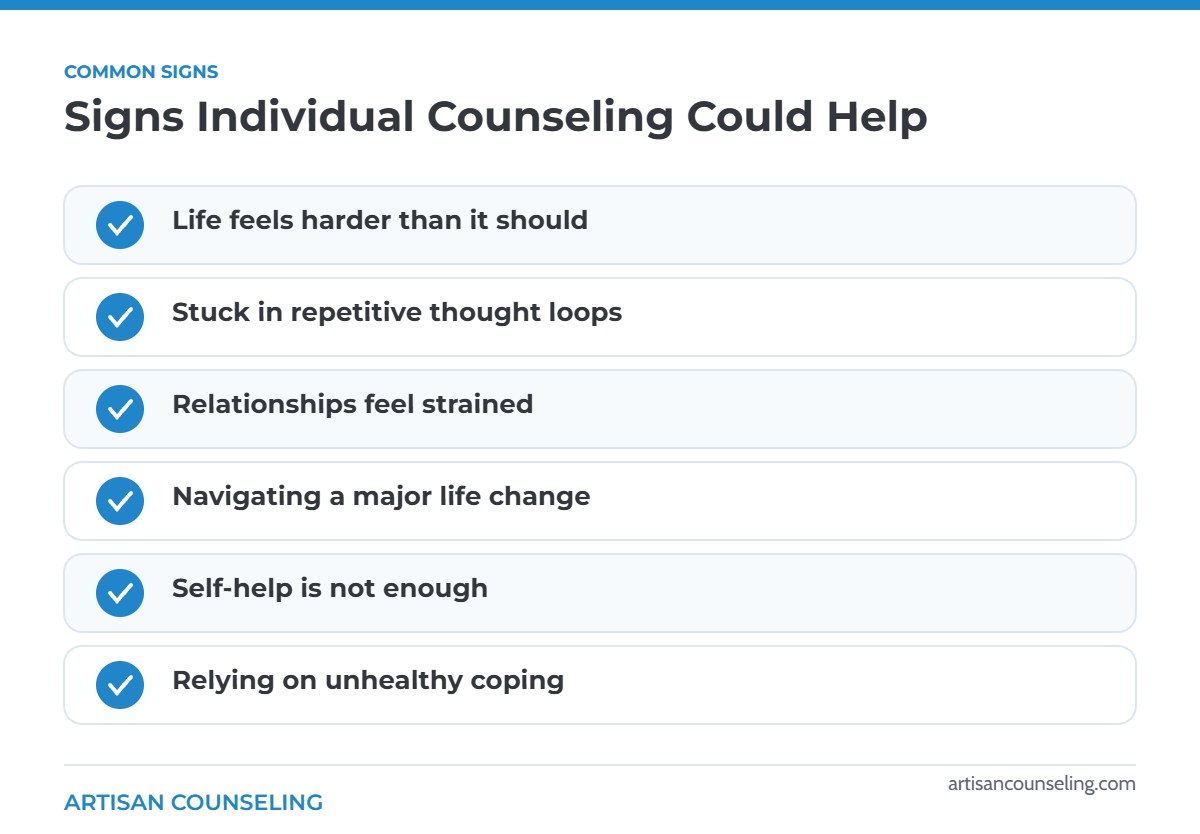
Life Feels Harder Than It Should
Everyday tasks feel heavier than they used to. You feel overwhelmed, irritable, or numb more days than not, and it has lasted for weeks. You may also feel constantly tired, a pattern we explore in why you might feel emotionally drained all the time.
For example, you might notice that tasks you once handled easily, like answering email or making dinner, now feel exhausting. You get through the day, but by evening you have nothing left, and weekends no longer feel restful.
You Are Stuck in Repetitive Thought Loops
You replay conversations, worry about worst-case scenarios, or criticize yourself harshly and cannot turn it off. Counseling can help you notice these patterns and respond to them differently. Our article on why negative thoughts keep repeating explains more.
Notice, too, whether you are stuck in the same mental replays at night, going over conversations or worrying about what might happen. A counselor can help you learn to step out of those loops instead of arguing with them.
Your Relationships Feel Strained
You argue more, pull away from people you care about, or notice the same painful dynamics in different relationships. Individual work can help you understand your part and communicate more effectively.
This might look like the same argument with your partner every week, pulling away from friends, or feeling irritable with coworkers in ways that surprise you. Counseling can help you see what you bring to these patterns and what you might do differently.
You Are Navigating a Major Life Transition
A new job, a move, a breakup, becoming a parent, retirement, a diagnosis, or a loss can shake your sense of stability, even when the change is positive.
You Have Tried to Handle It Alone
Maybe you have read books, exercised, journaled, or talked with friends, and it helped a little but not enough. That does not mean you failed. It may mean you would benefit from more structured support.
Many people wait until they feel completely overwhelmed. If you have read the books, tried the apps, and talked to friends, yet still feel stuck, that is not a failure. It may simply mean you would benefit from a trained, objective person in your corner.
Your Body Is Sending Signals
Changes in sleep, appetite, energy, headaches, stomach issues, or muscle tension can be linked to stress, anxiety, or depression. It is wise to check with a medical provider too, since physical causes should be ruled out.
You Are Relying on Unhealthy Coping
Drinking more, using substances, overworking, overspending, or scrolling for hours to avoid feelings can be signs that something needs attention.
What Can Individual Counseling Help With?
Individual counseling can address a wide range of concerns, including:
- Anxiety, panic, and constant worry, including high-functioning anxiety
- Depression and low mood
- Trauma and PTSD
- Grief and loss
- Low self-esteem and self-criticism
- Stress, burnout, and work-life balance
- Relationship patterns and boundaries
- Life transitions and identity questions
Tip: You do not need a clear diagnosis or a perfect explanation to start. “I just don’t feel like myself” is a valid reason to reach out.
A Simple Self-Check
If you are on the fence, these questions can help you sort out what you are feeling:
- Has this been going on for more than a few weeks?
- Is it affecting my sleep, work, relationships, or health?
- Do I find myself thinking about it most days?
- Have the people around me noticed a change?
- Would I want a friend in my situation to get support?
If you answered yes to two or more, talking with a counselor is a reasonable next step.
What If You Are Not Sure It Is Serious Enough?
Counseling works well as prevention, not just treatment. Addressing stress early can keep it from growing into something harder to manage. Think of it like a checkup: you do not have to wait until something breaks.
A first session can also help you decide. A counselor can talk through what you are experiencing and suggest whether ongoing counseling, a different type of support, or a few sessions would be most helpful.
Think of counseling the way you might think of a physical checkup. You do not have to be seriously ill to benefit from one. Many people come to counseling simply to understand themselves better, make a decision, or build skills before small problems become bigger ones.
What Does Individual Counseling Look Like?
Most people start with weekly sessions of about 50 to 60 minutes, either in person or by video. The first session focuses on getting to know you and setting goals. You can read more in what happens in your first counseling session.
Over time, sessions shift toward understanding patterns, practicing new skills, and tracking progress.
How Do You Take the First Step?
Reaching out is often the hardest part. A few practical steps can make it easier:
- Write down what is bothering you. A few notes help you explain it when you call or meet.
- Check your insurance. Artisan Counseling accepts most major insurance plans, and you can review insurance and payment information ahead of time.
- Decide between in-person and online. Sessions are available in Newport News and Suffolk, or by telehealth across Virginia.
- Ask questions. It is fine to ask about a counselor’s approach and experience before you begin.
You might say something as simple as, “I have been feeling overwhelmed for a while, and I would like to talk with someone.” That is enough to get started.
When Should You Seek Help Right Away?
Some situations need immediate support rather than waiting for a regular appointment:
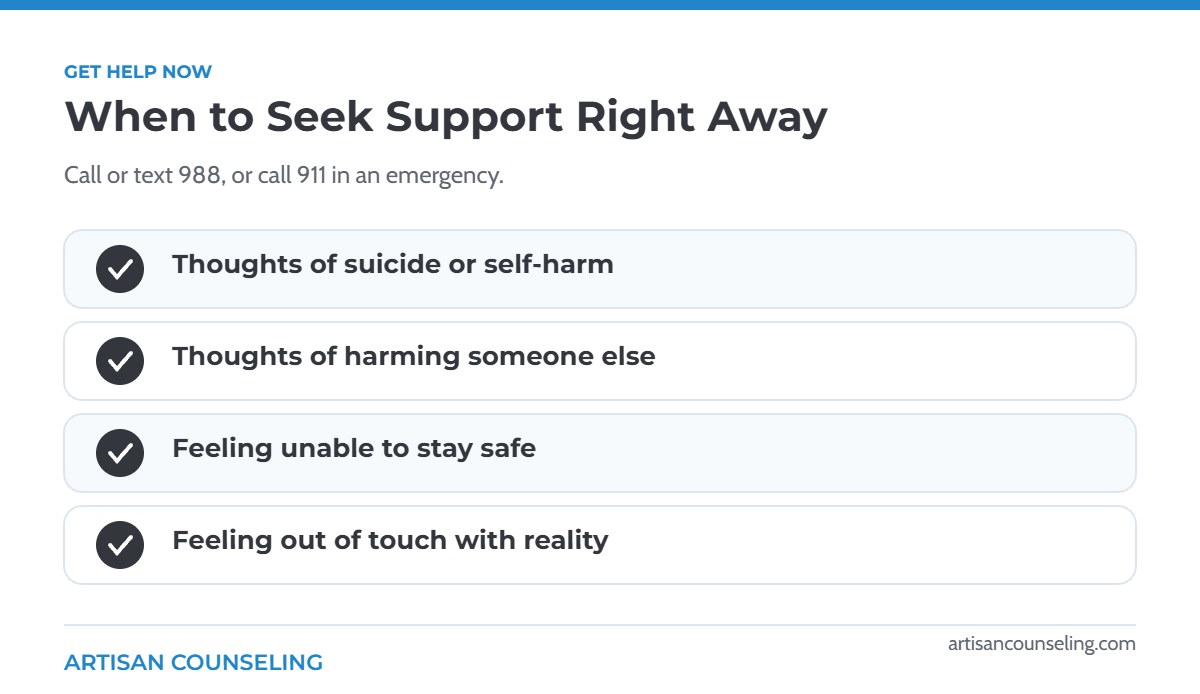
- Thoughts of suicide or self-harm
- Thoughts of harming someone else
- Feeling unable to keep yourself safe
- Hearing or seeing things others do not, or feeling out of touch with reality
If you are in crisis: call or text 988 to reach the 988 Suicide & Crisis Lifeline any time, day or night, or call 911 in an emergency.
Frequently Asked Questions
How do I know if I need therapy or just need to vent?
Venting to friends can help in the moment. If the same feelings keep returning, affect your daily life, or friends feel overwhelmed by supporting you, a counselor can offer skills and perspective that go beyond venting.
Can I go to counseling if nothing is “wrong”?
Yes. Many people use counseling for personal growth, self-understanding, or support during a busy season of life. You do not need a crisis to benefit.
Is individual counseling covered by insurance?
Many insurance plans cover individual counseling for mental health concerns. Coverage varies, so check your plan and ask about copays and deductibles.
How long will I need individual counseling?
It depends on your goals. Some people attend for a few months, while others benefit from longer-term work. Your counselor will review progress with you regularly.
What if I try counseling and it does not feel helpful?
It can take a few sessions to feel comfortable, so give it some time. If it still does not feel right, tell your counselor. You can adjust goals or approach, or ask to work with a different counselor who may be a better fit.
Is it a sign of weakness to need counseling?
Not at all. Seeking counseling takes self-awareness and courage. Just as you would see a doctor for a lingering physical problem, talking with a counselor is a practical way to take care of your mental and emotional health.
Individual Counseling at Artisan Counseling
If you see yourself in any of these signs, support is available. Learn more about individual counseling, read how to choose the right therapist for you, or contact us to schedule. We see clients in Newport News, Suffolk, and by telehealth across Virginia.