
Key Takeaways
- The first counseling session is mostly about getting to know you, your concerns, and your goals.
- Expect questions about what brought you in, your history, your health, and your support system.
- You will review paperwork, confidentiality, and its limits, often before or at the start of the session.
- You only share what you feel ready to share; trust builds over time.
- It is normal to feel relieved, tired, or emotional afterward.
Booking a first counseling appointment takes courage. Then the nerves can kick in: What will they ask? Do I have to talk about everything right away? What if I do not know what to say?
Knowing what to expect can make that first step much easier. In this article, you will learn what the first session is for, the questions you might be asked, the paperwork involved, how long it lasts, how you might feel afterward, and how to prepare.
What Is the First Counseling Session For?
The first session, often called an intake or assessment, is a chance for your counselor to understand your situation and for you to get a feel for working with them. It is less about solving problems and more about laying the groundwork.
By the end, you and your counselor will usually have a basic picture of what you want to work on and a rough plan for next steps.
What Questions Will a Counselor Ask in the First Session?
You do not need to prepare perfect answers. Your counselor will guide the conversation. Common topics include:
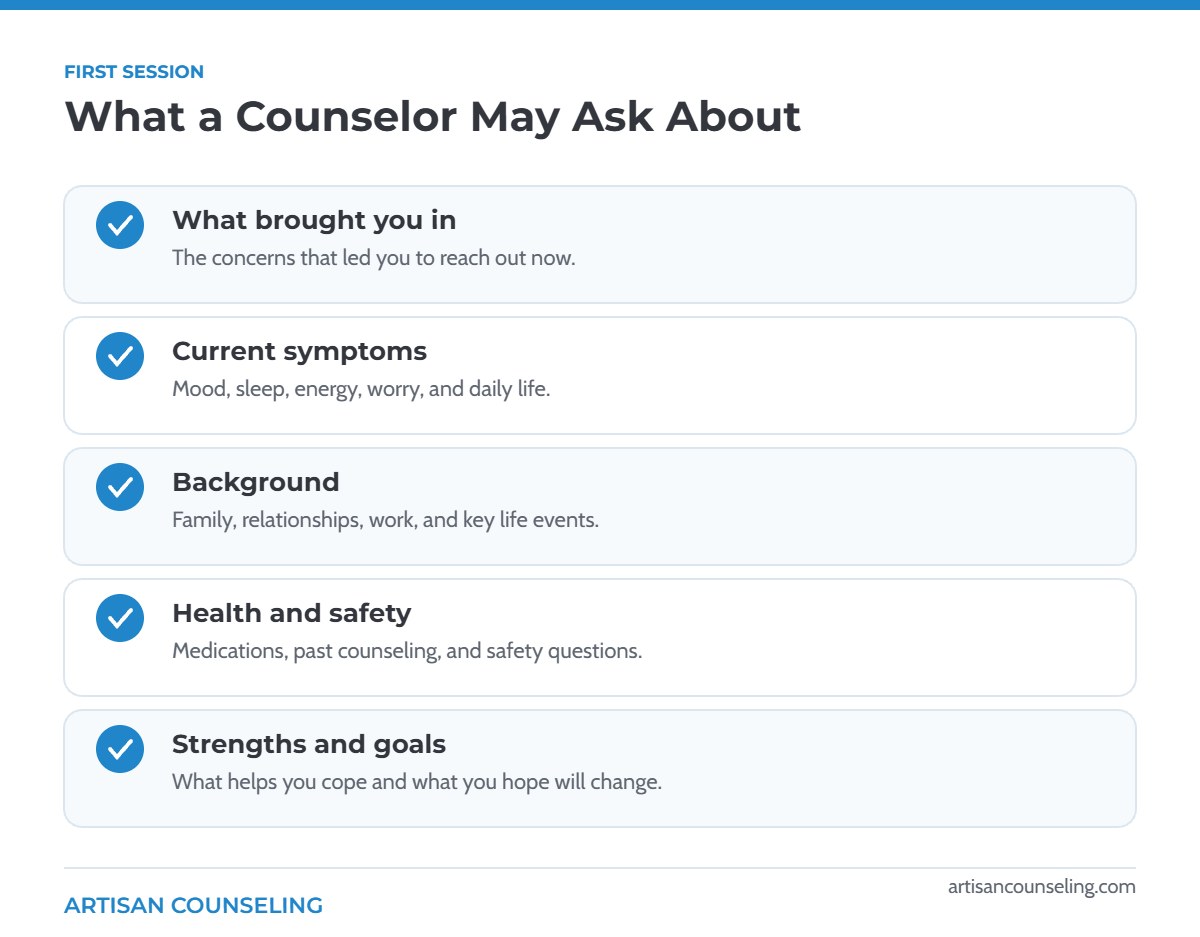
- What brought you in now: the concerns that led you to reach out.
- Current symptoms: mood, sleep, appetite, energy, worry, and how daily life is affected.
- Background: family, relationships, work or school, and important life events.
- Health: physical health, medications, substance use, and past counseling.
- Safety: questions about thoughts of self-harm or harming others, which counselors ask everyone.
- Strengths and goals: what helps you cope and what you hope will change.
If a question feels too personal right now, you can say so. A good counselor will respect your pace.
What Paperwork and Logistics Should You Expect?
Most practices send intake forms before your appointment. These usually include contact and insurance details, a health history, and consent forms.
Confidentiality and Its Limits
Your counselor will explain that what you share is confidential, with a few legal exceptions. These typically include a serious risk of harm to yourself or others, suspected abuse of a child or vulnerable adult, and certain court orders. Ask questions if anything is unclear.
Insurance and Payment
You may review copays, cancellation policies, and how billing works. Having your insurance card handy helps.
How Long Is a First Counseling Session?
First sessions are often 50 to 60 minutes, and some practices schedule a slightly longer intake. Ongoing sessions are usually around 50 minutes. If you are attending by video, plan to log in a few minutes early. See our guide to in-person vs. telehealth counseling if you are deciding between formats.
How Can You Prepare for Your First Appointment?
You do not need to prepare much, but a few small steps can help you feel more confident.
- Complete intake forms ahead of time so the session can focus on you.
- Jot down two or three things you want the counselor to know.
- Write down any questions about the counselor’s approach, scheduling, or fees.
- Bring a list of current medications if relevant.
- For telehealth, find a private space and test your connection.
Tip: It is okay to start with “I’m not sure where to begin.” Counselors hear this often, and it is a perfectly good opening line.
How Might You Feel After the First Session?
People leave their first session feeling many different things. Some feel lighter and hopeful. Others feel drained, raw, or unsure. All of these reactions are normal.
Talking about hard things can stir up emotions for a day or two. Plan something gentle afterward if you can, like a walk, a quiet meal, or rest.
If you are in crisis: call or text 988 to reach the 988 Suicide & Crisis Lifeline any time, day or night, or call 911 in an emergency.
How Do You Know If the Counselor Is a Good Fit?
After the first session, ask yourself a few questions:
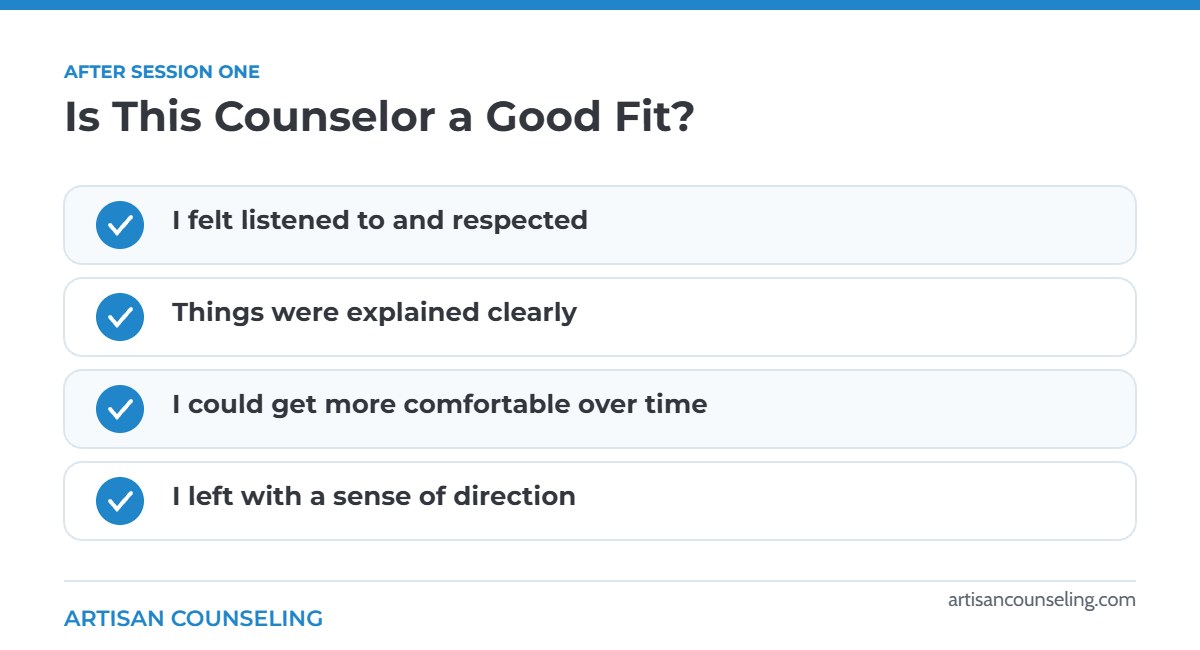
- Did I feel listened to and respected?
- Did the counselor explain things clearly?
- Do I feel I could become more comfortable over time?
- Did I leave with at least a small sense of direction?
It can take a few sessions to know for sure. If it does not feel right, it is okay to try someone else. Our article on how to choose the right therapist walks through what to look for.
What Happens After the First Session?
Usually, you will schedule regular sessions, often weekly to start. Over the next few meetings, you and your counselor will refine goals and begin the active work. To get a sense of the bigger picture, read how long counseling usually takes.
Frequently Asked Questions
Do I have to talk about my trauma in the first session?
No. You can share as much or as little as you are ready to. Counselors often focus on safety and stability first, and you can let them know if a topic feels like too much right now.
What should I say in my first therapy session?
Start with what is bothering you most and what you hope will change. If you are not sure, tell the counselor that. They will ask questions to help guide the conversation.
Is it normal to cry in the first session?
Yes. Crying is very common and completely okay. Counselors are used to it, and tissues are usually close by.
Can I bring someone with me to my first session?
For individual counseling, the session is usually just you and your counselor, but you can ask about having someone join for part of it. For couples or family counseling, the relevant people attend together.
Taking the First Step With Artisan Counseling
Our counselors know that first appointments can feel nerve-racking, and we aim to make yours welcoming and unhurried. Learn about individual counseling, meet our counselors, or contact us to book your first session in Newport News, Suffolk, or by telehealth.