
Key Takeaways
- Art therapy sessions usually follow a simple flow: a check-in, time to create, and a conversation about what you made.
- You do not need any artistic talent. The focus is on expression and the process, not the finished product.
- Sessions are led by trained mental health professionals who use art as part of counseling.
- Art therapy can support people working through stress, anxiety, grief, trauma, and big life changes.
If you are curious about art therapy but unsure what actually happens in the room, it is natural to feel a little hesitant. Many people picture an art class, or they worry they will be asked to explain a drawing they do not understand.
In reality, art therapy is a form of counseling that uses creative activities to help you explore thoughts and feelings that can be hard to put into words. It is gentle, flexible, and guided by your counselor at your pace.
This article walks you through what happens in an art therapy session, step by step. You will learn how a typical session flows, what materials you might use, what art therapy can help with, who leads the work, and how to prepare for your first visit.
Do You Need to Be an Artist for Art Therapy?
No. This is the most common worry, and the answer is a clear no. Art therapy is not about making something beautiful or “good.” Stick figures, scribbles, and simple shapes are all welcome.
What matters is the process: the colors you reach for, the way you use the space, and what comes up for you while you create. If this concern is holding you back, our article on whether you need art skills for art therapy goes into more detail.
How Does a Typical Art Therapy Session Flow?
Every counselor and client is different, but most sessions follow a similar three-part rhythm.
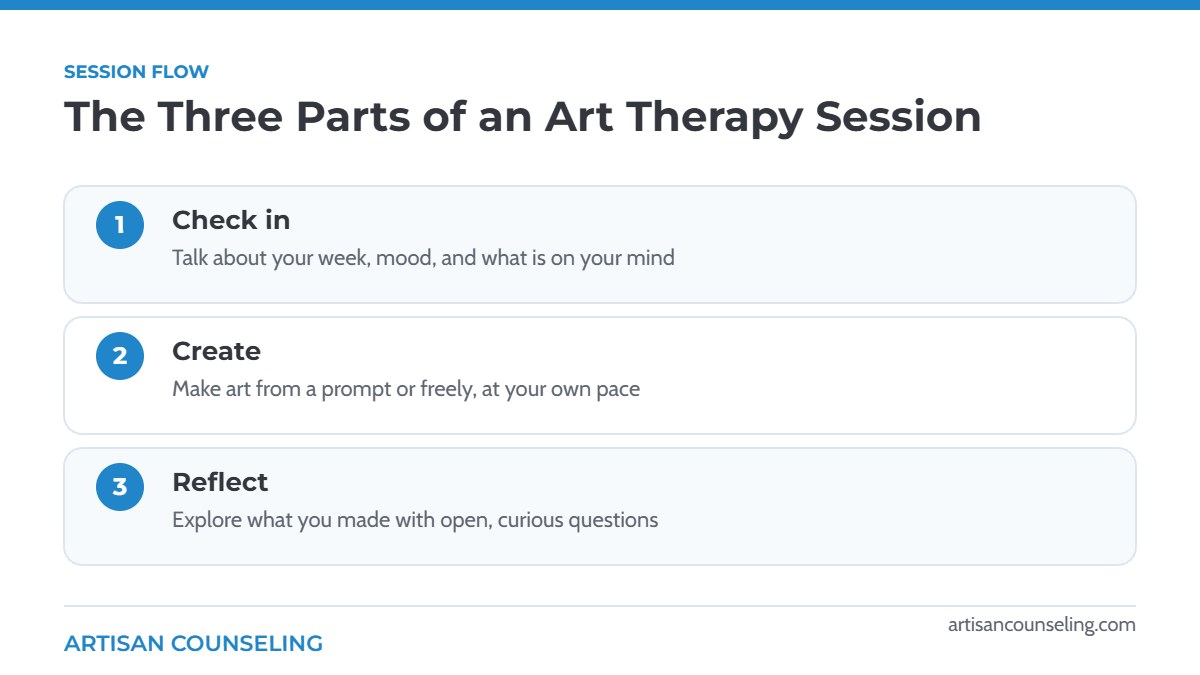
1. Checking In
Sessions usually begin with a short conversation. Your counselor may ask how your week went, how you are feeling today, or what has been on your mind. This helps shape what you focus on.
2. The Art-Making Part
Next, you create. Sometimes your counselor offers a prompt, such as “draw what your stress looks like” or “make a collage of what helps you feel safe.” Other times, you may be free to make whatever feels right.
You can work quietly or talk as you go. There is no pressure to finish, and you can stop or change direction whenever you need to.
3. Talking About What You Made
Afterward, you and your counselor may reflect on your work together. Your counselor will not “analyze” or interpret it for you. Instead, they might ask open questions like “What stands out to you?” or “What was it like to make this?”
You are the expert on your own art. Often, people notice feelings or connections they had not put into words before.
What Materials Are Used in Art Therapy?
Art therapists offer a range of materials so you can choose what feels comfortable. Common options include:
- Drawing tools: pencils, markers, crayons, colored pencils, and oil pastels
- Paint: watercolor or acrylic, which can feel freer and more fluid
- Collage: magazine images, paper, and glue, helpful if drawing feels intimidating
- Clay or modeling materials: hands-on, grounding, and good for tactile expression
- Mixed media: fabric, found objects, or anything else that fits the moment
Different materials can bring up different experiences. For example, clay can feel calming and grounding, while loose paint may help release pent-up emotion. Your counselor can help you explore what works for you.
What Can Art Therapy Help With?
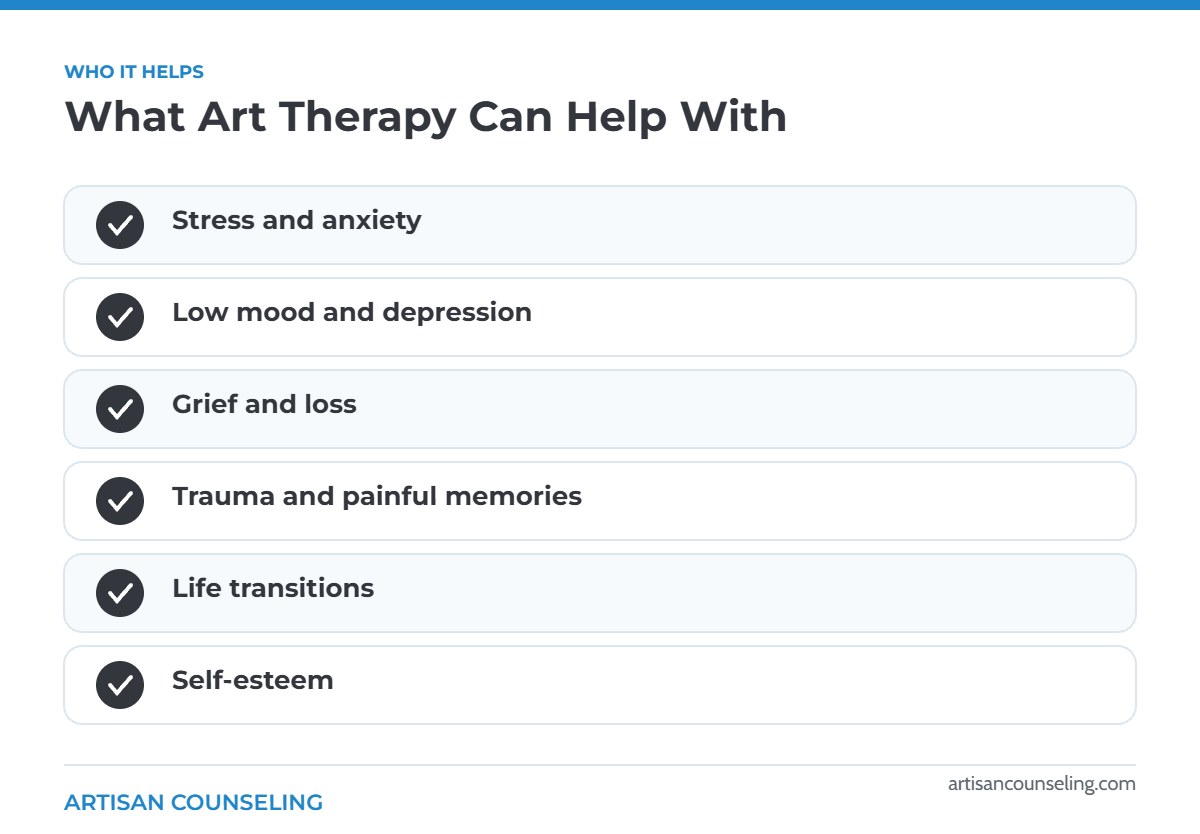
Art therapy can be helpful for children, teens, and adults. Because it does not depend only on talking, it can be especially useful when feelings are hard to name. People often seek art therapy for:
- Stress, anxiety, and feeling overwhelmed
- Low mood and depression
- Grief and loss
- Trauma and painful memories
- Life transitions, such as divorce, moving, or a new role
- Self-esteem and self-understanding
For people working through trauma, creating art can provide some distance from difficult experiences while still allowing them to be explored safely. Our counselors take a trauma-informed approach so you always stay in control of what you share. You can also learn how the approach differs by age in our post on art therapy for adults vs. children.
Who Leads Art Therapy Sessions?
Art therapy is provided by trained mental health professionals. Some are credentialed art therapists, and others are licensed counselors with specific training in using art-based techniques within counseling.
Either way, the person guiding your session is trained to support your emotional well-being, create a safe space, and help you make sense of what comes up. If you would like to know about a specific counselor’s training, it is always okay to ask. Our guide on how to choose the right therapist for you includes helpful questions.
Good to know: Art therapy can be used on its own or combined with talk therapy and other approaches. Many clients move between creating and talking within the same session.
What to Expect From Your First Art Therapy Session
Your first session is usually more about getting to know each other than making art. Your counselor will likely ask about what brings you in, your goals, and any relevant history. They may introduce a simple, low-pressure activity to help you get comfortable.
Tips to Feel More Prepared
- Wear clothes you do not mind getting a little messy.
- Come with an open mind rather than a plan for what to make.
- Share any worries about art or being judged. Your counselor has heard them before.
- Remember that you can say no to any activity or take a break at any time.
Many people find that after one or two sessions, the hesitation fades and the creative process starts to feel natural.
Frequently Asked Questions
How long is an art therapy session?
Most individual art therapy sessions last about 45 to 60 minutes, similar to other counseling sessions. Your counselor will let you know what to expect when you schedule.
Will my counselor interpret my artwork?
No. A good art therapist does not tell you what your art “means.” They ask questions and help you reflect, so the meaning comes from you.
Can art therapy be done through telehealth?
Often, yes. Many art-based activities can be done at home with simple supplies like paper and markers. Ask your counselor whether telehealth is a good fit for your goals.
Is art therapy only for kids?
Not at all. While it works well with children, many teens and adults find art therapy helpful, especially when talking about feelings feels difficult.
Starting Art Therapy at Artisan Counseling
If you are curious about trying a creative approach to healing, our team is here to help. Learn more about our art therapy services and meet the counselors who offer them.
We see clients in Newport News and at our Suffolk counseling office. When you feel ready, contact us to schedule your first session.