Key Takeaways
- Boundaries are the limits that protect your time, energy, feelings, body, and values.
- Unhealthy boundaries can be too loose (people-pleasing, over-responsibility) or too rigid (shutting everyone out).
- Common signs include saying yes when you mean no, guilt when resting, apologizing constantly, and one-sided relationships.
- Boundary patterns are usually learned in childhood or past relationships and can be changed.
- Starting small, keeping requests simple, and following through make boundaries easier over time.
Do you leave conversations feeling drained? Say yes to things you do not want to do? Feel guilty for taking time for yourself? These experiences often point to the same underlying issue: boundaries that are not protecting you.
Healthy boundaries are not walls. They are the limits that let you stay connected to others without losing yourself. When they are missing or unclear, relationships can start to feel exhausting and one-sided.
In this article, you will learn what unhealthy boundaries look like, 15 common signs, where these patterns come from, and practical steps to start setting healthier limits.
What Do Unhealthy Boundaries Look Like?
Boundaries define where you end and others begin. They cover your time, energy, emotions, body, possessions, and values.
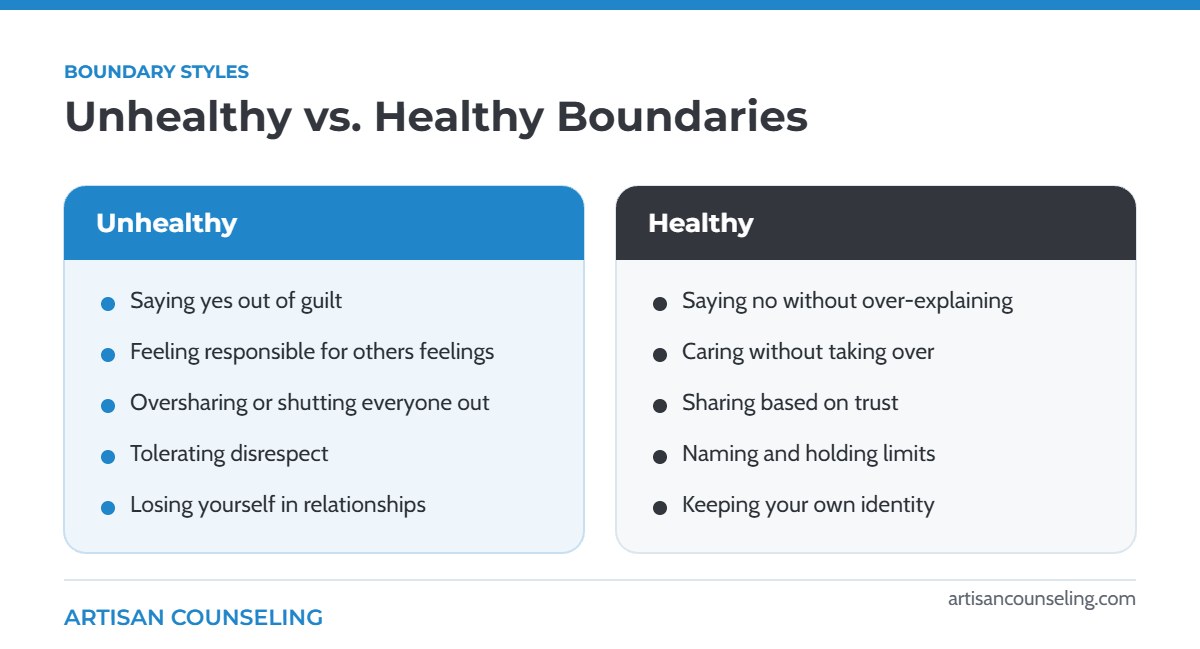
Unhealthy boundaries usually fall into two categories:
- Porous or loose boundaries: difficulty saying no, people-pleasing, taking responsibility for others’ feelings, and oversharing.
- Rigid boundaries: keeping everyone at a distance, rarely asking for help, and avoiding closeness to stay safe.
Most people have a mix, with looser boundaries in some relationships and more rigid ones in others. Healthy boundaries sit in between: flexible, clear, and based on your values.
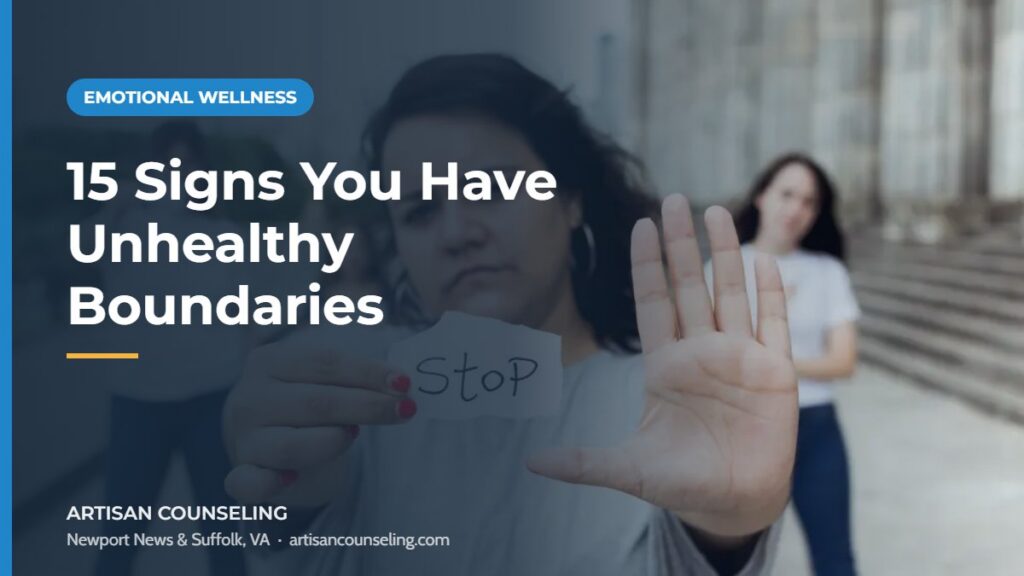
15 Signs You Have Unhealthy Boundaries
Read through these signs with curiosity rather than judgment. Recognizing a pattern is the first step toward changing it.
1. You Say Yes When You Want to Say No
You agree to requests out of guilt or fear, then feel resentful or overwhelmed.
2. You Feel Responsible for Other People’s Feelings
If someone is upset, you assume it is your job to fix it.
3. You Apologize for Things That Are Not Your Fault
“Sorry” becomes a reflex, even when you have done nothing wrong.
4. You Struggle to Ask for What You Need
Stating a need feels selfish, so you hint, hope, or go without.
5. You Overshare With People You Barely Know
You share very personal details quickly, sometimes hoping to create closeness.
6. You Undershare With People Who Are Close to You
You keep your real feelings hidden from people who could support you.
7. You Take On Other People’s Problems
Their stress becomes your stress, and you carry it long after the conversation ends.
8. You Feel Guilty When You Rest
Time for yourself feels like something you have to earn.
9. You Cannot Tolerate Someone Being Upset With You
You give in quickly to end any tension, even when you were right.
10. You Give Too Much Access to Your Time or Space
People can reach you anytime, borrow anything, or drop by without asking.
11. You Have Trouble Trusting Anyone
Walls that are too rigid can also be a boundary problem, keeping safe people out.
12. Your Relationships Feel One-Sided
You give far more than you receive and rarely feel cared for in return.
13. You Lose Yourself in Relationships
Your interests, opinions, and friendships fade as you adapt to a partner.
14. You Tolerate Disrespect
You excuse put-downs, broken promises, or crossing lines you have stated.
15. You Feel Drained After Most Interactions
Spending time with others regularly leaves you exhausted or resentful.
If several of these signs fit, you are not alone. Boundary struggles are among the most common reasons people start counseling, and they respond well to practice and support.
Where Do Unhealthy Boundary Patterns Come From?
Boundary patterns are usually learned. Common roots include:
- Growing up in a family where your needs were overlooked or where you had to care for a parent
- Being punished or rejected for saying no or expressing feelings
- Past relationships involving control, manipulation, or abuse
- Cultural or family messages that put others’ needs ahead of your own
- Trauma, which can make boundaries either very loose or very rigid
These patterns often overlap with codependency. Learn more in what codependency is and how to break the cycle, and explore how childhood experiences shape later relationships in how childhood trauma affects adult relationships.
How to Start Setting Healthier Boundaries
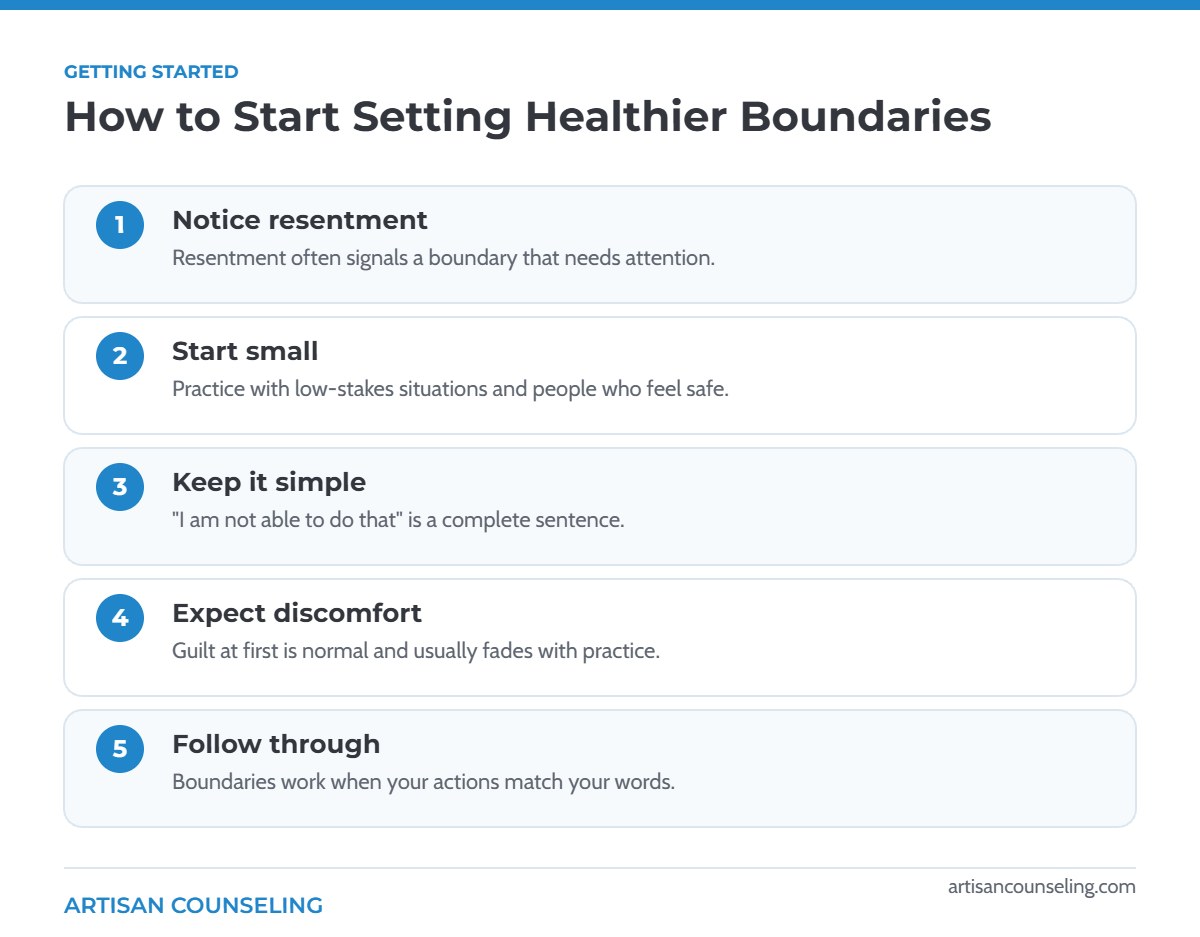
Setting boundaries is a skill. It feels awkward at first and becomes more natural with repetition.
Notice Resentment
Resentment is often a sign that a boundary has been crossed or never set. When you feel it, ask what you needed in that situation.
Start Small
Practice with lower-stakes situations, such as declining an optional event or asking for a small change, before tackling bigger conversations.
Keep It Simple and Kind
You do not need a long explanation. Clear, respectful statements work best: “I cannot take that on this week,” or “I need to leave by 8.”
Expect Some Discomfort
Guilt is normal when you begin setting limits, especially if you are used to putting others first. Feeling guilty does not mean you did something wrong.
Follow Through
A boundary is something you do, not just something you say. If someone repeatedly ignores it, you may need to adjust how much time or access you give them.
For more on how limits strengthen connection, see why healthy relationships need healthy boundaries.
When Counseling Helps With Boundaries
If boundary struggles are affecting your relationships, mood, or self-worth, counseling can help you understand where the patterns started and practice new responses in a safe setting. If you are in a relationship where setting boundaries feels unsafe, or where someone controls, threatens, or hurts you, please reach out for support.
If you are in crisis: call or text 988 to reach the 988 Suicide & Crisis Lifeline any time, day or night, or call 911 in an emergency.
Frequently Asked Questions
What are examples of unhealthy boundaries?
Examples include saying yes when you mean no, feeling responsible for other people’s emotions, tolerating disrespect, oversharing with people you just met, and feeling guilty whenever you take time for yourself.
Why is it so hard to set boundaries?
Many people learned early that their needs were less important or that saying no led to conflict or rejection. Setting boundaries can feel risky because it challenges those old lessons, even when it is healthy.
Are rigid boundaries unhealthy too?
Yes. Boundaries that are too rigid can keep safe, supportive people out and lead to isolation. Healthy boundaries are flexible and adjust based on trust and context.
Can therapy help with boundaries?
Yes. A counselor can help you identify your patterns, understand where they came from, and practice setting limits. Many people find that boundary work improves relationships, energy, and self-esteem.
Building Healthier Boundaries With Artisan Counseling
Learning to protect your time and energy is an act of self-respect, and you do not have to figure it out alone. Our counselors offer individual counseling in Newport News and Suffolk, along with telehealth across Virginia. Contact us to schedule an appointment.