Key Takeaways
- Codependency is a relational pattern where you consistently prioritize another person’s needs and feelings over your own.
- It is not a formal DSM-5-TR diagnosis, but it describes a real and common pattern that counselors help people with.
- Signs include people-pleasing, trouble saying no, needing to be needed, and losing your identity in relationships.
- Codependency often begins in childhood and can change through self-awareness, boundaries, and counseling.
Caring deeply for the people you love is a strength. But when caring turns into constantly managing someone else’s feelings, fixing their problems, and ignoring your own needs, it can leave you exhausted and resentful.
That pattern is often called codependency. In this article, you will learn what codependency actually is, the most common signs, where it tends to come from, and practical steps to break the cycle and build more balanced relationships.
What Is Codependency?
Codependency is a pattern of relating in which your sense of worth and safety depends heavily on another person’s approval, needs, or wellbeing. You may focus so much on helping, pleasing, or rescuing others that you lose touch with yourself.
The term first came from work with families affected by addiction, but it is now used more broadly. Codependency can show up with romantic partners, parents, children, friends, or coworkers.
Is Codependency a Mental Health Diagnosis?
No. Codependency is not a diagnosis in the DSM-5-TR. It is a descriptive term for a set of relational patterns. Codependent patterns can overlap with anxiety, depression, or trauma, which is one reason a professional evaluation can be helpful.
What Codependency Can Look Like Day to Day
For example, imagine Maria’s partner comes home in a bad mood. Before he says a word, she is scanning his face, offering to make his favorite dinner, and canceling her plans with a friend so she can stay home and keep things calm. Later, when he seems fine, she feels relieved but also drained and a little invisible. She cannot remember the last time someone asked how she was doing.
Moments like this can seem small, and many people see them as simply being a good partner. The difference is the pattern underneath: Maria’s sense of okay depends on his mood, and her own needs keep slipping to the bottom of the list.
What Are the Signs of Codependency?
Codependency looks different for everyone, but these signs are common.
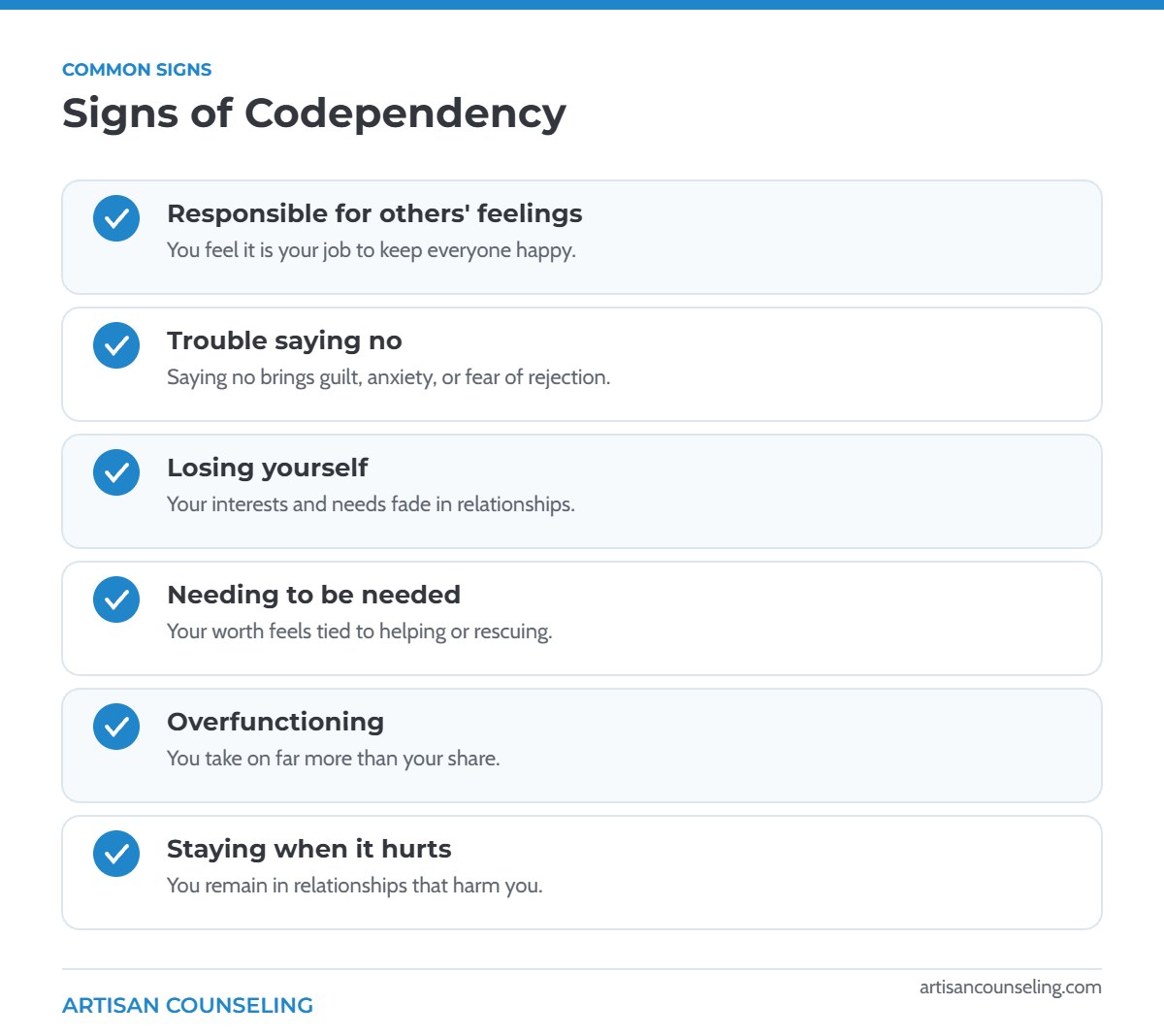
You Feel Responsible for Other People’s Feelings
If someone is upset, you feel it is your job to fix it, even when you did nothing wrong.
You Have Trouble Saying No
Saying no brings intense guilt or fear that the other person will be angry or leave.
You Lose Yourself in Relationships
Your hobbies, opinions, and friendships fade as you focus on your partner’s life.
You Need to Be Needed
You feel most valuable when you are helping or rescuing someone, and uneasy when you are not.
You Overfunction
You take on more than your share of responsibilities, often while others underfunction.
You Struggle to Identify What You Feel or Want
When asked what you want, your mind goes blank or you defer to others.
You Stay in Relationships That Hurt You
You may tolerate disrespect or neglect because leaving feels impossible. Learn more in why people stay in unhealthy relationships.
A Quick Self-Check
Consider how often these statements feel true for you:
- “I feel anxious when someone I love is upset, even if it has nothing to do with me.”
- “I apologize a lot, even when I did not do anything wrong.”
- “I find it easier to name what others need than what I need.”
- “I feel guilty when I spend time or money on myself.”
- “I stay quiet to avoid conflict, then feel resentful later.”
Saying yes to several of these does not mean something is wrong with you. It simply suggests these patterns may be worth exploring, ideally with someone who can help you understand where they come from.
Where Does Codependency Come From?
Codependent patterns usually develop as a way to cope. Common roots include:
- Growing up with a parent who struggled with addiction, mental illness, or chronic illness.
- Families where love felt conditional on being good, helpful, or quiet.
- Being asked to take on adult responsibilities as a child.
- Homes where feelings were ignored, criticized, or unpredictable.
- Past relationships involving control or emotional abuse.
These patterns made sense at one time because they helped you stay safe or connected. As an adult, they may no longer serve you. Read more about how childhood experiences shape adult relationships.
How Do You Break the Codependency Cycle?
Change is gradual, but it is very possible. These steps can help.
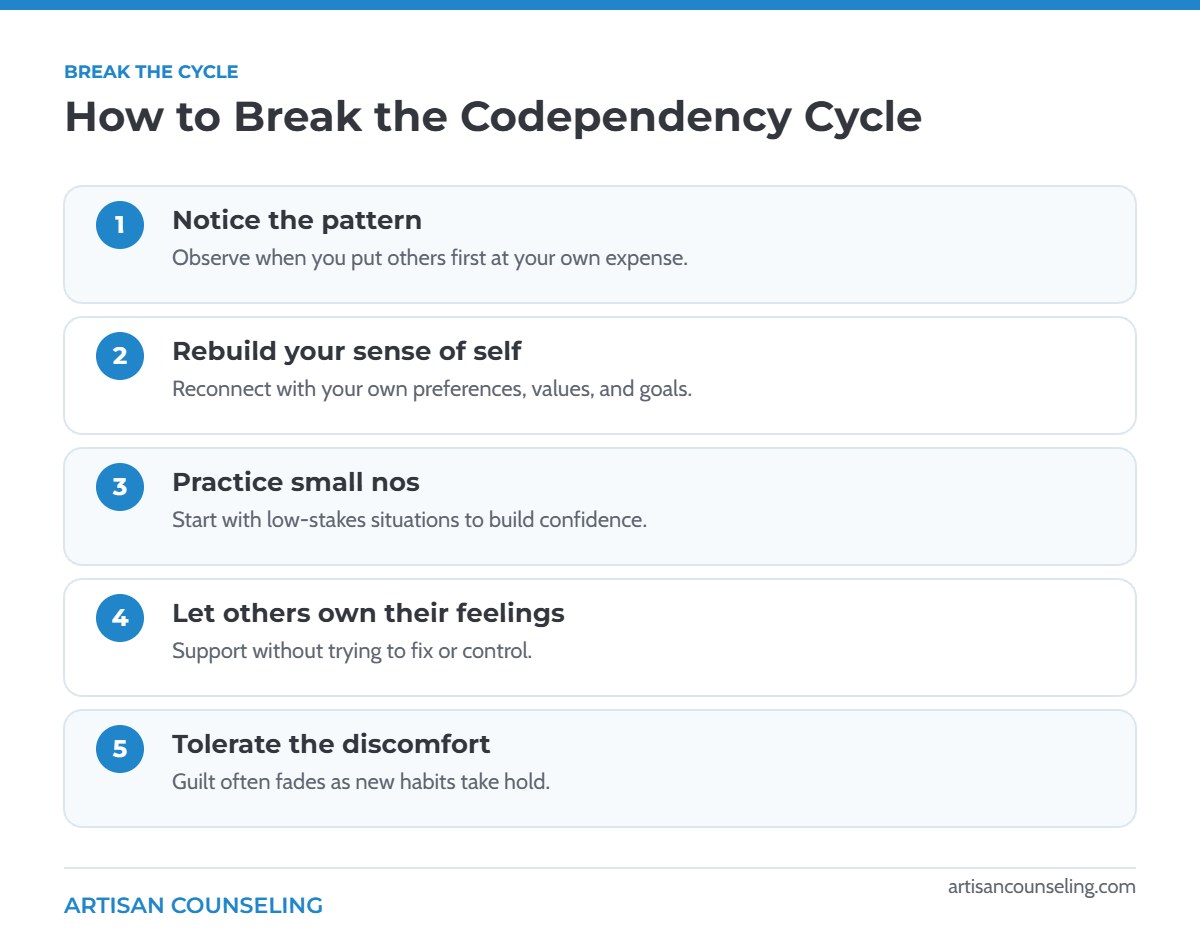
Notice the Pattern First
Pay attention to moments when you say yes but mean no, or when you feel anxious until someone else is okay. Awareness is the foundation for change.
Rebuild Your Sense of Self
Ask yourself what you enjoy, value, and want. Try a new hobby or spend time with friends who support you.
Practice Small Nos
Start with low-stakes situations, like declining an extra favor. Each small no builds confidence. Our guide to healthy boundaries offers simple scripts.
Let Others Handle Their Own Feelings
You can be supportive without fixing. Try saying, “That sounds hard. I’m here if you want to talk,” and then let the other person take the lead.
Build a Life of Your Own
Friendships, interests, and goals outside the relationship make you less dependent on one person for your sense of worth.
Phrases to Practice
New habits are easier when you have words ready. Try a few of these:
- “Let me think about it and get back to you.”
- “I can’t do that this week, but I hope it works out.”
- “I care about you, and I trust you to figure this out.”
- “I need some time for myself tonight.”
- “I’d like to share how I feel about that too.”
It is normal for these to feel awkward at first. Saying “let me think about it” is often the easiest place to start, because it gives you space to check in with yourself before agreeing.
Sit With the Discomfort
Guilt and anxiety often spike when you change old habits. These feelings usually ease as you practice and see that relationships can handle your needs.
Helpful question: Before saying yes, pause and ask yourself, “Am I doing this because I want to, or because I’m afraid of what happens if I don’t?”
How Does Codependency Affect Your Health and Relationships?
Over time, constantly putting others first takes a toll. Many people with codependent patterns describe feeling chronically tired, tense, or on edge. Some notice anxiety, low mood, trouble sleeping, or physical stress symptoms like headaches.
Relationships suffer too. Resentment can build quietly when giving only flows one way. The other person may come to rely on you more and more, which can keep both of you stuck. Friendships may fade, and you may feel lonely even when you are rarely alone. Recognizing these costs is not about blame. It is often the moment people realize they deserve care, too.
When Can Counseling Help With Codependency?
Counseling can help you understand the roots of codependent patterns, build self-worth, and practice new ways of relating. Individual counseling is a common starting point. Approaches like CBT can help you challenge beliefs such as “my needs don’t matter,” while Internal Family Systems can help you understand the protective parts of you that try to keep others happy. If codependency is affecting your relationship, couples counseling can help both partners find a healthier balance.
At Artisan Counseling, early sessions usually focus on understanding your history and how these patterns show up now. Over time, you might practice naming your feelings in session, rehearse a difficult conversation before having it, and notice the guilt that comes up when you put yourself first. Progress often looks like small shifts: pausing before saying yes, asking for help, or letting someone else be uncomfortable without rushing to fix it.
It may be a good time to reach out if you feel exhausted by your relationships, are staying in a situation that hurts you, or notice anxiety or depression alongside these patterns. If you are in a relationship involving fear, threats, or harm, your safety comes first. Call 911 in an emergency, or call or text 988 if you are in emotional crisis.
Frequently Asked Questions
What is the difference between caring and codependency?
Caring means supporting someone while still respecting your own needs and limits. Codependency involves sacrificing your needs, identity, or wellbeing to manage another person’s feelings or behavior.
Can codependency be cured?
Codependency is a pattern rather than an illness, so it is not cured in a medical sense. Many people significantly change codependent habits through awareness, boundary-setting, and counseling.
What causes codependency?
Codependency often develops in childhood, especially in families affected by addiction, mental illness, neglect, or conditional love. It can also grow out of controlling or emotionally abusive relationships.
Can two codependent people have a healthy relationship?
It is possible when both partners recognize their patterns and work to change them. Counseling can help couples build more balanced, mutual support.
Breaking the Cycle With Artisan Counseling
You deserve relationships where your needs matter too. Our licensed counselors can help you understand codependent patterns and build healthier connections, in person in Newport News and Suffolk or through telehealth. Contact us to schedule your first session.