Key Takeaways
- Emotional regulation is the ability to notice, understand, and respond to your emotions in ways that fit the situation, not to suppress them.
- Signs of difficulty include intense or fast reactions, trouble calming down, shutting down, and coping habits that backfire.
- Regulation skills are learned, often first through caregivers, and can be built at any age.
- Naming emotions, calming the body, pausing, and checking the facts are practical skills that help.
- DBT and CBT both teach emotional regulation skills directly and can help when emotions feel overwhelming.
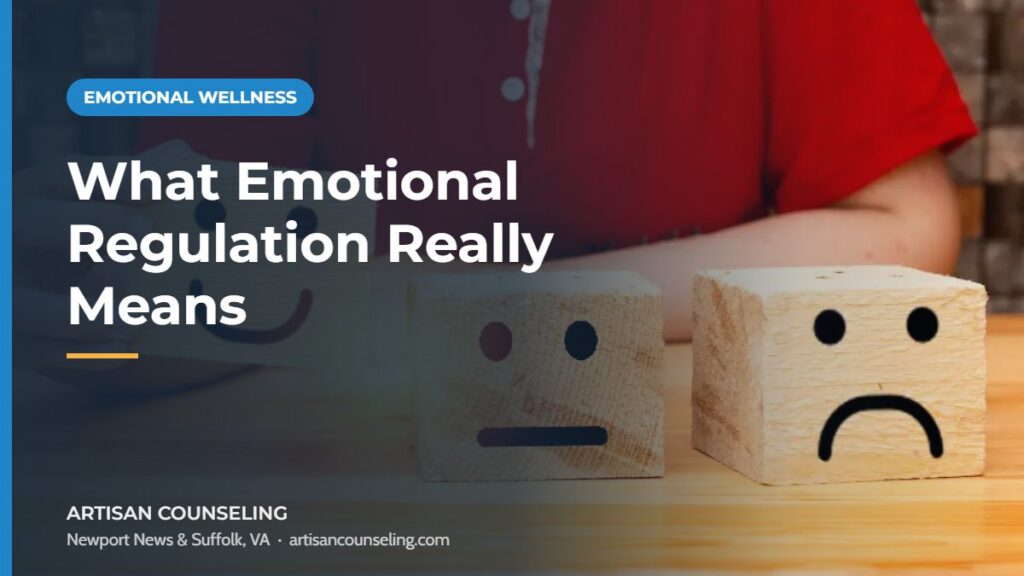
When people hear “emotional regulation,” they often picture someone who never gets upset. In reality, emotionally regulated people feel anger, sadness, and fear just like everyone else. The difference is that their emotions do not take over their choices.
If you often feel swept away by big feelings, or if you shut down so you do not have to feel them at all, learning regulation skills can make daily life and relationships much easier.
In this article, you will learn what emotional regulation really means, common signs of struggle, why it matters, practical skills you can start using today, and when counseling can help.
What Is Emotional Regulation?
Emotional regulation is the set of skills you use to notice what you are feeling, understand it, and influence how strongly and how long you feel it, so you can respond in a way that fits your goals and values.
It is not the same as suppression. Pushing feelings down tends to make them come out later in other ways, such as irritability, physical tension, or sudden outbursts. Healthy regulation means allowing the emotion while choosing what to do with it.
Most of us first learn regulation from caregivers. A parent who stays calm and comforts a crying child is teaching that child how to settle. If you did not get much of that growing up, you may find these skills harder now, and that is something you can still learn.
Signs of Emotional Dysregulation
Everyone has hard days. Difficulty with regulation shows up as a pattern over time. Common signs include:
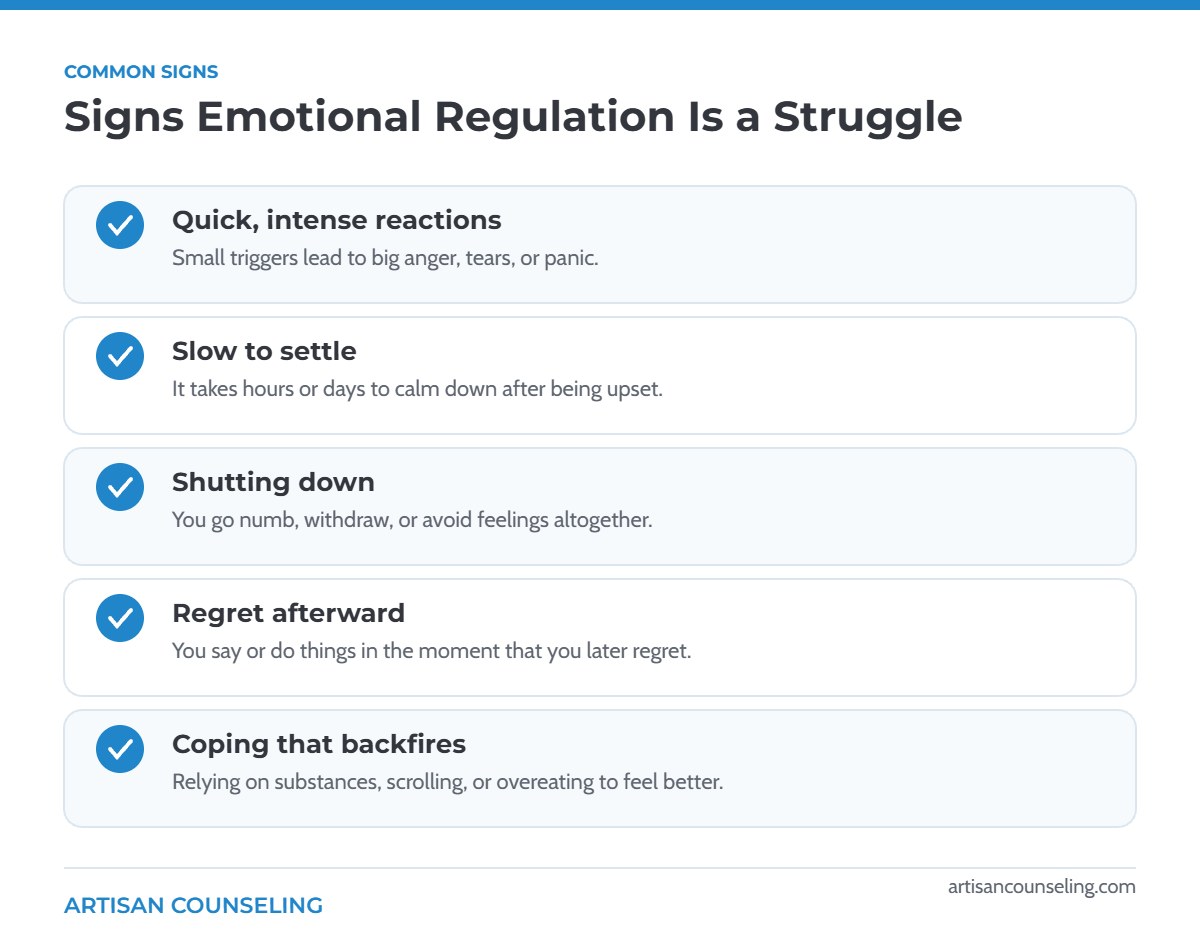
- Emotions that rise very quickly and feel overwhelming
- Taking a long time to return to calm after being upset
- Going numb, shutting down, or avoiding feelings entirely
- Saying or doing things in the heat of the moment that you later regret
- Relying on alcohol, food, spending, or endless scrolling to escape feelings
- Feeling like your mood is controlled by other people or circumstances
Difficulty with regulation can be connected to stress, trauma, ADHD, anxiety, depression, and other conditions. Our article on signs your nervous system is stuck in survival mode explains how past stress can keep the body on high alert.
Why Emotional Regulation Matters
In Relationships
When emotions run the conversation, small disagreements can turn into big fights. Regulation helps you stay present, listen, and repair after conflict. If arguments keep circling back to the same place, see how to stop arguing about the same things.
At Work and School
Managing frustration and stress helps you focus, handle feedback, and work well with others.
For Your Health
Chronic emotional stress affects sleep, energy, and the body’s stress response. Learning to settle yourself supports both mental and physical well-being.
For Your Sense of Self
When you trust that you can handle your feelings, you are more willing to take healthy risks, have honest conversations, and try new things.
Practical Emotional Regulation Skills
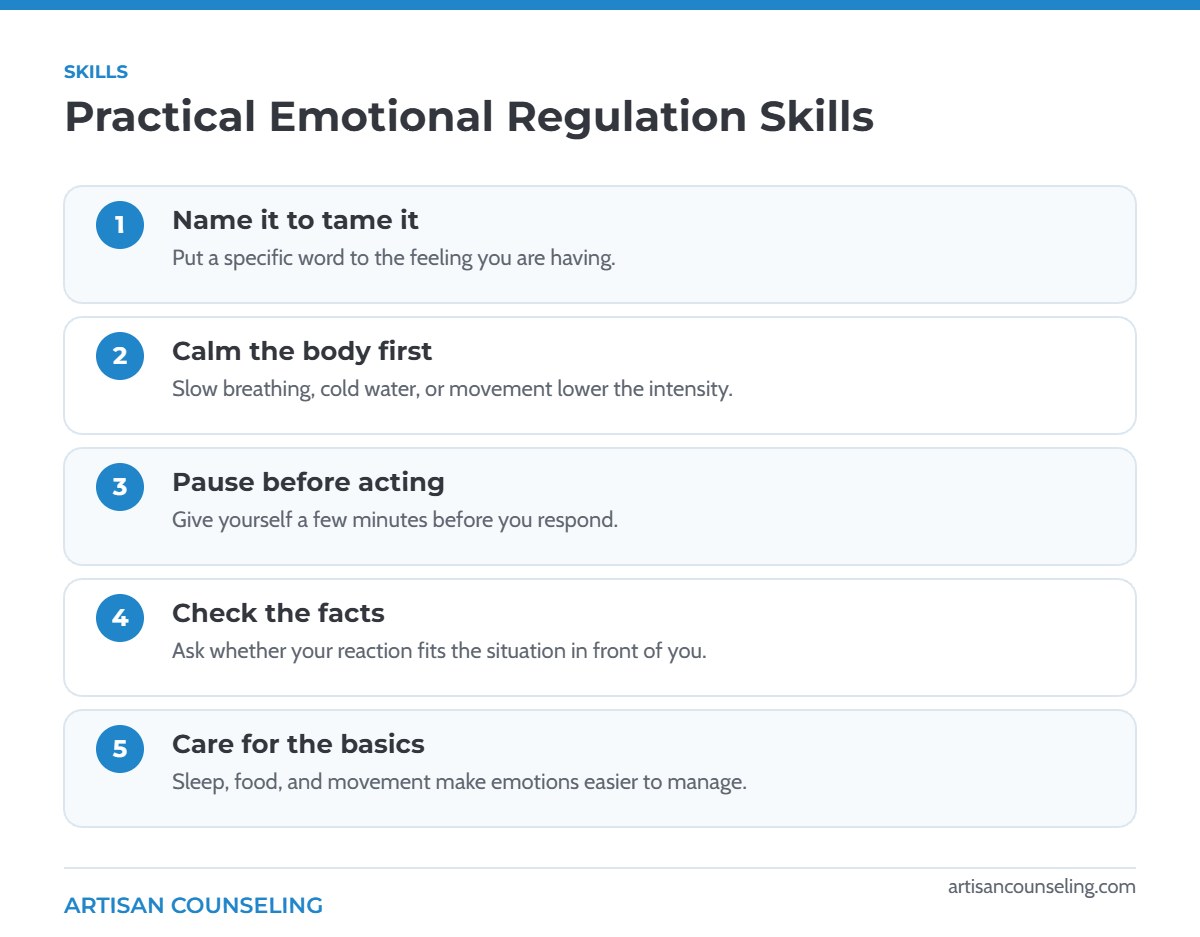
These skills are drawn from well-established approaches such as dialectical behavior therapy (DBT) and cognitive behavioral therapy (CBT). Practice them when you are calm so they are easier to reach for when you are upset.
Name the Emotion
Try to be specific. Instead of “upset,” is it disappointed, embarrassed, lonely, or scared? Putting a precise word to a feeling often lowers its intensity a little.
Calm Your Body First
When emotions are very intense, thinking clearly is hard. Slow breathing with a longer exhale, splashing cold water on your face, or a few minutes of brisk movement can help your body settle so your mind can catch up.
Pause Before You Act
Give yourself permission to wait. Saying “I need a few minutes before I respond” is a regulation skill, not avoidance, as long as you come back to the conversation.
Check the Facts
Ask yourself what actually happened, what you are assuming, and whether the strength of your reaction fits the situation. Sometimes the emotion makes perfect sense; sometimes it is pointing to an older wound.
Act Opposite to the Urge
When an emotion pushes you toward an unhelpful action, such as isolating when sad, try doing the opposite in a small way, like texting a friend.
Take Care of the Basics
Sleep, regular meals, movement, and limiting alcohol all make emotions easier to manage. It is much harder to regulate when you are running on empty.
Regulation is a practice, not a personality trait. Every time you notice a feeling a moment earlier or pause before reacting, you are strengthening the skill, even if the moment did not go perfectly.
When Counseling Can Help With Emotional Regulation
If your emotions regularly feel overwhelming, affect your relationships, or lead to choices that hurt you, counseling can help. Dialectical behavior therapy (DBT) teaches emotional regulation, distress tolerance, mindfulness, and interpersonal skills step by step. You can learn more in our overview of DBT skills.
A counselor can also help you explore what is underneath intense emotions, such as past trauma or long-standing beliefs, so you are not just managing symptoms.
Frequently Asked Questions
What is an example of emotional regulation?
Feeling angry after a frustrating email, then taking a short walk and a few slow breaths before replying calmly, is emotional regulation. You still felt the anger, but you chose how to respond.
What causes poor emotional regulation?
Common contributors include growing up without models for handling emotions, trauma, chronic stress, lack of sleep, and conditions such as ADHD, anxiety, or depression. It is not a sign of weakness.
Can adults learn emotional regulation?
Yes. Emotional regulation skills can be learned at any age. Structured approaches like DBT were designed specifically to teach these skills to adults and teens.
Is emotional regulation the same as controlling your emotions?
Not exactly. Regulation is about influencing how you experience and respond to emotions, not forcing them away. Trying to control or suppress emotions completely often makes them stronger.
Learning Emotional Regulation at Artisan Counseling
You do not have to feel at the mercy of your emotions. Our counselors offer individual counseling at our Newport News office and in Suffolk, plus telehealth across Virginia. Contact us when you are ready to start.