Key Takeaways
- Art therapy is a form of mental health counseling that uses creative expression, such as drawing, painting, and collage, alongside talking.
- You do not need any artistic skill; the focus is on the process and what it brings up, not on the finished product.
- Art therapy can help people who find it hard to put feelings into words, including children, teens, and adults coping with trauma, grief, anxiety, or depression.
- Sessions are guided by a trained professional who helps you reflect on your artwork in a safe, nonjudgmental way.
Sometimes the hardest part of counseling is finding the right words. You may know something feels heavy or tangled, but describing it out loud feels impossible. That is not a failure. Some experiences, especially painful ones, are stored in ways that words do not easily reach.
Art therapy offers another way in. By using simple art materials, you can express what you are feeling, notice patterns, and make sense of experiences with a counselor beside you.
In this article, you will learn what art therapy is, how it works, who it can help, what a session looks like, how it is used for trauma, and the most common misconceptions about it.
What Is Art Therapy?
Art therapy is a mental health approach that combines creative processes with counseling. Instead of relying only on conversation, you might draw, paint, sculpt with clay, or build a collage, then explore what you made and what came up while making it.
It is not an art class. There are no grades, and nobody is judging technique. The artwork becomes a bridge for communication between you and your counselor, and between you and parts of your own experience.
How Does Art Therapy Work?
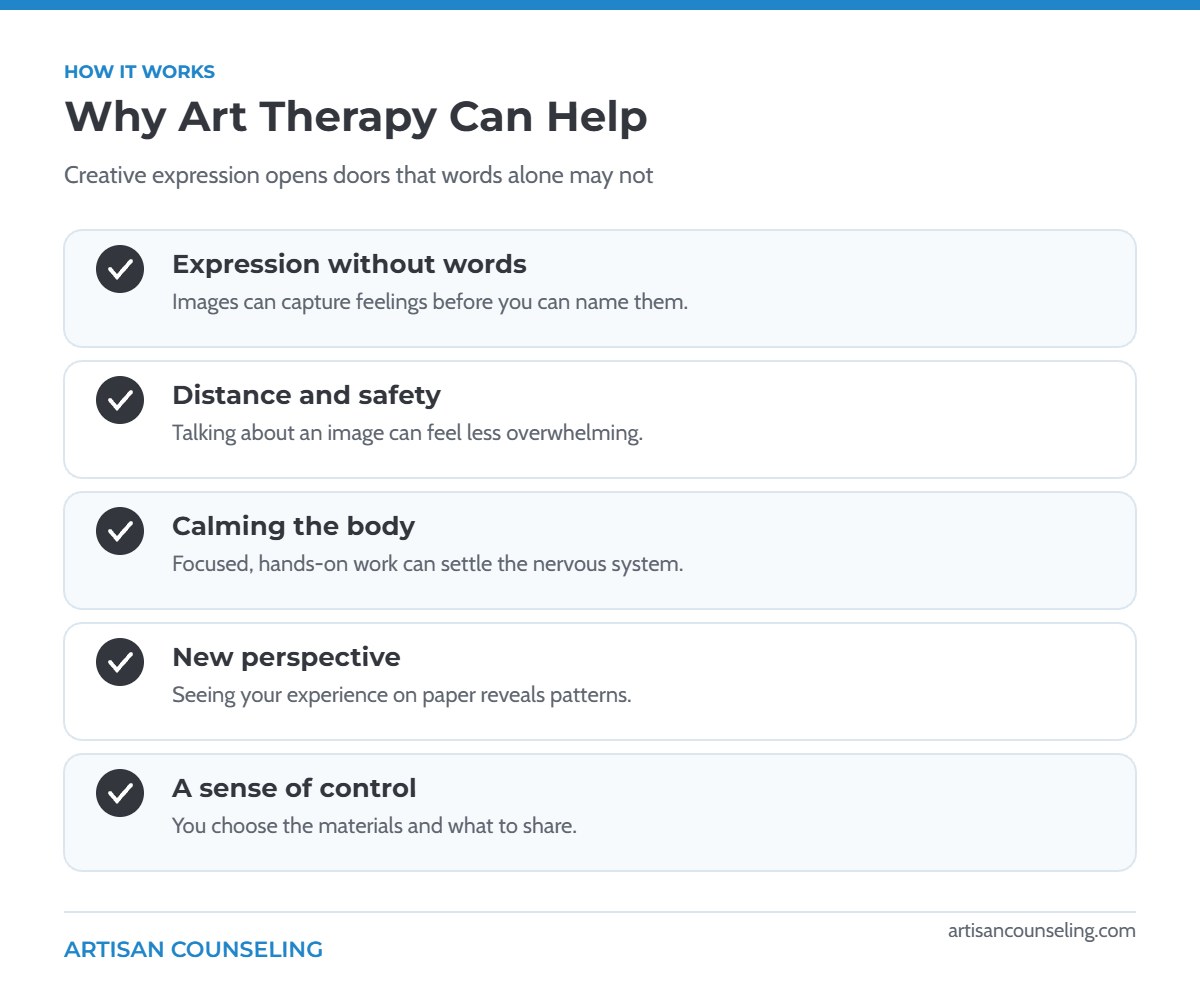
Creating art engages the senses and the body, not just verbal thinking. That can make it easier to access feelings and memories that are hard to talk about directly. Art therapy tends to work through several pathways:
- Expression without words: colors, shapes, and images can capture feelings before you can name them.
- Distance and safety: talking about an image can feel less overwhelming than talking about yourself directly.
- Calming the body: repetitive, focused activities can help settle the nervous system.
- New perspective: seeing your inner experience on paper can reveal patterns and possibilities.
- A sense of control: you choose the materials and decide what to share.
Who Can Benefit From Art Therapy?
Art therapy can help people of all ages. It may be especially useful if you:
- Find it hard to talk about feelings or have tried talk therapy and felt stuck
- Are coping with trauma, grief, or loss
- Experience anxiety, depression, or chronic stress
- Are a child or teen who communicates more naturally through play and creativity
- Are navigating a major life change or questions of identity
- Want to build self-esteem and self-understanding
It works differently across ages. Read art therapy for adults vs. children to learn how sessions are adapted.
Where Is Art Therapy Used?
Art therapy appears in many settings, including private counseling practices, schools, hospitals, rehabilitation programs, and community organizations. It can be used in individual, family, or group sessions, and it is often blended with other approaches such as trauma-informed or person-centered counseling.
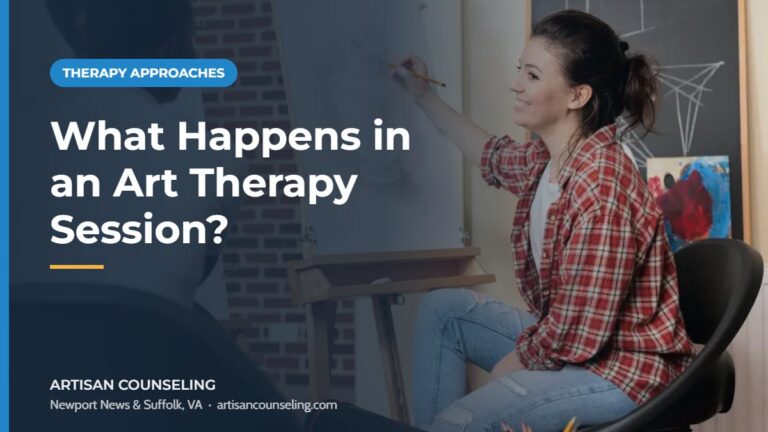
What Happens in an Art Therapy Session?
Every session is shaped around your goals, but many follow a similar flow:
- Check-in. You talk briefly about how you are doing and what feels important today.
- Invitation. Your counselor may suggest a prompt, such as drawing a safe place, or leave the activity open.
- Creating. You work with the materials at your own pace. Talking is optional during this time.
- Reflecting. You look at the work together and explore what you notice, what you felt, and what it might mean to you.
- Closing. Sessions end with grounding and thoughts about what to carry into the week.
Your counselor will not tell you what your art “means.” You are the expert on your own work. For a closer look, see what happens in an art therapy session.
Good to know: You are always in charge of what you share. If an image brings up more than you want to explore today, it is okay to set it aside and come back to it later.
How Can Art Therapy Help With Trauma?
Trauma can leave memories and sensations that are hard to put into a clear story. Art therapy allows you to approach those experiences gradually and at a safe distance, which can reduce the sense of being overwhelmed.
A trauma-informed art therapist focuses first on safety and stabilization, using creative work to build grounding and coping skills before exploring painful material. Learn more in how art therapy helps with trauma.
If you are in crisis: call or text 988 to reach the 988 Suicide & Crisis Lifeline, available 24/7, or call 911 in an emergency.
Common Misconceptions About Art Therapy
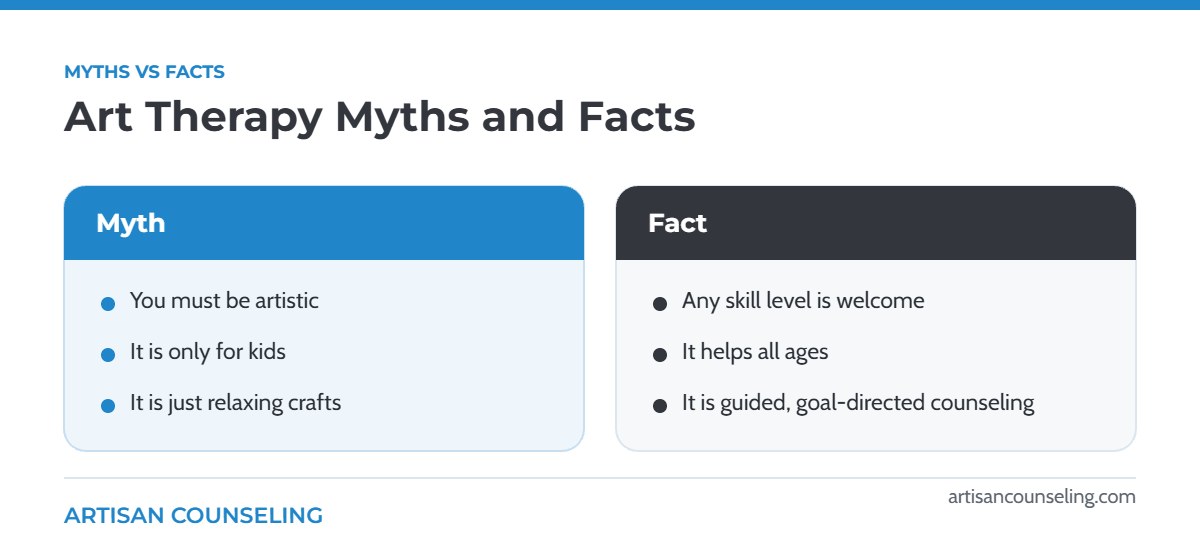
“I am not artistic, so it will not work for me.”
Artistic skill does not matter. Stick figures and scribbles are welcome. Many people who say they “cannot draw” find art therapy especially freeing. See do you need art skills for art therapy?.
“It is just for kids.”
Art therapy is used with children, teens, adults, and older adults. Adults often benefit precisely because it bypasses habits of overthinking.
“It is just relaxing crafts.”
Art can be relaxing, but art therapy is goal-directed counseling guided by a trained professional who helps you reflect and make meaning.
How Do You Know if Art Therapy Is Right for You?
Art therapy may be a good fit if words feel limiting, if you are curious about a creative approach, or if traditional talk therapy has not quite clicked. You can also combine it with other methods. A brief conversation with a counselor can help you decide.
Frequently Asked Questions
Do I need to be good at art for art therapy?
No. Art therapy focuses on the process of creating and what it brings up, not on how the finished piece looks. Any level of skill is welcome.
What materials are used in art therapy?
Common materials include pencils, markers, paint, pastels, clay, and collage supplies. Your counselor will help you choose materials that feel comfortable.
Can adults benefit from art therapy?
Yes. Adults use art therapy for trauma, grief, anxiety, depression, and self-exploration, and it can be especially helpful for people who tend to overthink.
Is art therapy available through telehealth?
Many art-based activities can be done at home with simple supplies during a video session. Ask your counselor whether in-person or telehealth sessions fit your goals best.
Exploring Art Therapy at Artisan Counseling
Our counselors use art therapy with children, teens, and adults as part of a caring, individualized plan. Meet our team to learn about each counselor’s approach.
We offer sessions at our Newport News location and in Suffolk. Get in touch to ask questions or schedule a first visit.