Key Takeaways
- CBT focuses on changing unhelpful thoughts and behaviors; DBT adds acceptance, validation, and mindfulness to that change work.
- CBT is widely used for anxiety, depression, OCD, and insomnia; DBT is often used when intense emotions, impulsivity, or self-harm are central.
- Comprehensive DBT usually includes individual therapy, a skills group, and between-session coaching, while CBT is usually delivered in individual sessions.
- The two overlap a lot, and many counselors combine tools from both.
If you are researching therapy options, you have probably seen CBT and DBT side by side. Their names are similar, they both teach practical skills, and DBT actually grew out of CBT. So what is the real difference?
Understanding how each approach works can help you have a more informed conversation with a counselor about what might fit you best.
In this article, you will learn what each therapy focuses on, how sessions and structure differ, which concerns each is commonly used for, where they overlap, and how to choose.
What Is CBT?
Cognitive behavioral therapy is based on the idea that thoughts, feelings, and behaviors influence one another. By identifying unhelpful thinking patterns and testing new behaviors, you can change how you feel.
CBT is usually structured, goal-oriented, and time-limited. Common tools include thought records, behavioral activation, and exposure. You can learn more in what CBT therapy is.
What Is DBT?
Dialectical behavior therapy was developed by Marsha Linehan as an adaptation of CBT for people with very intense emotions, originally those with chronic suicidal behavior and borderline personality disorder. She found that a strong push for change alone could feel invalidating, so she added acceptance.
DBT teaches four skill areas: mindfulness, distress tolerance, emotion regulation, and interpersonal effectiveness. Read the full overview in what DBT therapy is.
What Are the Key Differences Between DBT and CBT?
Both approaches are evidence-based and skills-focused. The differences are mostly about emphasis, structure, and who each was designed for.
Change vs. Acceptance and Change
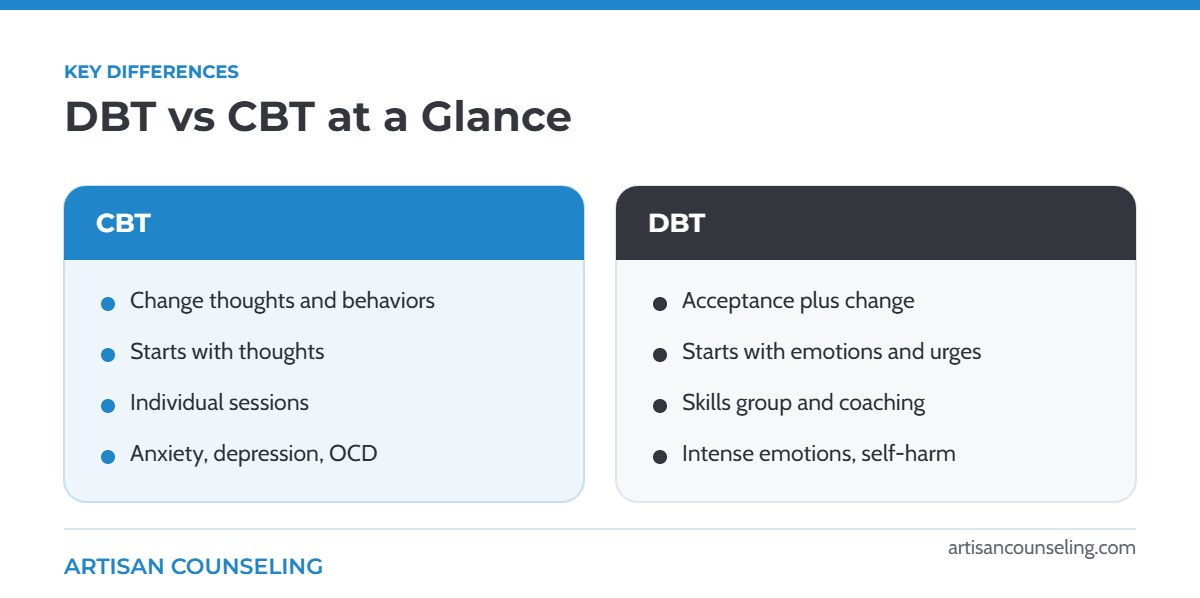
CBT mainly asks, “Is this thought accurate and helpful, and what could you do differently?” DBT asks that too, but it also emphasizes accepting your emotions and circumstances as they are in this moment. Validation is a core strategy, not an extra.
Thoughts vs. Emotions
CBT often starts with thoughts. DBT often starts with emotions and urges, especially when they are intense enough to override rational thinking. It assumes you may need to calm your body before you can reconsider a thought.
Treatment Structure
CBT is usually delivered in weekly individual sessions. Comprehensive DBT typically combines individual therapy, a weekly skills group, between-session coaching, and a therapist consultation team. Many counselors also offer DBT-informed individual therapy.
The Role of the Relationship
Both value collaboration. DBT places extra emphasis on the therapeutic relationship and on commitment to treatment, because the people it was designed for often experience strong ups and downs in relationships.
DBT vs. CBT: Side-by-Side Comparison
| Feature | CBT | DBT |
|---|---|---|
| Core focus | Changing thoughts and behaviors | Balancing acceptance and change |
| Starting point | Thoughts and beliefs | Emotions, urges, and behaviors |
| Typical format | Individual sessions | Individual therapy plus skills group and coaching |
| Key tools | Thought records, exposure, behavioral activation | Mindfulness, distress tolerance, emotion regulation, interpersonal skills |
| Commonly used for | Anxiety, depression, OCD, insomnia | Intense emotions, self-harm, impulsivity, unstable relationships |
Which Concerns Does Each Therapy Treat?
CBT Is Often Used For
- Generalized anxiety, panic, social anxiety, and phobias
- Depression
- OCD (through exposure and response prevention)
- Insomnia (CBT-I)
- Stress and low self-esteem
See CBT for anxiety for an example of how it is applied.
DBT Is Often Used For
- Emotions that feel overwhelming or hard to control
- Self-harm or chronic suicidal thoughts
- Borderline personality disorder
- Impulsive behaviors, including some eating and substance use patterns
- Frequent conflict or instability in relationships
DBT is not only for borderline personality disorder. Our article on who benefits from DBT explains why.
If you are in crisis: call or text 988 to reach the 988 Suicide & Crisis Lifeline, available 24/7, or call 911 in an emergency.
Where Do DBT and CBT Overlap?
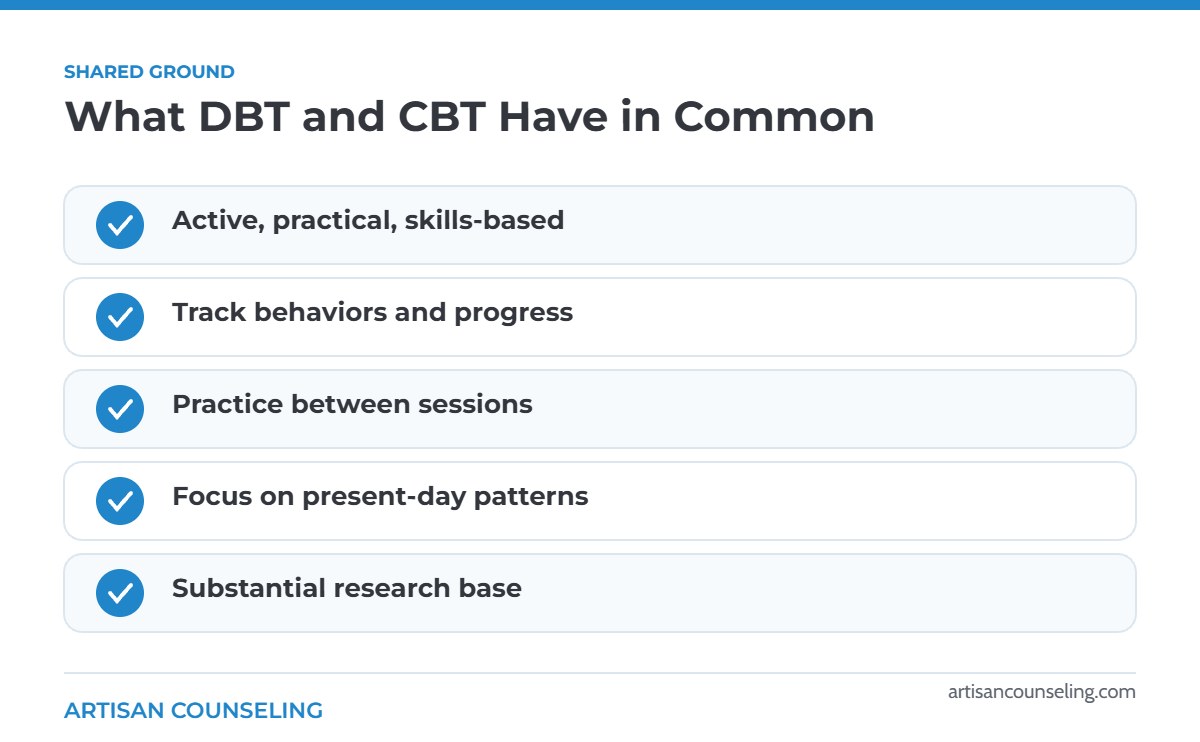
Because DBT came from CBT, they share a lot of DNA. Both:
- Are active, practical, and skills-based
- Track behaviors and progress over time
- Encourage practice between sessions
- Focus on what keeps problems going in the present
- Have a substantial research base
Many counselors draw on both, for example using CBT to challenge anxious thoughts and DBT distress tolerance skills for overwhelming moments.
How Do You Choose Between DBT and CBT?
A few questions can guide the conversation with a counselor:
- Do your emotions feel so intense that it is hard to think clearly? DBT skills may help first.
- Is your main concern specific worry, panic, or low mood? CBT is often a strong fit.
- Do you act on urges you later regret, or struggle with self-harm? DBT is often recommended.
- Do you want a shorter, focused course of therapy? CBT is often time-limited.
Remember: You do not have to decide alone. A counselor can assess your needs and explain why they recommend one approach, the other, or a blend.
Frequently Asked Questions
Is DBT better than CBT?
Neither is better overall. CBT has strong evidence for anxiety and depression, while DBT is often recommended when intense emotions, self-harm, or impulsivity are central. The right choice depends on your needs.
Can you do DBT and CBT at the same time?
Many counselors integrate skills from both. It is less common to attend two separate full programs at once, so talk with your counselor about the best plan.
Is DBT a type of CBT?
Yes. DBT was developed as an adaptation of CBT and is generally considered part of the broader cognitive behavioral family of therapies.
How long do CBT and DBT take?
CBT is often completed in a few months of weekly sessions. Comprehensive DBT programs commonly last six months to a year, though DBT-informed therapy varies.
Talk With a Counselor About CBT or DBT
At Artisan Counseling, our counselors offer both CBT and DBT, and can help you decide where to start. Explore our counselors or contact us to schedule.
Appointments are available in Newport News, in Suffolk, and through telehealth anywhere in Virginia.