

Key Takeaways
- Art therapy uses the same core idea for all ages: creative expression helps you communicate and process what is hard to say.
- With children, art therapy often looks like guided play, builds emotional vocabulary, and involves parents in the process.
- With adults, it often helps quiet the inner critic, bypass overthinking, and access emotions linked to stress, grief, or trauma.
- A trained counselor adapts materials, prompts, and pacing to each person’s developmental stage and goals.
Art therapy is sometimes thought of as a children’s approach, and adults may wonder whether it would feel silly for them. Parents, on the other hand, often wonder what their child is actually doing in a session that looks a lot like drawing.
The truth is that art therapy helps both children and adults, but it looks and feels different depending on age. The materials might be similar, while the goals, prompts, and conversations are tailored to where each person is developmentally.
In this article, you will learn how art therapy works for adults, how it works for children, what parents should know, where the two overlap, and how to find the right counselor.
How Does Art Therapy Work for Adults?
Adults often come to art therapy because talking alone has not helped them get unstuck. Many have spent years explaining, analyzing, and rationalizing their feelings. Art offers a different route that does not depend on finding the perfect words.
Why It Can Be Effective for Adults
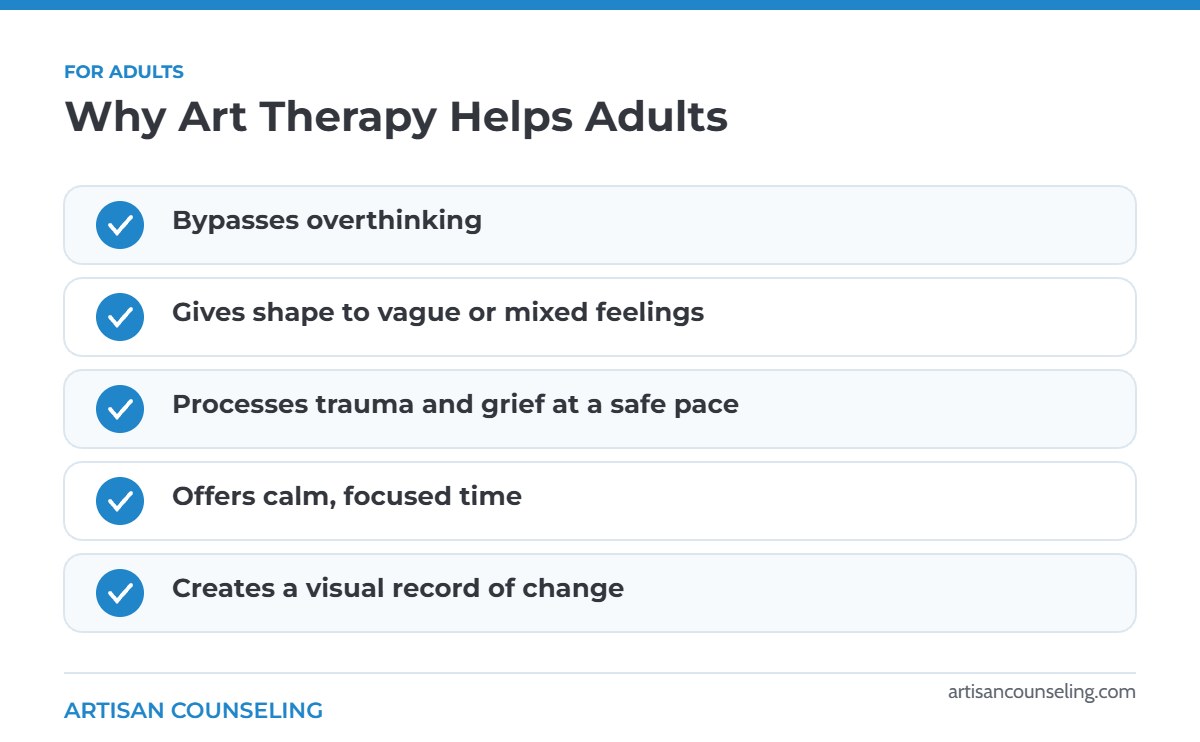
- It bypasses overthinking and intellectualizing.
- It gives shape to feelings that are vague or mixed.
- It can help process trauma or grief at a manageable pace.
- It offers calm, focused time that soothes stress.
- It creates a visual record of change over time.
Working With the Inner Critic
The biggest hurdle for many adults is the voice that says, “I cannot draw,” or “This looks childish.” A counselor helps you notice that judgment without obeying it. Often, that inner critic shows up in other areas of life too, so working with it in art therapy can carry over to self-esteem and perfectionism. If that sounds familiar, do you need art skills for art therapy? may reassure you.
How Does Art Therapy Work for Children?
Children naturally communicate through play and creativity long before they can explain complex feelings. Art therapy meets them in that language.
Why It Works for Kids
- It feels natural and less intimidating than sitting and talking.
- It helps children name and express emotions they do not have words for yet.
- It offers a safe way to show worries, conflicts, or frightening experiences.
- It builds confidence, focus, and problem-solving skills.
- It gives children a sense of choice and control.
Developmental Considerations
Counselors adjust activities for age. Younger children may work with clay, finger paint, or simple drawing prompts, while older children and teens might create comics, collages, or more symbolic pieces. Sessions are often shorter and more playful, and counselors pay close attention to what the child does, not only what they say.
For parents: Try not to ask “What is it?” or judge how a drawing looks. Instead, say something like, “Tell me about your picture.” This invites your child to share in their own way.
What Should Parents Know About Child Art Therapy?
Parents play an important role. A counselor will usually meet with you to understand your concerns and goals, and will share general themes and progress while protecting the trust your child needs to open up.
You may be asked to support new coping skills at home or join some sessions. When challenges involve the whole household, family counseling can be a helpful complement. Our article on family counseling for teens explains how that can work with older kids.
How Do Adult and Child Art Therapy Compare?
| Aspect | Children | Adults |
|---|---|---|
| Main purpose | Express feelings and build emotional language | Bypass overthinking and access deeper feelings |
| Session style | Playful, often shorter, more directive | Reflective, often more open-ended |
| Common challenge | Limited words for feelings | Self-judgment and the inner critic |
| Family role | Parents are usually involved | Individual work, family optional |
Where Do the Approaches Overlap?
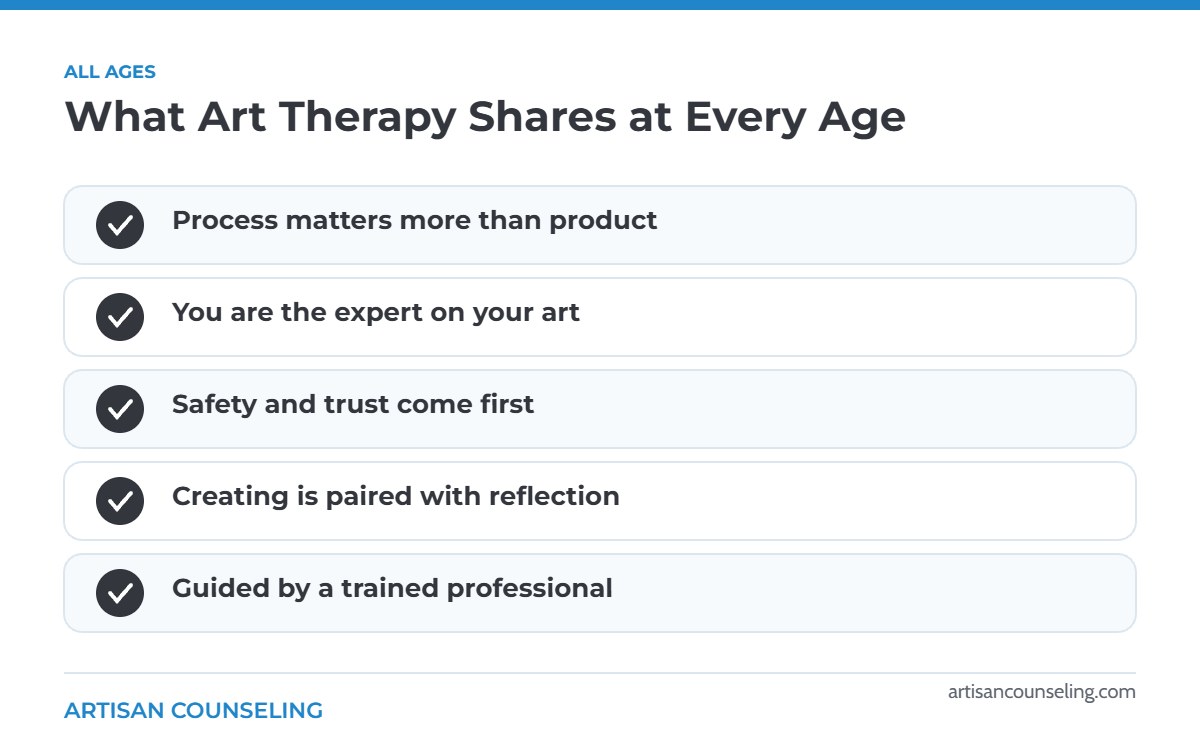
Whatever your age, art therapy shares the same foundations:
- The process matters more than the final product.
- You are the expert on what your art means.
- Safety and trust come first.
- Creative work is paired with reflection and conversation.
- Sessions are guided by a trained professional with clear goals.
To understand the approach as a whole, read what art therapy is and how it works. If trauma is part of the picture, art therapy for trauma explains how it is adapted for safety.
How Do You Find a Qualified Art Therapy Counselor?
Look for a licensed mental health professional with specific training in art-based approaches. Ask about their experience with your age group, how they involve parents (for children), and how they handle difficult emotions that come up. A good fit should feel warm, patient, and respectful of your pace.
Frequently Asked Questions
At what age can a child start art therapy?
Art therapy can be adapted for young children, often from preschool age, as well as older children and teens. A counselor will tailor activities to your child’s developmental stage.
Is art therapy effective for adults?
Yes. Many adults find art therapy helpful for stress, trauma, grief, anxiety, and self-esteem, especially when talking alone has not led to change.
Will I see my child’s artwork?
Practices vary. Counselors often discuss with the child what they are comfortable sharing, and share general themes with parents while protecting the child’s trust.
Do adults need art supplies or experience?
No experience is needed, and supplies are provided for in-person sessions. For telehealth, simple materials like paper and markers are usually enough.
Art Therapy for All Ages at Artisan Counseling
Our counselors provide art therapy for children, teens, and adults. Learn about our counselors to find someone experienced with your age group, then contact us to schedule. We see clients in Newport News and Suffolk, Virginia.