Key Takeaways
- DBT skills fall into four groups: mindfulness, distress tolerance, emotion regulation, and interpersonal effectiveness.
- Each group targets a different challenge, from surviving a crisis to asking for what you need.
- The skills are practical and easy to remember, often taught with simple acronyms like TIPP, STOP, and DEAR MAN.
- You can learn DBT skills in a skills group, in individual counseling, or both, with practice between sessions.
Dialectical behavior therapy, or DBT, is built around a set of practical skills for handling intense emotions, stressful moments, and difficult relationships. The skills can sound technical at first, but at their heart they are simple, concrete tools anyone can learn.
If you have heard about DBT and want to understand what the skills actually are, you are in the right place.
In this article, you will learn why DBT skills matter, the four skill categories explained in plain language, real examples of skills you might practice, and how people usually learn them.
Why Do DBT Skills Matter?
Many people know what they “should” do when they are upset, like stay calm or communicate clearly. The hard part is doing it when emotions are running high. DBT skills give you specific, step-by-step actions to use in those moments.
DBT was developed by psychologist Marsha Linehan, originally for people with intense emotions and chronic suicidal thoughts. Today, its skills help people with a wide range of concerns. Our article on who benefits most from DBT covers this in more detail.
What Are the Four DBT Skill Categories?
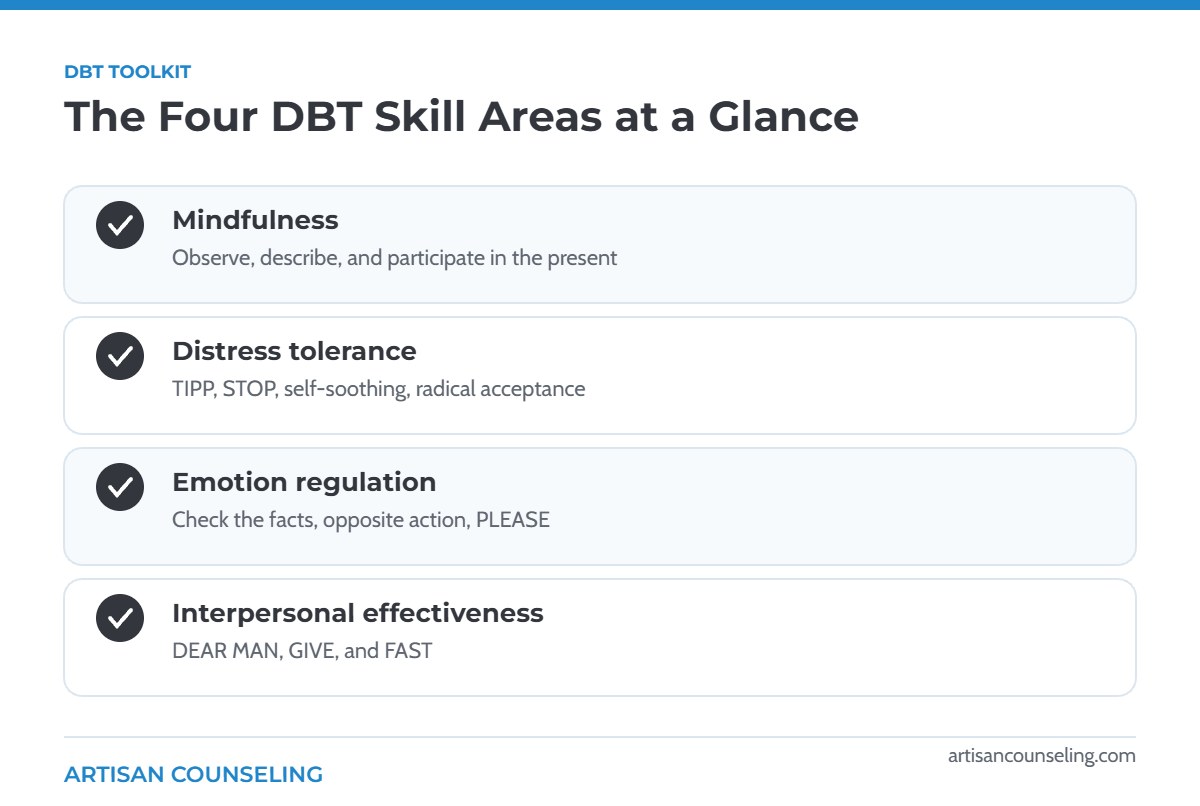
DBT skills are organized into four groups. Two focus on acceptance (mindfulness and distress tolerance), and two focus on change (emotion regulation and interpersonal effectiveness).
1. Mindfulness
Mindfulness is the foundation of all DBT skills. It means paying attention to the present moment, on purpose, without judging it.
- Observe: notice what you see, hear, feel, or think
- Describe: put your experience into words, such as “I notice my heart is racing”
- Participate: fully engage in what you are doing right now
DBT also describes “wise mind,” the balance point between emotional mind and reasonable mind, where you can feel your emotions and still think clearly.
2. Distress Tolerance
Distress tolerance skills help you get through a crisis without making things worse. They are not about solving the problem right away, but about surviving the moment safely.
- TIPP: change your body chemistry quickly using Temperature (cold water on your face), Intense exercise, Paced breathing, and Paired muscle relaxation
- STOP: Stop, Take a step back, Observe, Proceed mindfully
- Self-soothing: use your five senses to calm yourself, such as a warm drink or soothing music
- Radical acceptance: acknowledge reality as it is, even when you do not like it, so you can stop fighting what you cannot change
Note: Some TIPP skills, like cold water or intense exercise, affect heart rate. Check with your doctor first if you have a heart condition or other medical concerns.
3. Emotion Regulation
Emotion regulation skills help you understand your feelings and reduce how often and how intensely they overwhelm you.
- Check the facts: ask whether your emotion and its intensity fit the situation
- Opposite action: when an emotion does not fit the facts, act opposite to its urge, such as approaching instead of avoiding when fear is not justified
- PLEASE: care for your body to lower emotional vulnerability by treating PhysicaL illness, balanced Eating, avoiding mood-Altering substances, balanced Sleep, and Exercise
For more on this skill area, read what emotional regulation really means.
4. Interpersonal Effectiveness
These skills help you ask for what you need, say no, and handle conflict while keeping your relationships and self-respect intact.
- DEAR MAN: Describe, Express, Assert, Reinforce, stay Mindful, Appear confident, Negotiate. Used to make requests or set limits.
- GIVE: be Gentle, act Interested, Validate, use an Easy manner. Used to protect the relationship.
- FAST: be Fair, no unnecessary Apologies, Stick to your values, be Truthful. Used to protect self-respect.
What Does Using DBT Skills Look Like in Real Life?
Imagine you get a frustrating text from a family member and feel a wave of anger. Instead of firing back right away, you might:
- Use STOP to pause before reacting
- Try paced breathing to lower the intensity
- Check the facts to see whether your reaction fits what was actually said
- Use DEAR MAN to respond clearly and calmly once you feel steadier
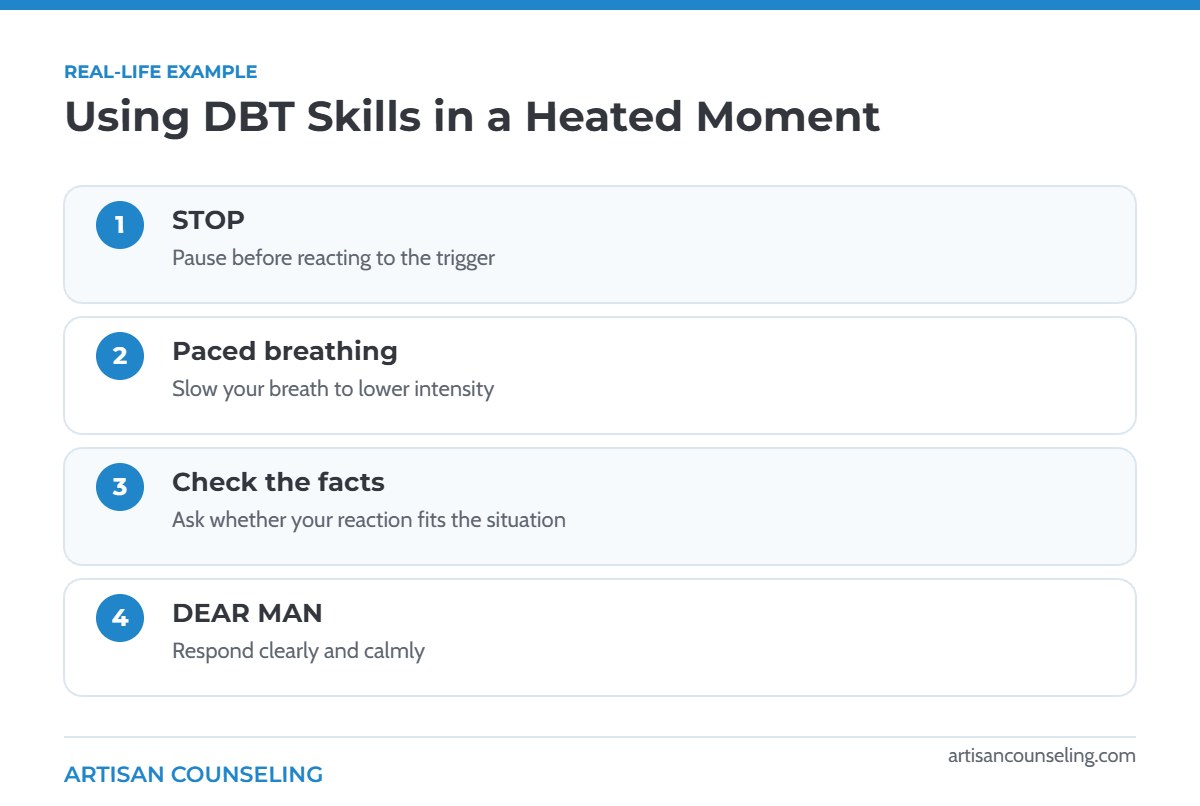
The skills often work best together, moving you from crisis to calm to clear communication.
How Do You Learn DBT Skills?
In comprehensive DBT, skills are usually taught in a weekly skills group, much like a class, alongside individual therapy where you apply them to your own life. Many counselors also teach DBT skills within regular individual counseling.
Practice between sessions is essential. You might use a diary card to track emotions, urges, and which skills you tried. Over time, the skills start to feel more natural and automatic. If you are wondering whether DBT is meant only for certain diagnoses, see is DBT only for borderline personality disorder?
If you are in crisis: call or text 988 to reach the 988 Suicide & Crisis Lifeline, available 24/7, or call 911 in an emergency.
Frequently Asked Questions
What are the four main DBT skills?
The four DBT skill areas are mindfulness, distress tolerance, emotion regulation, and interpersonal effectiveness. Each targets a different kind of challenge.
Can I learn DBT skills on my own?
Some people start with DBT workbooks, which can be helpful. A trained counselor can help you choose the right skills, practice them, and troubleshoot when they do not seem to work.
How long does it take to learn DBT skills?
A full DBT skills curriculum often takes about six months to complete, and some programs repeat it. In individual counseling, the pace depends on your goals.
Are DBT skills helpful for everyday stress?
Yes. Even if you are not in crisis, skills like mindfulness, STOP, and DEAR MAN can make daily stress and conversations easier to handle.
Building DBT Skills With Artisan Counseling
If you want practical tools for handling strong emotions, our counselors can help you learn and practice DBT skills. Learn more about our DBT therapy services or individual counseling.
Meet our counselors, visit our Newport News counseling office or our Suffolk location, or ask about telehealth. Contact us when you are ready to begin.