Key Takeaways
- Life transitions like divorce, moves, new siblings, loss, or deployment affect every member of a family, often in different ways.
- Common signs a family is struggling include more conflict, withdrawal, behavior changes in kids, and communication breakdowns.
- Family counseling gives everyone a voice, improves communication, and helps the family adapt together.
- Seeking help early can prevent short-term stress from turning into long-term patterns.
Change is a normal part of family life. Children grow up, parents change jobs, families move, relationships end, new members arrive, and loved ones pass away. Even positive changes can shake up routines, roles, and relationships in ways no one expected.
When a family goes through a major transition, each person may react differently. One child acts out, another goes quiet, and the adults are too stretched to notice. In this article, you will learn which transitions commonly strain families, the signs your family may need support, how family counseling helps during change, what sessions look like, and simple ways to support each other at home.
Life Transitions That Commonly Affect Families
Any change that shifts a family’s routines, roles, or sense of security can be hard. Some of the most common include:
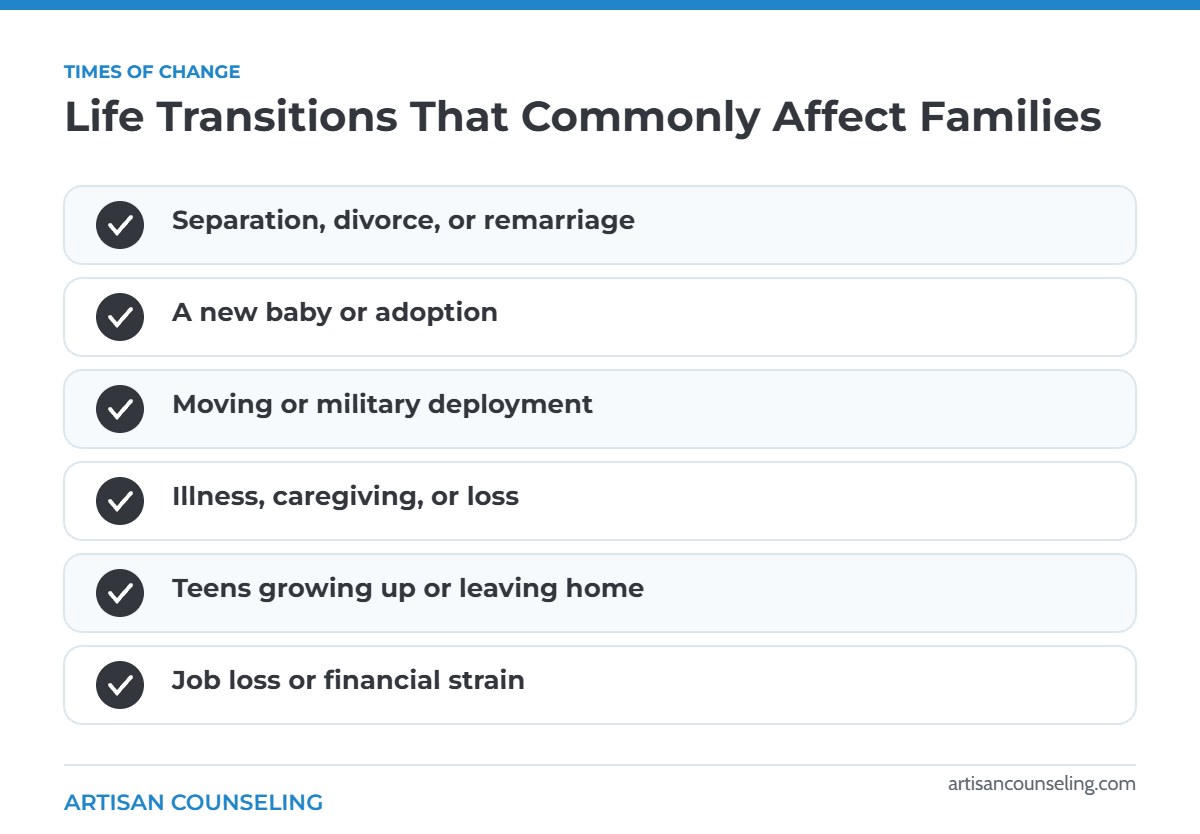
- Separation, divorce, or remarriage. Kids may split time between homes, and new step-relationships take time to form. See our guide to co-parenting after separation.
- A new baby or adoption. Older siblings may feel displaced, and parents adjust to new demands.
- Moving or relocation. Leaving friends, schools, and communities behind is a real loss for children and adults.
- Military deployment and reintegration. Families near military communities often navigate repeated separations and the adjustment when a parent returns home.
- Illness, injury, or caregiving. A family member’s health change can shift roles and add stress for everyone.
- Grief and loss. The death of a family member, friend, or pet affects each person differently. Read why grief doesn’t follow a timeline.
- Developmental changes. Starting school, entering adolescence, or a young adult leaving home all change family dynamics.
- Job loss or financial strain. Money stress often fuels tension and conflict at home.
Why Transitions Are So Hard on Families
Families work a bit like a mobile: when one piece moves, everything else shifts too. A transition can change who does what, how much time and attention each person gets, and how safe and predictable home feels.
Children in particular rely on routine to feel secure. When routines change, they may not have the words to explain how they feel, so their emotions show up in behavior instead. Adults, meanwhile, may be so focused on logistics that they miss the emotional side. For more on this, read why life transitions can feel emotionally overwhelming.
Signs Your Family May Need Support
Some stress during change is expected. Consider reaching out if you notice these patterns lasting more than a few weeks:
- More arguing, tension, or slammed doors at home.
- A child or teen withdrawing, seeming sad, or losing interest in activities.
- Changes in sleep, appetite, or school performance.
- Younger children regressing, such as bedwetting or clinginess.
- Family members avoiding each other or difficult topics.
- Parents disagreeing about how to handle the change.
- Someone in the family seeming stuck in grief, anger, or worry.
How Family Counseling Helps During Life Transitions
Family counseling brings family members together with a trained counselor to understand what is happening and work through it as a team. The focus is not on blaming one person but on how the family functions together.
It Gives Everyone a Voice
In everyday life, the loudest voice often wins. In counseling, each person, including quieter kids, gets space to share how the change feels for them.
It Improves Communication
Counselors teach families to listen, express feelings without blame, and problem-solve together. These skills help long after the transition passes.
It Clarifies New Roles and Routines
Families can work out practical questions, such as new schedules, household responsibilities, and expectations in a blended family, with a neutral guide.
It Supports Each Person’s Adjustment
A counselor can notice when a family member needs extra help and may suggest individual sessions alongside family work. Approaches like art therapy can be especially helpful for younger children who express themselves more easily through play and creativity than words.
What to Expect in Family Counseling
Here is how the process usually unfolds:
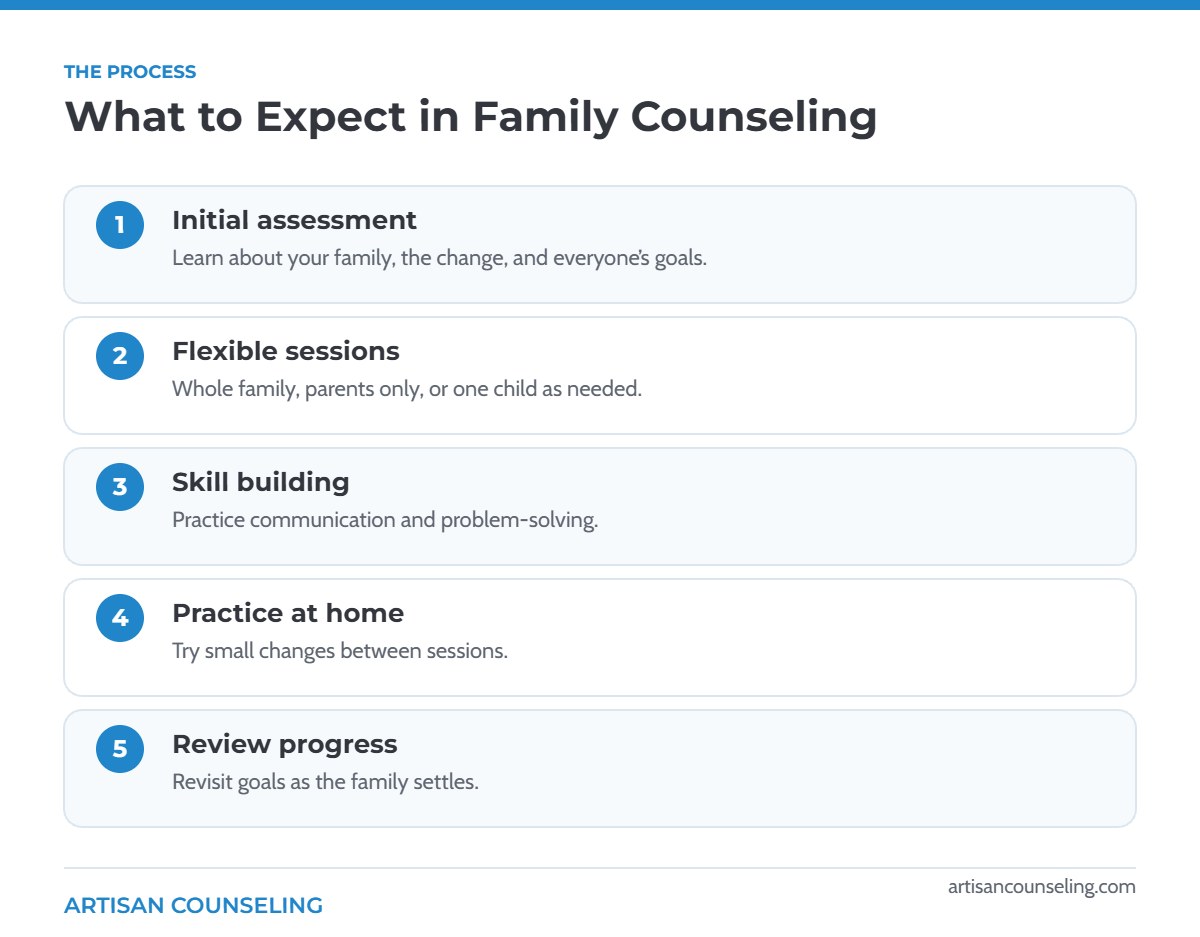
- Initial assessment. The counselor learns about your family, the transition, and each person’s concerns and goals.
- Flexible sessions. Some sessions include the whole family, while others may include just parents or one child.
- Skill building. Families practice communication, coping, and problem-solving strategies.
- Practice at home. You will try small changes between sessions and talk about how they went.
- Reviewing progress. Goals are revisited regularly, and sessions wind down as the family feels more settled.
If you are wondering about timing and commitment, see what family counseling is and how it works.
Ways to Support Your Family at Home
Alongside or before counseling, these steps can help:
- Talk openly and at an age-appropriate level about what is changing and why.
- Keep routines as steady as possible, especially meals, bedtimes, and family rituals.
- Invite feelings, including hard ones, without rushing to fix them.
- Give kids some choices, such as how to decorate a new room, to restore a sense of control.
- Care for yourself, because kids take emotional cues from the adults around them.
Tip: Try a short weekly family check-in. Each person shares one thing that went well and one thing that was hard. It builds the habit of talking before problems pile up.
Frequently Asked Questions
Does the whole family need to attend every session?
Not always. Counselors often vary who attends based on the goals, so some sessions may include everyone, while others focus on parents, siblings, or one child.
Is family counseling helpful for blended families?
Yes. Blended families face unique challenges, such as new roles, loyalty conflicts, and different household rules. Counseling helps everyone adjust and build trust over time.
How do I know if my child needs individual counseling instead?
If one child is struggling much more than others, or has symptoms such as persistent anxiety, depression, or trauma reactions, individual counseling may help, often alongside family sessions. A counselor can help you decide.
Family Support at Artisan Counseling
If your family is navigating a big change, you do not have to find your way alone. Our counselors offer family counseling in Suffolk, Newport News, and through telehealth across Virginia. Contact us to talk about what your family needs.