Key Takeaways
- There is no single answer: counseling can last a few sessions, a few months, or longer depending on your goals.
- Focused, skills-based work for one concern is often shorter; complex trauma or long-standing patterns usually take longer.
- Session frequency, practice between sessions, and openness all affect how quickly you progress.
- Your counselor should review goals with you regularly so the timeline stays intentional.
- Ending counseling is a planned step, and you can always return if you need support later.
One of the first questions people ask before starting counseling is, “How long will this take?” It is a fair question. You want to know what you are committing to in time, energy, and cost.
The honest answer is that it depends. In this article, you will learn what affects the length of counseling, typical timelines for common concerns, how often people usually attend, and how you and your counselor will know when you are ready to wrap up.
Is There a Typical Length for Counseling?
Research on psychotherapy shows that many people notice meaningful improvement within the first several months of regular sessions, while others benefit from longer-term work. Some structured treatments, like certain forms of CBT, are designed to be completed within a set number of sessions. Others are open-ended.
Rather than a fixed number, think of counseling as having phases: getting started, active work, and consolidating gains. How long each phase lasts depends on you.
What Happens in the Early Sessions?
The first one to three sessions usually focus on assessment. Your counselor will ask about your history, current stressors, strengths, and what you hope will change. Together, you will set goals that are specific enough to track, such as fewer panic attacks, calmer conversations with a partner, or sleeping better.
Those goals become the roadmap for the rest of counseling. They also make the timeline clearer, because you can see what has been accomplished and what is left. If you are nervous about getting started, read what happens in your first counseling session.
What Affects How Long Counseling Takes?
Several factors shape your timeline. Understanding them can help you set realistic expectations.
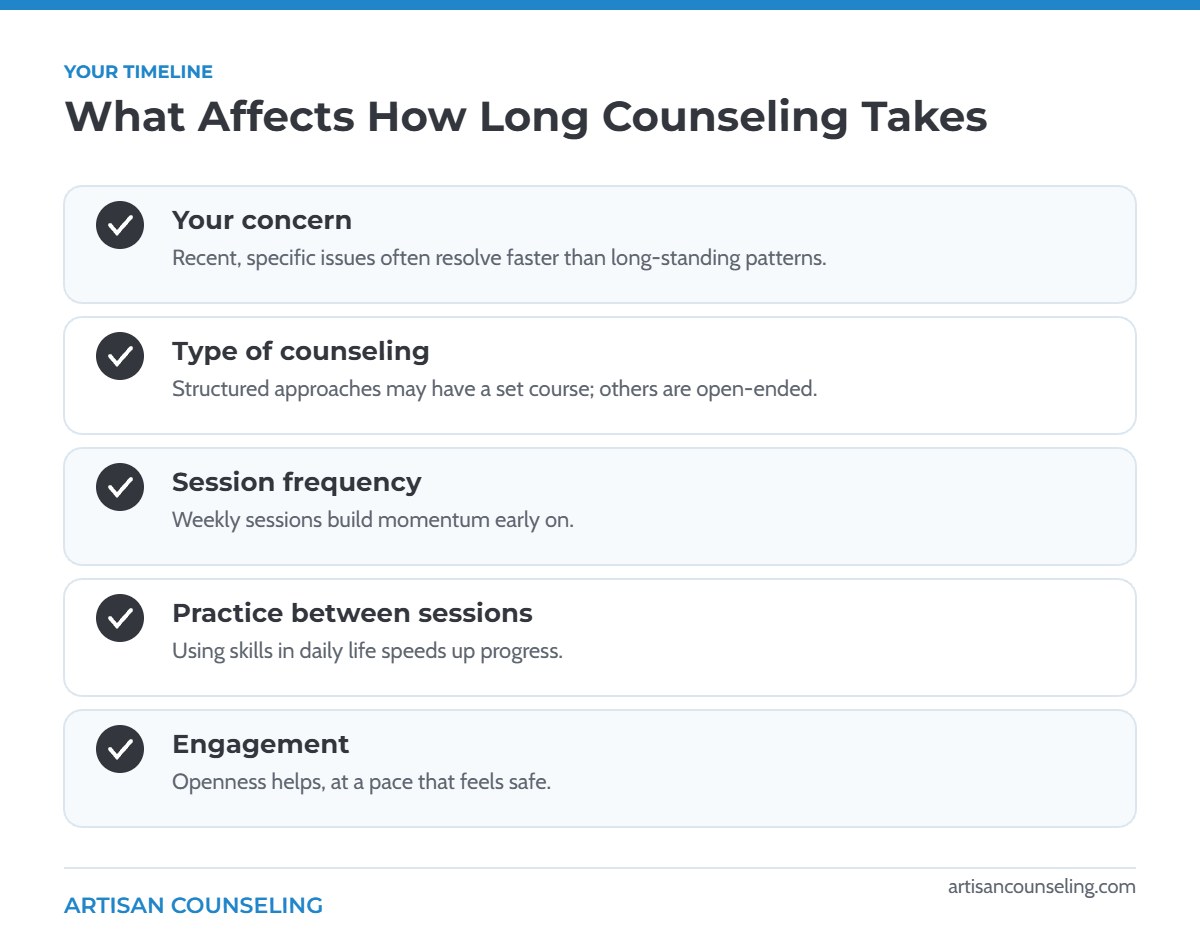
What You Are Working On
A specific, recent concern, like adjusting to a new job or managing panic attacks, often responds to shorter, focused work. Long-standing patterns, childhood trauma, or several overlapping concerns usually take more time.
The Type of Counseling
Structured approaches such as CBT or solution-focused therapy often have a defined course. Trauma processing with EMDR therapy varies based on how many memories need attention and how much preparation is needed first. Couples and family counseling depend on how many people are involved and their shared goals.
How Often You Attend
Weekly sessions build momentum, especially early on. Attending less often can stretch the timeline, though some people move to every other week once they have stable skills.
What You Do Between Sessions
The real change often happens between appointments. Practicing skills, noticing patterns, journaling, or trying a new response in a hard moment all speed up progress.
Life Circumstances
Ongoing stressors, such as a demanding job, caregiving, health problems, or a relationship in transition, can slow progress or add new topics along the way. That is normal. Counseling adapts to what is happening in your life.
Your Readiness and Engagement
Being open, honest, and willing to try new things helps. That does not mean you must feel ready for everything. A good counselor will move at a pace that feels safe.
Common Counseling Timelines
These are general ranges, not rules. Your counselor can give you a better sense after an initial assessment.
| Type of Concern | General Range |
|---|---|
| Specific stressor or life adjustment | A few sessions to a few months |
| Anxiety or depression with skills-based therapy | Often several months of regular sessions |
| Relationship or family concerns | Several months, depending on goals |
| Trauma, PTSD, or long-standing patterns | Several months to a year or more |
Tip: Ask your counselor in the first few sessions how they will measure progress. Clear goals make it easier to see how far you have come and how much further you want to go.
How Often Do People Go to Counseling?
Most people start with weekly sessions of about 50 to 60 minutes. As you build skills and feel more stable, you and your counselor may move to every other week, then monthly check-ins before ending.
If you are in a period of acute stress, more frequent support may help at first. Telehealth can make consistent attendance easier when schedules are tight; see our guide to in-person vs. telehealth counseling.
How Do You Know You Are Making Progress?
Progress is not always a straight line. Some weeks feel like a breakthrough and others feel stuck. Our article on why healing isn’t linear explores this in more detail. Signs you are moving forward include:
- You recover from setbacks faster than before.
- You notice your patterns sooner and respond differently.
- Symptoms like worry, low mood, or irritability are less frequent or intense.
- People close to you notice changes.
How Do You Know You Are Ready to End Counseling?
Ending is usually a gradual, planned process. You and your counselor will look back at your original goals together.
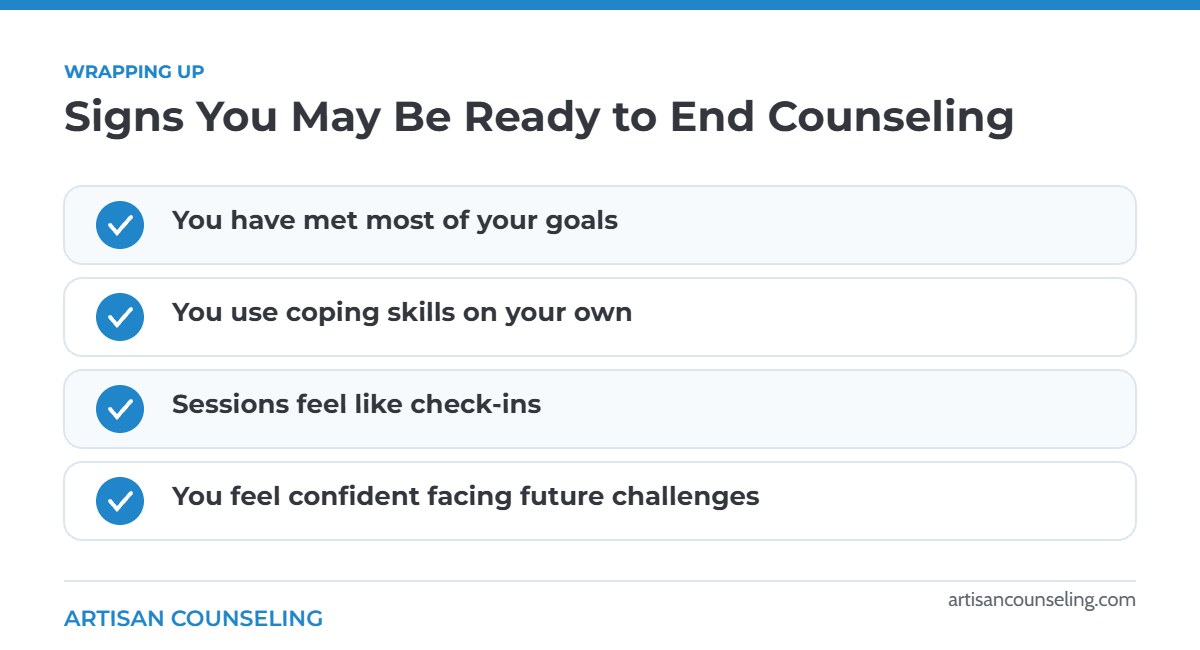
- You have met most of the goals you set.
- You can use your coping skills on your own.
- Sessions start to feel more like check-ins than active work.
- You feel confident handling future challenges.
Ending counseling does not have to be permanent. Many people return for a few “tune-up” sessions during a stressful season, and that is a healthy use of support.
Frequently Asked Questions
How many counseling sessions will I need?
It varies. Some people meet their goals in a handful of sessions, while others benefit from months of work. Your counselor can give you a clearer estimate after your first few appointments.
Can counseling be short-term?
Yes. Short-term approaches, such as solution-focused therapy and some structured CBT programs, are designed to address specific goals in a limited number of sessions.
What if I feel like counseling is not working?
Bring it up with your counselor. You might adjust your goals, the approach, or session frequency. If the fit is not right, it is okay to try another counselor.
Does insurance limit how many sessions I can have?
Some plans have limits or require periodic authorization, while others do not. Check your plan and ask our team to help you understand your benefits.
Starting Counseling at Artisan Counseling
Whatever your timeline, our counselors will work with you to set clear goals and review them regularly. Learn about individual counseling, read how to choose the right therapist, or contact us to get started in Newport News, Suffolk, or by telehealth.