Key Takeaways
- For many common concerns, telehealth counseling can be similarly effective to in-person sessions.
- In-person sessions offer a dedicated, distraction-free space and can suit some trauma, couples, child, and art therapy work.
- Telehealth removes travel time and can make it easier to attend consistently, especially with busy schedules.
- You need privacy, a stable connection, and to be physically located in Virginia for a Virginia-licensed counselor.
- You can switch formats or combine them as your needs change.
Counseling no longer has to happen only in an office. Today, many people meet with a counselor by secure video from their living room, parked car, or office. Others still prefer sitting across from someone in person. So which is better?
The answer depends on you. In this article, you will learn what each format looks like, the benefits of each, who tends to prefer which option, how to set yourself up for a good telehealth session, and how to decide.
What Does In-Person Counseling Look Like?
In-person counseling takes place in a private office with your counselor. You check in, sit in a comfortable space, and spend about 50 to 60 minutes together. The room itself becomes a dedicated place for focusing on yourself.
Benefits of In-Person Sessions
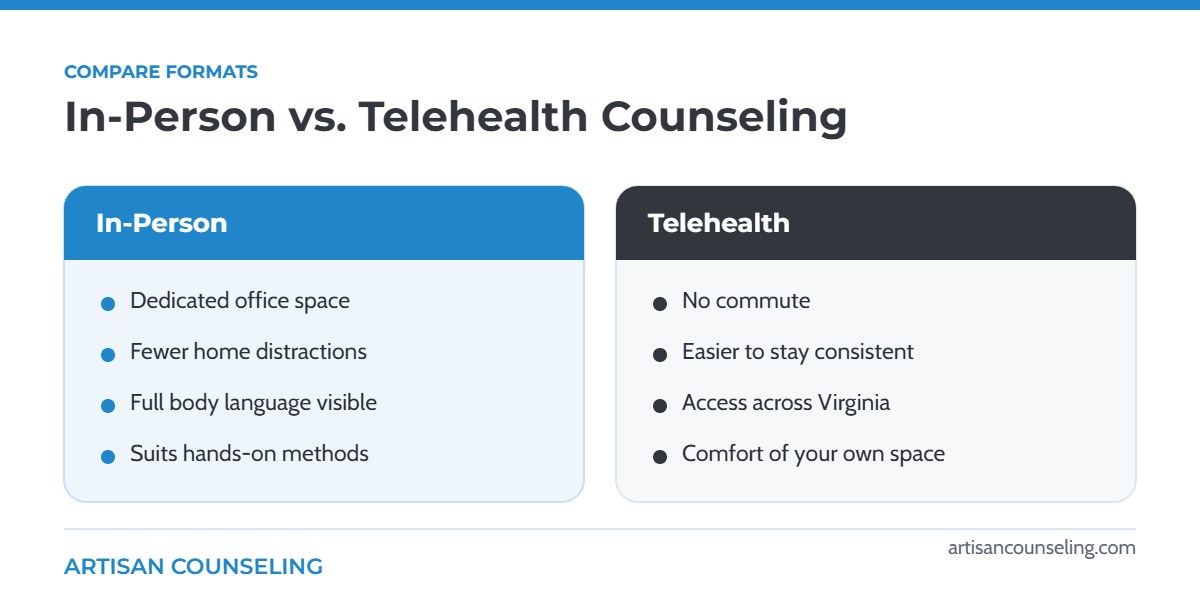
- A clear boundary. Leaving home helps some people shift into a reflective mindset and “leave it” at the office afterward.
- Fewer distractions. No notifications, kids, pets, or roommates nearby.
- Full nonverbal communication. Your counselor can see body language, posture, and subtle cues more easily.
- Hands-on methods. Some approaches, such as art therapy or work with young children, often flow more naturally in person.
Who Often Prefers In-Person Counseling
People without a private space at home, those who feel more connected face to face, younger children, and some couples and families often choose in-person sessions. Some trauma clients also prefer the containment of an office.
A Day in the Life: In-Person
For example, imagine you leave work at 4:30, drive 20 minutes to the office, and sit in the waiting room for a few minutes to settle. After your session, the drive home gives you time to think through what you talked about before walking back into family life. For many people, that buffer is part of what makes in-person counseling work.
What Does Telehealth Counseling Look Like?
Telehealth counseling uses a secure, HIPAA-compliant video platform. You join from a private location using a computer, tablet, or phone. The session follows the same structure and confidentiality standards as in-person counseling.
Benefits of Telehealth
- No commute. You save travel time and can fit sessions into a lunch break.
- Consistency. It is easier to keep appointments during bad weather, illness, or busy weeks.
- Access across the state. You can see a counselor whose specialty fits you, even if they are not nearby.
- Comfort. Some people open up more easily in their own familiar space.
Who Often Prefers Telehealth
Busy professionals, parents, people in rural areas, people with mobility or health challenges, and military families with changing schedules often find telehealth a better fit. People with social anxiety may also find it an easier first step.
A Day in the Life: Telehealth
Now imagine a parent who has 50 minutes while the baby naps. They close the bedroom door, put on headphones, and log in from their laptop. There is no need to find childcare or sit in traffic. Others join from a parked car on a lunch break, which can be a surprisingly private spot. The trade-off is that you create your own buffer, so it helps to take a few quiet minutes before jumping back into your day.
Is Telehealth Counseling as Effective as In-Person?
For many common concerns, including anxiety and depression, research suggests video-based therapy can be about as effective as in-person therapy. Approaches like CBT translate especially well to video.
What matters most is the relationship with your counselor and your ability to attend consistently. If one format helps you show up and speak openly, that is likely the better format for you.
When In-Person Care May Be a Better Fit
Telehealth is not the right choice for everyone or every situation. In-person sessions may be a better option when:
- You do not have a private place where you can talk freely without being overheard.
- Someone in your home makes you feel unsafe or monitors your devices.
- You are in a period of serious crisis and your counselor recommends closer support.
- You find it hard to stay focused or present on screen.
- Your therapy involves hands-on work or young children.
Your counselor will talk with you about what level and format of care makes sense, and they may recommend a change if your needs shift.
In-Person vs. Telehealth: Side-by-Side
Here is a quick comparison to help you think through your options.
| Factor | In-Person | Telehealth |
|---|---|---|
| Travel | Requires a commute | None |
| Privacy needs | Office provides it | You need a private space |
| Distractions | Minimal | Depends on your environment |
| Nonverbal cues | Fully visible | Mostly face and upper body |
| Scheduling flexibility | Moderate | Often higher |
How Do You Prepare for a Telehealth Session?
A little preparation makes video sessions feel smoother and more private.
- Find a quiet, private room, or use headphones and a white noise machine outside the door.
- Test your internet connection, camera, and microphone ahead of time.
- Charge your device and close other apps and notifications.
- Keep water, tissues, and a notepad nearby.
- Give yourself a few minutes before and after to transition.
Creating Privacy When Home Is Busy
Many people worry that they do not have a quiet enough space. A few practical ideas can help:
- Schedule sessions when roommates or family members are out, or ask them for an hour of privacy.
- Sit in your car, a closet, or a bathroom if that is the only door that closes. Counselors have seen it all.
- Use the chat feature, if your platform offers one, to type something you do not want to say out loud.
- Agree on a signal with your counselor if someone walks in and you need to pause.
At the start of each telehealth session, your counselor may confirm your location and a phone number to reach you. This is standard practice and helps them support you if the call drops or an emergency comes up.
Good to know: Licensing rules generally require you to be physically located in the state where your counselor is licensed during the session. If you will be traveling outside Virginia, let your counselor know ahead of time.
Can You Switch Between In-Person and Telehealth?
Yes. Many clients use a hybrid approach, such as starting in person to build rapport and then moving to video, or using telehealth during busy seasons. Your counselor can help you decide what supports your goals.
For example, some clients begin in person while working through an intense period, then switch to video once sessions become more about maintaining progress. Others use telehealth most weeks and come into the office now and then for work that benefits from being in the room together, such as couples sessions or art therapy. If your concerns involve trauma, ask your counselor which format they suggest for approaches like EMDR therapy, since preferences can vary by client and counselor.
How Do You Choose the Right Format?
Ask yourself a few honest questions:
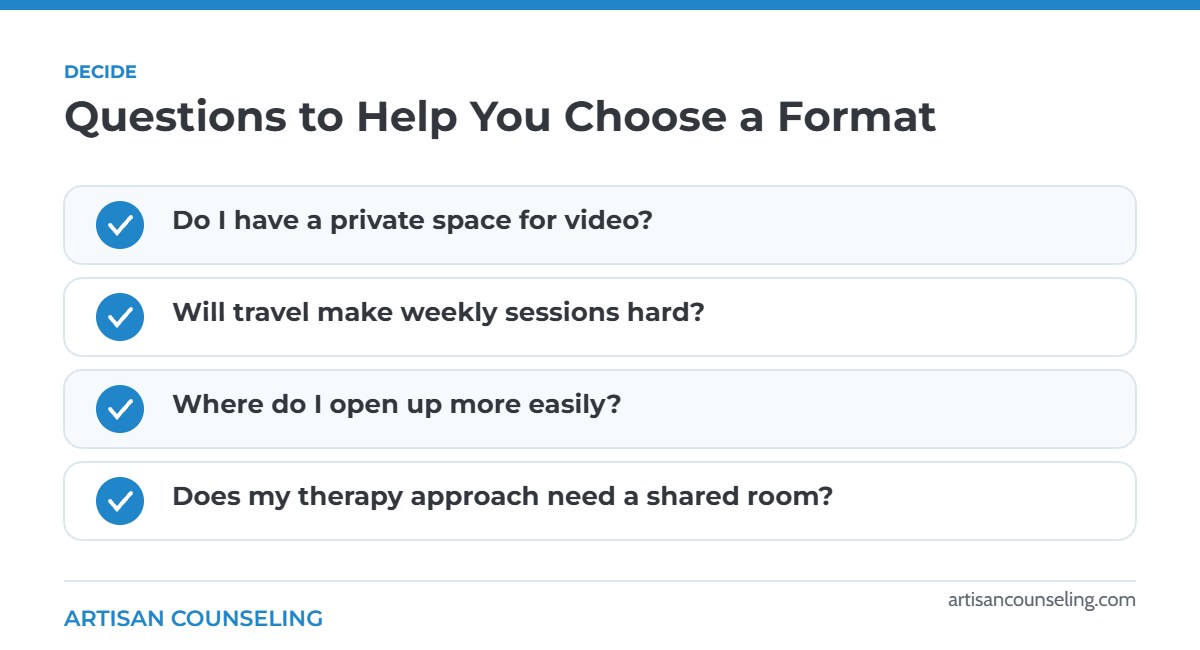
- Do I have a private, quiet place for video sessions?
- Will travel time make it hard to attend weekly?
- Do I connect more easily face to face or in my own space?
- Does my therapy approach work better in a room together?
Your answers will usually point you in a clear direction. For more help deciding who to see, read how to choose the right therapist for you.
Frequently Asked Questions
Will my first telehealth session feel awkward?
It might feel a little unusual for the first few minutes, especially if you are new to counseling. Most people settle in quickly. Your counselor will explain how sessions work and help you get comfortable.
Is telehealth counseling confidential?
Yes. Licensed counselors use secure, HIPAA-compliant platforms and follow the same confidentiality rules as in-person care. Your part is choosing a private space where others cannot overhear.
Does insurance cover telehealth counseling?
Many insurance plans cover telehealth counseling, but coverage varies. Check with your plan or review our insurance and payment information page.
Can couples or families do counseling by telehealth?
Yes. Couples and families can join from the same room or, in some cases, from different locations within the state. Your counselor will help set up a format that works.
What if my internet connection drops during a session?
Your counselor will usually have a backup plan, such as reconnecting or switching to a phone call. Discuss this at the start of your first telehealth session.
Counseling Your Way at Artisan Counseling
We offer both formats so you can choose what works best. Visit our offices in Newport News or Suffolk, or learn about telehealth counseling across Virginia. When you are ready, contact our team to schedule.