
Key Takeaways
- You do not need to be good at art to benefit from art therapy. No experience or talent is required.
- Art therapy focuses on the process of creating and what it brings up for you, not on how the final piece looks.
- Your counselor is not grading or judging your work. They are paying attention to your experience.
- Simple materials like collage or clay can help if drawing feels intimidating.
Many people are drawn to the idea of art therapy and then stop themselves with one thought: “But I am not artistic.” Maybe you have not picked up a paintbrush since grade school, or you still remember someone criticizing your drawings.
Here is the good news: art therapy is not an art class, and skill has nothing to do with whether it works for you. In fact, people who consider themselves “bad at art” often find it freeing.
In this article, you will learn what art therapy actually is, why artistic skill does not matter, what your counselor is really paying attention to, how to manage the fear of being judged, and who tends to benefit most.
What Is Art Therapy?
Art therapy is a form of mental health counseling that uses creative activities, such as drawing, painting, collage, or sculpting, to help you explore emotions, reduce stress, and gain insight. It is led by a trained mental health professional.
The art becomes another way to communicate. Some feelings are hard to say out loud, and making something with your hands can help them surface in a gentler way. To see how a session works step by step, read what happens in an art therapy session.
Why Doesn’t Artistic Skill Matter in Art Therapy?
In art therapy, the goal is expression, not technique. A messy scribble can say just as much as a detailed painting, sometimes more.
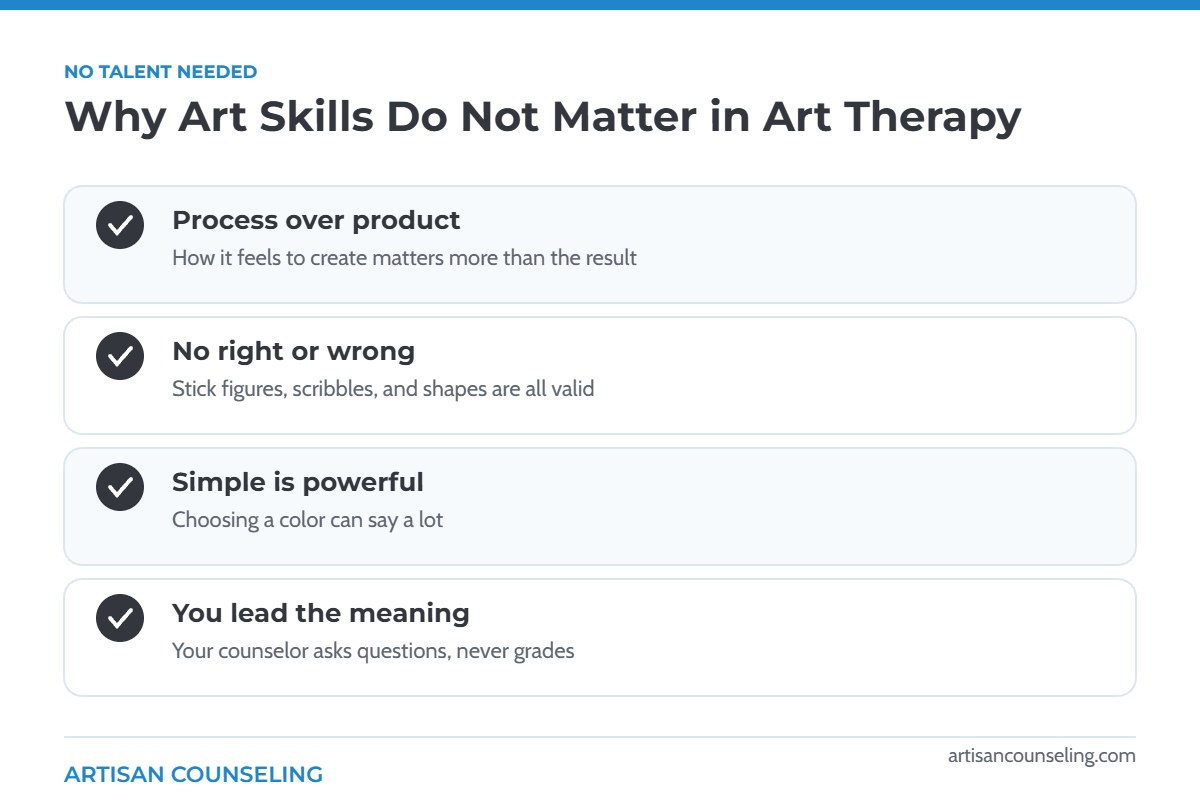
The Process Matters More Than the Product
What you choose to make, the colors you reach for, and how it feels to create are all meaningful. Whether the result “looks good” is not part of the equation.
There Is No Right or Wrong Way
You will not be corrected on perspective or shading. Stick figures, shapes, lines, and abstract marks are all completely valid.
Simple Can Be Powerful
Some of the most meaningful moments in art therapy come from very simple activities, like choosing a color that matches your mood or tearing paper to release frustration.
What Is Your Art Therapist Actually Paying Attention To?
It is natural to wonder what your counselor sees when they look at your work. They are not evaluating your talent. Instead, they are curious about your experience, such as:
- How you felt before, during, and after creating
- What you chose to include or leave out
- Any thoughts, memories, or feelings that came up
- What the piece means to you, in your own words
Your counselor will not tell you what your art “means.” They will ask open questions and let you lead. You are the expert on your own work.
How Do You Get Past the Fear of Being Judged?
Feeling self-conscious is very common, especially at first. Many adults carry old messages about not being creative. Here are a few things that can help:
- Name the worry out loud. Telling your counselor “I feel awkward about this” is a great starting point, and they will meet it with understanding.
- Start with low-pressure materials. Collage, clay, or simply choosing colors can feel easier than drawing.
- Focus on the feeling, not the picture. Ask yourself “What does this feel like?” instead of “Does this look right?”
- Remember it is private. Your work stays between you and your counselor unless you choose to share it.
Try this: At home, grab a piece of paper and a few colors. Without planning, fill the page with shapes or lines that match how your day felt. Notice what it is like to create without any goal. That is the spirit of art therapy.
Who Benefits Most From Art Therapy?
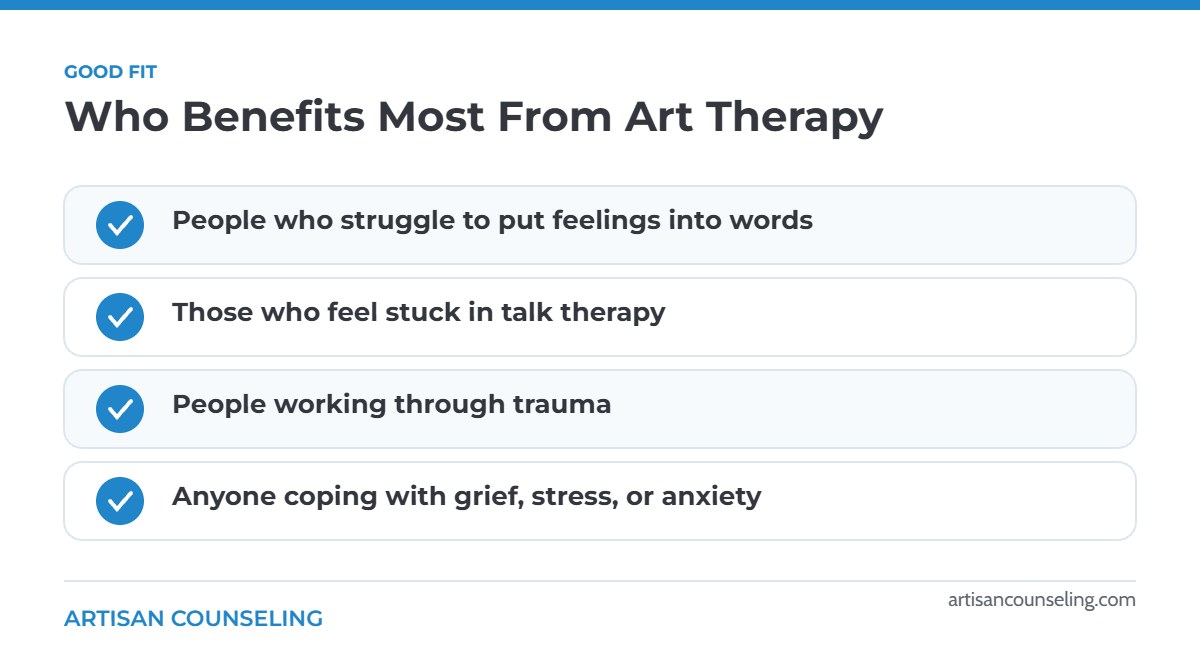
Art therapy can help children, teens, and adults. It is often especially helpful for people who:
- Find it hard to put feelings into words
- Feel stuck in traditional talk therapy
- Are working through trauma or painful memories
- Are coping with grief, stress, or anxiety
- Want a hands-on, calming way to process emotions
For people with trauma, art can offer a safer way to approach difficult experiences without having to describe every detail. Learn more in our article on art therapy for trauma, or see how the approach changes with age in art therapy for adults vs. children.
If You Are Still Hesitant
It is okay to feel unsure. You do not have to commit to anything before your first session. You can ask questions, share your concerns, and decide how much art you want to include. Many counselors blend art activities with regular conversation, so you can move between the two at your own pace.
Most people find the hesitation fades quickly once they realize no one is judging their work.
Frequently Asked Questions
Do I have to show my artwork to anyone?
No. Your artwork is part of your counseling and stays private. You decide whether to keep it, share it, or leave it with your counselor.
What if I really hate drawing?
That is fine. Art therapy includes many materials, such as collage, clay, and paint. Your counselor can help you find something that feels comfortable.
Is art therapy as effective as talk therapy?
Art therapy is a form of counseling, and many people find it helpful, especially when words are hard to find. It is often combined with talk therapy so you get the benefits of both.
Exploring Art Therapy at Artisan Counseling
If you are curious but nervous, that is a perfect place to start. Learn more about our art therapy services, meet our counselors, or ask whether telehealth sessions could work for you. When you are ready, get in touch with our team in Newport News or Suffolk.