

Key Takeaways
- Family counseling treats the family as a system, focusing on patterns between people instead of blaming one person.
- Families seek it for conflict, communication problems, transitions, grief, parenting stress, and mental health concerns.
- Sessions may include the whole family or smaller groups, and the counselor keeps the conversation fair and safe.
- Common approaches include structural, strategic, systemic, and solution-focused family therapy, often combined with CBT or narrative work.
- You do not need everyone on board to begin; change in one person often shifts the whole family.
When one person in a family is struggling, everyone feels it. Tension at home can show up as constant arguments, silence, distance, or one family member who seems to carry all the stress. It is easy to assume the fix is for that one person to change.
Family counseling takes a different view. In this guide, you will learn what family counseling is, how it differs from individual therapy, when families typically seek it, what happens in a session, which approaches counselors use, and who needs to attend.
What Is Family Counseling?
Family counseling, also called family therapy, is a form of talk therapy that helps family members understand each other, communicate better, and resolve conflict. A licensed counselor works with two or more family members together.
“Family” is defined broadly. It can include parents and children, couples raising kids, siblings, stepfamilies, grandparents raising grandchildren, chosen family, or anyone who shares a home and close relationship.
How Is Family Counseling Different From Individual Counseling?
In individual counseling, the focus is on one person’s thoughts, feelings, and goals. Family counseling focuses on the relationships and patterns between people.
The key idea is that families work like systems. When one part changes, the rest of the system adjusts. A teen acting out, for example, may be responding to stress between parents, a recent move, or unclear rules. Addressing the system often creates more lasting change than treating one person alone.
A Quick Comparison
| Individual Counseling | Family Counseling |
|---|---|
| One client | Two or more family members |
| Focus on personal thoughts, feelings, and history | Focus on communication, roles, and patterns between people |
| Goals set by the individual | Shared goals the family agrees on |
The two can work well together. Some people attend individual sessions while also joining family sessions.
When Do Families Seek Counseling?
Families come to counseling for many reasons, and you do not need to be in crisis to benefit. Common reasons include:
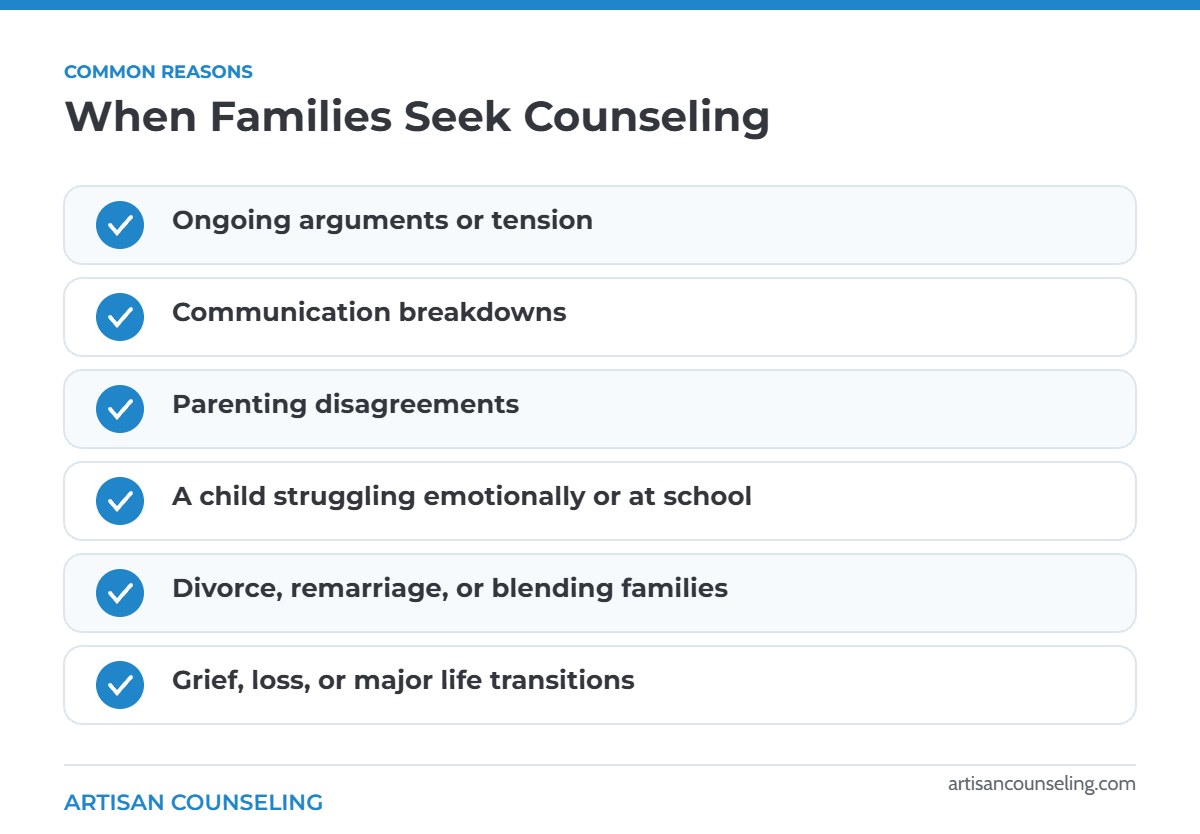
- Frequent arguments or tension that never seems to resolve
- Communication breakdowns, such as shutting down, yelling, or avoiding each other
- Parenting challenges or disagreements between caregivers about discipline
- A child or teen struggling with anxiety, depression, behavior, or school
- Divorce, separation, remarriage, or blending two families
- Grief after a death, illness, or other major loss
- Life transitions such as a move, a new baby, deployment, or a child leaving home
- Substance use or a mental health condition affecting the household
If your family includes teenagers, our article on family counseling for teens covers those concerns in more depth.
What Happens in a Family Counseling Session?
Most sessions last about 50 to 60 minutes. The first session or two focus on getting to know your family: who is in it, what brought you in, what each person hopes will change, and what has already been tried.
During Ongoing Sessions
- The counselor helps each person share their view without being interrupted.
- You will notice patterns, like who steps in during conflict or who tends to withdraw.
- The family practices new skills, such as calm problem-solving or “I” statements.
- You may get small assignments to try at home, like a weekly family check-in.
The counselor stays neutral and keeps the conversation safe. If things get heated, they will slow the discussion down so it stays productive.
Tip: Before your first session, ask each family member to think about one thing they would like to be different at home. Starting with hopes rather than complaints sets a more constructive tone.
What Approaches Do Family Counselors Use?
Family counselors draw from several well-established models. Many blend approaches based on your family’s needs.
- Structural family therapy looks at roles, boundaries, and hierarchy, such as who makes decisions and how close or distant members are.
- Strategic family therapy focuses on specific problems and practical changes to the patterns that keep them going.
- Systemic family therapy explores how beliefs and interactions across generations shape current behavior.
- Solution-focused therapy builds on what already works and sets small, concrete goals.
- Narrative therapy helps families separate people from problems and rewrite unhelpful stories.
- Cognitive behavioral techniques teach skills for managing thoughts, emotions, and behavior.
You can learn more about solution-focused therapy and other approaches on our services pages.
Who Needs to Be in the Room?
It depends on your goals. Sometimes the whole household attends. Other times, the counselor meets with parents alone, a parent and one child, or siblings together. Sessions can change format over time.
You also do not need everyone to agree before you start. If one family member refuses, the rest can begin. Because families are systems, when even one person responds differently, the whole pattern often begins to shift.
Is Family Counseling About Assigning Blame?
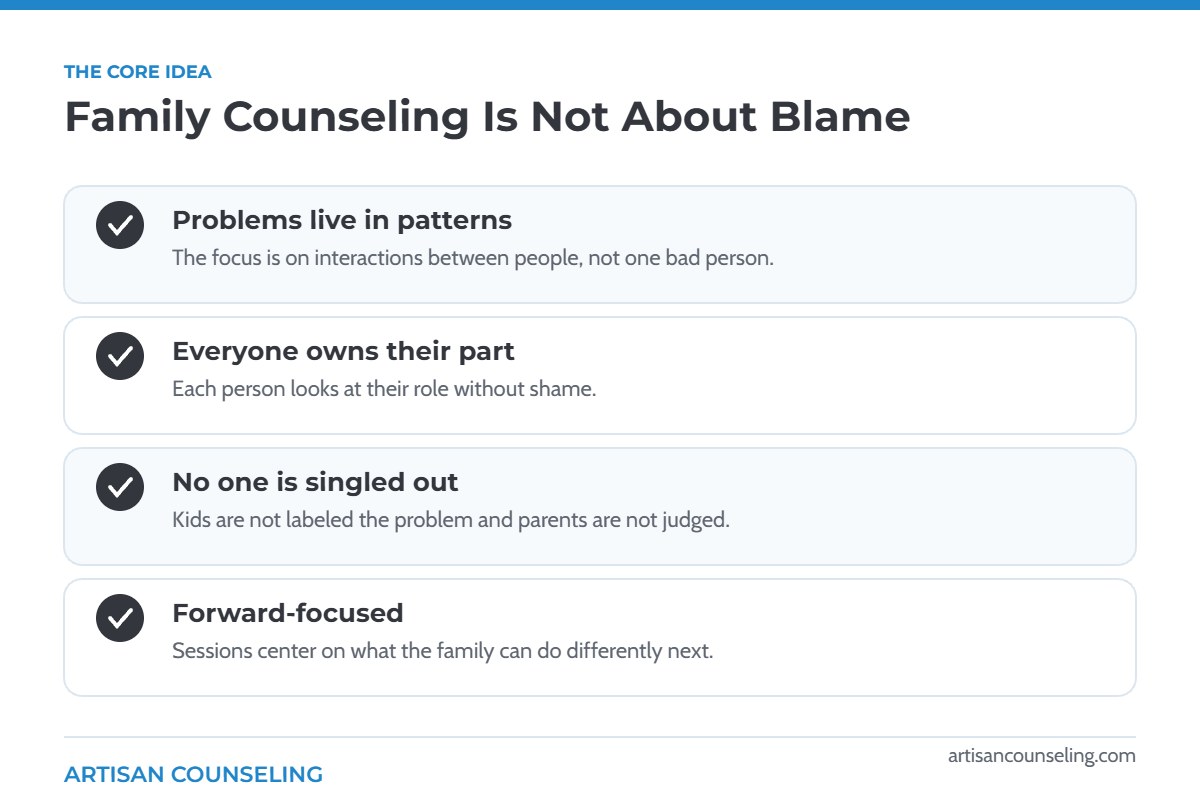
No. This is one of the most common worries, and it is understandable. Family counseling is built on the idea that problems live in patterns, not in one “bad” person.
A good counselor helps everyone take responsibility for their own part without shaming anyone. Parents are not judged for their past mistakes, and children are not singled out as the problem. The focus stays on what the family can do differently going forward.
Frequently Asked Questions
How long does family counseling take?
It varies. Some families work on a focused issue for a few months, while others with longer-standing patterns attend longer. Your counselor will review progress with you regularly so you can adjust the plan.
Can family counseling help with divorce or co-parenting?
Yes. Family counseling can help children adjust to two homes and help co-parents communicate more calmly. Our article on co-parenting after separation offers more practical guidance.
Is family counseling available online?
Yes. Many families attend by secure video, which can make it easier to coordinate schedules or include family members who live elsewhere in Virginia.
Does insurance cover family counseling?
Many plans cover family counseling when it is connected to a mental health concern, but coverage differs by plan. Contact your insurer and ask our team about your benefits.
Starting Family Counseling at Artisan Counseling
If your family feels stuck, our licensed counselors can help you understand what is happening and build a calmer, more connected home. Learn more about our family counseling services, read about what helps when co-parenting after separation, or meet our counselors.
We see families in Newport News and Suffolk and by telehealth throughout Virginia. When you are ready, reach out to schedule.