
Key Takeaways
- Family counseling for teens treats the whole family as the client, so no one person is labeled “the problem.”
- It can help with conflict, shutdown, anxiety, mood changes, school stress, divorce, and blended-family adjustment.
- Teens often participate more than parents expect when sessions feel fair and their voice is taken seriously.
- Many families notice changes within a few months, though timelines depend on goals and consistency.
- Safety concerns such as self-harm or suicidal thoughts need prompt professional attention, not a wait-and-see approach.
The teenage years bring real change, and not just for the teen. As your child pushes for independence, the whole family system shifts. Conversations that used to be easy turn into arguments, doors close more often, and you may feel like you are living with someone you no longer understand.
Family counseling gives everyone a structured, neutral place to work through that shift together. In this article, you will learn what family counseling for teens involves, the most common reasons families seek it, how teens tend to feel about it, how long it usually takes, and practical ways to help your teen walk in the door.
What Is Family Counseling for Teens?
Family counseling treats the family as the unit of focus. Instead of sending a teen to “get fixed,” a counselor looks at how everyone communicates, how roles and rules work at home, and which patterns keep conflict going.
Who Attends Sessions
- The teen and at least one parent or caregiver
- Sometimes siblings, a stepparent, or other people who live in the home
- A licensed counselor who guides the conversation, keeps it safe, and points out patterns
Some sessions include everyone, while others may be split. A counselor might meet with the teen alone for part of a session, then with parents, then bring everyone back together. This helps each person speak openly.
What It Is Not
Sessions are not about deciding who is right. A good family counselor will not take sides or let the hour turn into a list of complaints about one person. The goal is to understand what is happening between people and build new ways of responding.
Why Teens Benefit From Family Counseling
Adolescence is a period of rapid brain development, identity building, and growing independence. Teens are learning to manage stronger emotions while also wanting more privacy and control. That combination naturally creates friction at home.
Family counseling helps because many teen struggles are tied to family dynamics, and changing those dynamics supports lasting progress. Benefits families often report include:
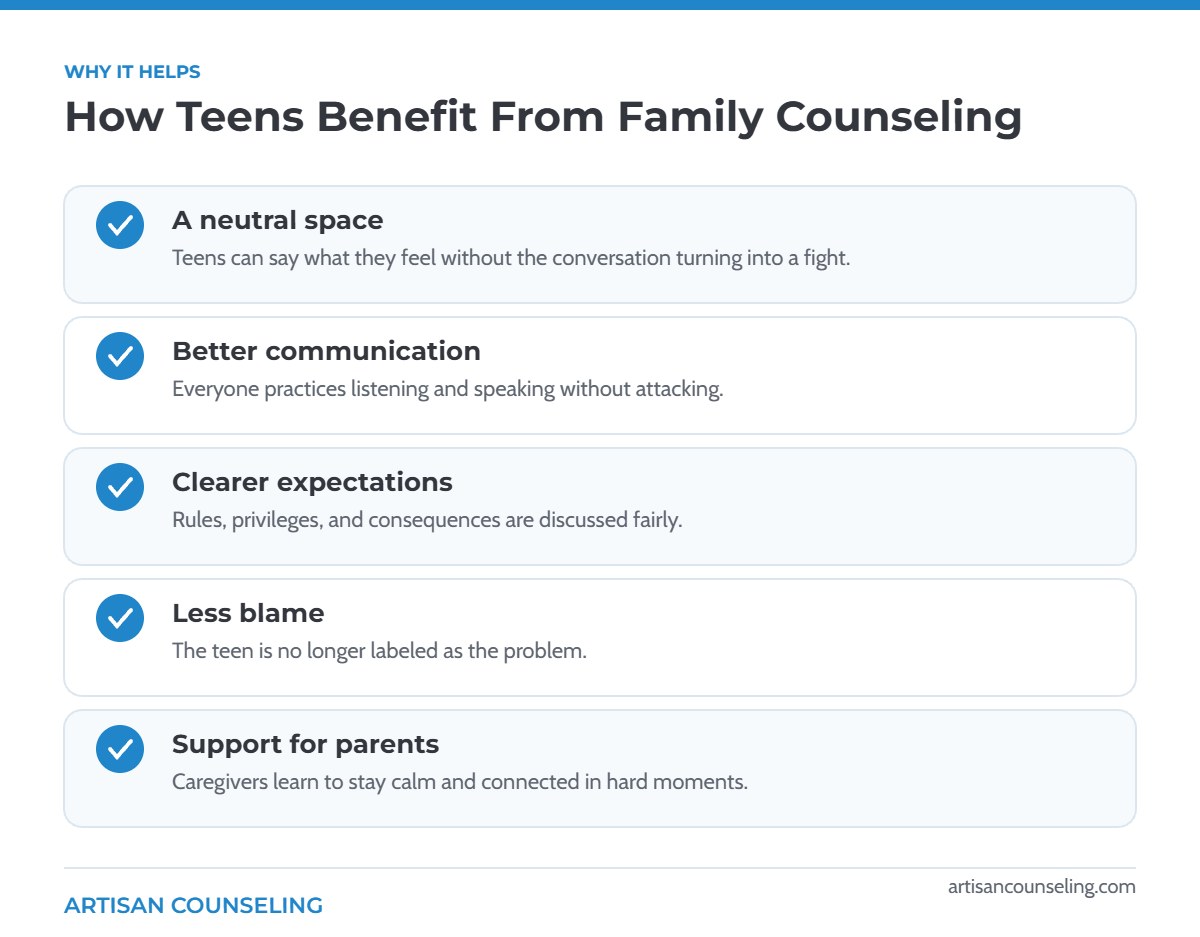
- A neutral space. Teens often say things in session they would never say at the dinner table.
- Better communication skills. Everyone practices listening without interrupting and speaking without attacking.
- Clearer expectations. Rules, consequences, and privileges get discussed openly and fairly.
- Less blame. The teen stops carrying the label of “the problem child.”
- Support for parents. Caregivers learn how to stay calm and connected during hard moments.
Common Reasons Families Seek Counseling
There is no single “right” reason to start. Families come in for everything from daily arguments to a major crisis. Here are some of the most common concerns.
Mental Health and Behavioral Concerns
Anxiety, depression, irritability, withdrawal, changes in sleep or eating, falling grades, defiance, or substance use can all affect the whole household. Family counseling can work alongside individual therapy for the teen so that home becomes a place that supports recovery.
Communication Breakdowns
Maybe every conversation becomes a fight, or maybe your teen has gone quiet and answers everything with “fine.” Both patterns are signs that communication needs repair. Counseling helps families slow down and actually hear each other. Our article on parenting through big emotions without yelling offers more ideas you can try at home.
Divorce, Separation, and Blended Families
New stepparents, new siblings, two households, and shifting schedules are a lot for anyone. Teens may feel caught in the middle or loyal to one parent. If your family is navigating two homes, you may also find what actually helps when co-parenting after separation useful.
Life Transitions and Loss
A move, a military deployment, a new school, a serious illness, or the death of a loved one can unsettle an entire family. Counseling gives everyone room to process change together rather than alone.
If you are in crisis: call or text 988 to reach the 988 Suicide & Crisis Lifeline any time, day or night, or call 911 in an emergency.
How Do Teens Usually Feel About Family Counseling?
Many parents worry their teen will refuse to go or sit in silence. Some resistance at first is normal. Teens often expect to be lectured or ganged up on.
That usually changes once they see the counselor is not there to take the parents’ side. When a teen feels respected and heard, they often become one of the most honest voices in the room. They may also appreciate seeing their parents work on their own reactions, not just theirs.
How to Talk to Your Teen About Starting
- Frame it as a family effort: “We want things to feel better for all of us.”
- Avoid presenting it as punishment or as proof that they are the problem.
- Give them some say, such as helping pick an appointment time or choosing in-person or online sessions.
- Let them know they can share their own opinion about the counselor after a few sessions.
Tip: Ask the counselor how confidentiality works for teens before the first session, then explain it to your teen. Knowing what stays private, and the safety exceptions, helps many teens open up.
How Long Does Family Counseling Take?
Every family is different. Some families come in with one focused concern, like adjusting to a new stepparent, and see meaningful change in a few months. Others are working through longer-standing patterns and benefit from a longer commitment.
Weekly or every-other-week sessions are common at the start. Progress tends to come faster when everyone shows up consistently and practices new skills between sessions. For a broader look, read how long counseling usually takes.
What Can Parents Do Between Sessions?
The hour in the counselor’s office matters, but the other 167 hours of the week matter too. Small, steady efforts at home make a big difference.
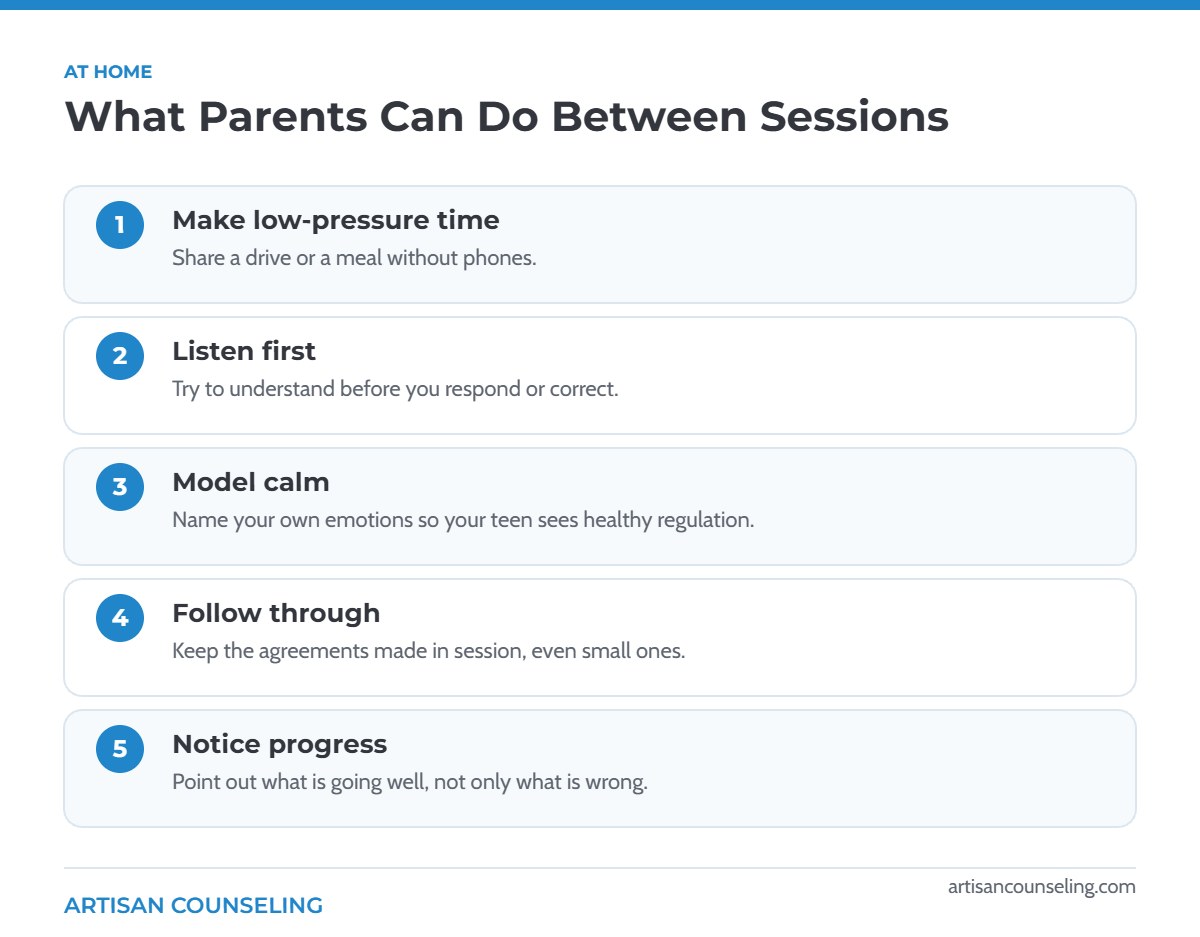
- Schedule short, low-pressure time together, like a drive or a meal without phones.
- Listen to understand before you respond or correct.
- Name your own emotions calmly so your teen sees healthy regulation modeled.
- Follow through on agreements made in session, even small ones.
- Notice and mention progress, not just problems.
Frequently Asked Questions
Can my teen see a counselor alone instead of with the family?
Yes. Many teens benefit from individual counseling, and some families use both. A counselor can help you decide whether individual sessions, family sessions, or a mix makes the most sense for your situation.
What if my teen refuses to go?
Start without them if you need to. Parents can meet with a family counselor to learn new approaches, and teens often join later once they see things changing at home and hear that sessions are not about blaming them.
Is what my teen says in family counseling kept private?
Counselors explain their confidentiality policy at the start. Generally, private details a teen shares are respected, but counselors must act if there is a risk of serious harm to the teen or others. Ask about the specifics during intake.
Is family counseling covered by insurance?
Many insurance plans cover family counseling when it relates to a mental health concern, but coverage varies. Check with your plan and review our insurance and payment information page for details.
Getting Family Support at Artisan Counseling
If your family feels stuck in the same arguments or your teen seems farther away than ever, you do not have to wait for a crisis to reach out. Our family counseling services are offered in person at our Newport News and Suffolk offices and through telehealth across Virginia.
You can contact our team to ask questions or schedule a first appointment.