
Key Takeaways
- Art therapy is a mental health treatment led by a trained clinician that uses art-making to help you process experiences, including trauma.
- Because trauma is often stored as images, sensations, and emotions rather than words, art offers a way to express it without needing to explain everything.
- Art therapy can create distance from painful memories, support emotional regulation, and build a sense of control and safety.
- You do not need any artistic skill. The focus is on the process, not on making something that looks good.
After a traumatic experience, many people find that words fall short. You might know something affected you deeply but struggle to describe it, or talking about it might leave you feeling flooded and shut down.
Art therapy offers another path. By working with color, shape, and materials, you can express and begin to process what happened at a pace that feels manageable.
In this article, you will learn what art therapy is, why it can be especially helpful for trauma, what a session actually looks like, who tends to benefit, and how it fits with other trauma treatments.
What Is Art Therapy?
Art therapy is a form of psychotherapy in which a trained counselor uses the creative process as part of treatment. You might draw, paint, sculpt with clay, or create a collage, then explore what came up with your counselor.
It is different from an art class. There is no grading, no technique to master, and no “right” result. The artwork is a bridge for communication, reflection, and healing. For a fuller overview, see what art therapy is and how it works.
Why Does Art Therapy Help With Trauma?
Trauma often affects the parts of the brain involved in language and organizing memories into a clear story. Memories may surface as fragments: an image, a smell, a tight chest, a sudden wave of fear. Art can meet those fragments where they are.
Here are some of the main reasons art therapy can support trauma recovery:
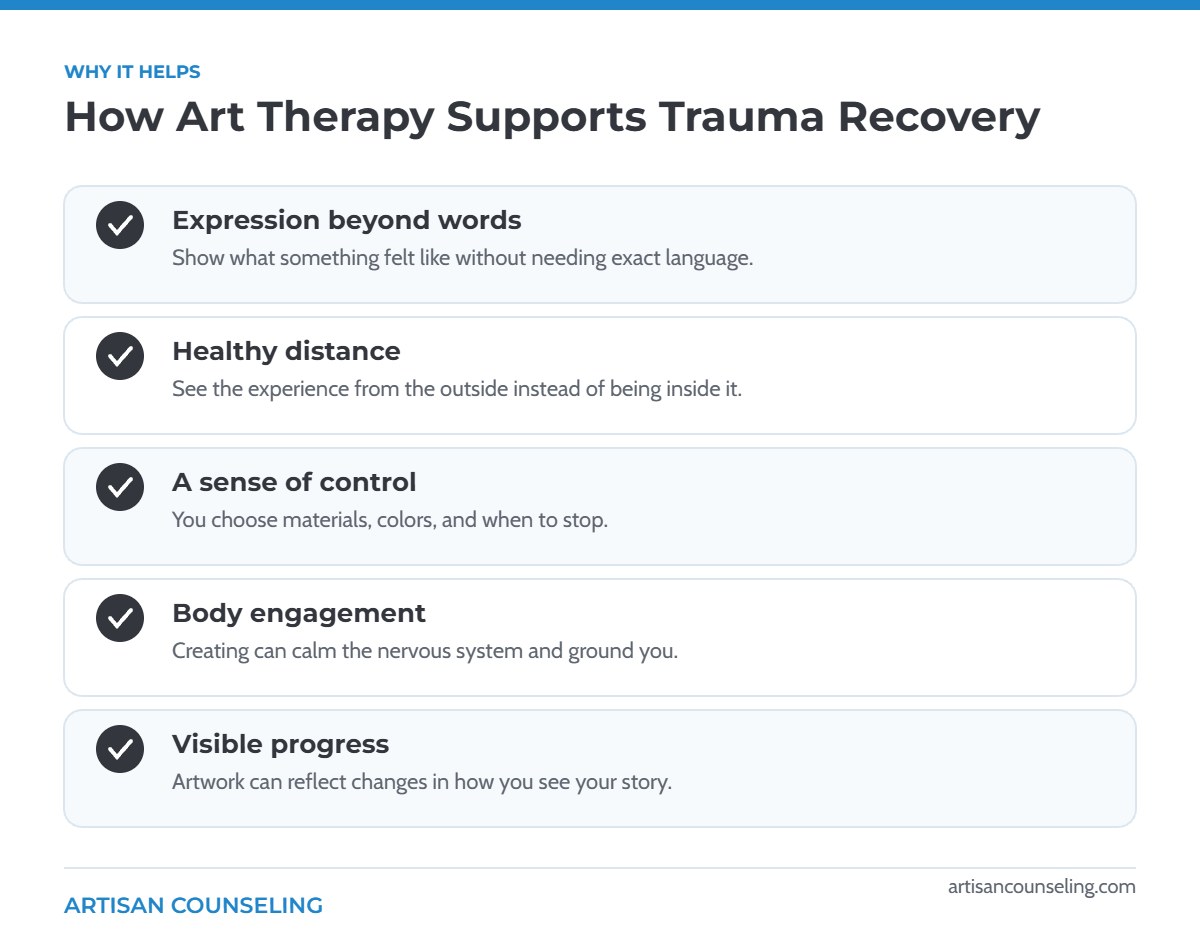
- Expression beyond words. You can show what something felt like without needing exact language.
- Healthy distance. Putting an experience on paper lets you look at it from the outside instead of being inside it.
- A sense of control. You choose the materials, the colors, and when to stop, which can counter the helplessness trauma often brings.
- Body engagement. The physical act of creating can calm the nervous system and bring you back to the present.
- Visible progress. Over time, artwork can show changes in how you see yourself and your story.
Expression Without Overwhelming Exposure
Some trauma treatments involve talking about memories in detail. That approach helps many people, but for others it can feel like too much too soon.
Art therapy allows you to approach difficult material indirectly. You might draw a symbol of safety, create an image of a feeling, or represent a “before and after” without describing the event itself. Your counselor helps you stay within a range where you can reflect without becoming overwhelmed.
Tip: If you start to feel overwhelmed while creating, it is okay to pause, change materials, or switch to a grounding activity. A trauma-informed counselor will help you notice those signals and slow down.
What Happens in an Art Therapy Session for Trauma?
Every counselor works a bit differently, but sessions often follow a similar flow:
- Check-in. You talk briefly about how you are feeling today.
- Invitation. Your counselor may offer a prompt, such as “create a safe place,” or let you choose freely.
- Creating. You work with the materials while your counselor stays present and supportive.
- Reflecting. You look at the artwork together and talk about what you notice, if you want to.
- Grounding. The session ends by helping you feel settled before you leave.
Early sessions usually focus on safety, coping, and building trust. Processing harder memories comes later, once you have tools to stay steady. Read more about what happens in an art therapy session.
Common Art Therapy Activities for Trauma
- Drawing or painting a safe or calm place
- Body maps that show where emotions are felt
- Collage to represent identity, strengths, or hopes
- Clay work to release tension or shape something new
- Containment exercises, such as creating a box to “hold” difficult feelings
Who Can Benefit From Art Therapy for Trauma?
Art therapy can help children, teens, and adults. It is often a good fit for people who:
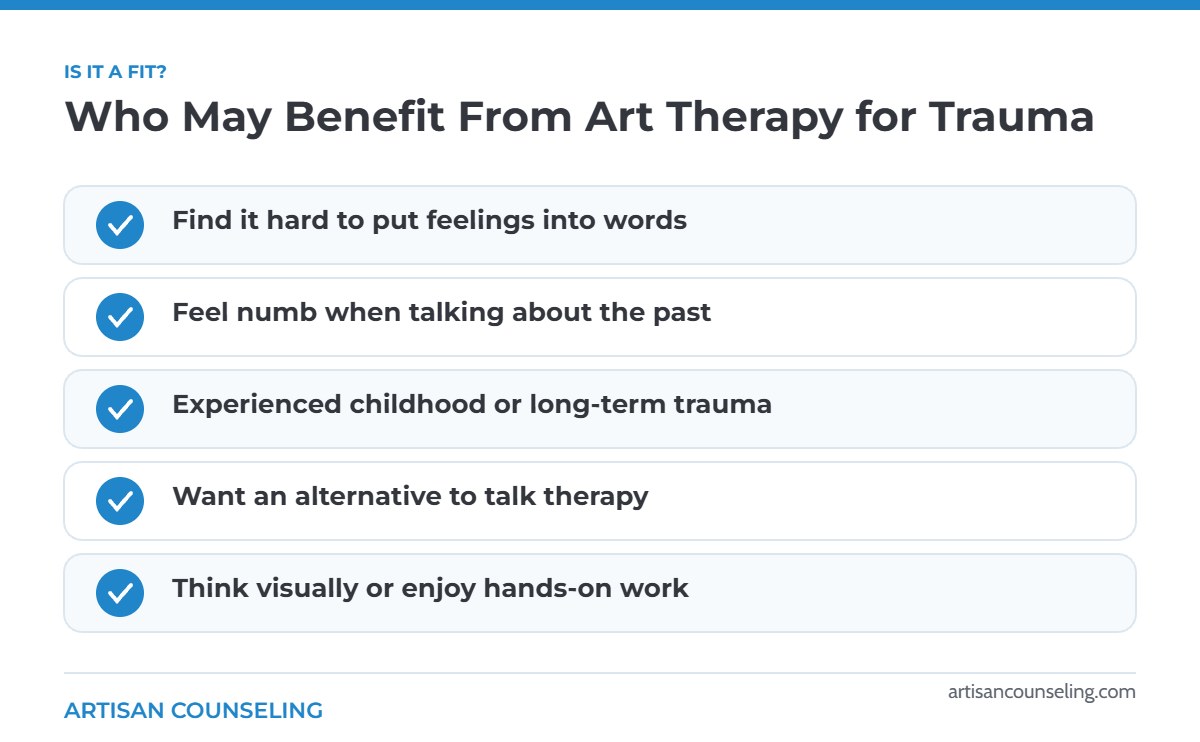
- Find it hard to put feelings into words
- Feel shut down or numb when talking about the past
- Have experienced childhood or long-term trauma
- Have tried talk therapy and want a different way in
- Enjoy working with their hands or think visually
Children in particular often communicate more naturally through play and art. Our article on art therapy for adults vs. children explains how the approach differs by age.
Can Art Therapy Be Combined With Other Trauma Treatments?
Yes. Art therapy often works well alongside other approaches. Some people use it to build safety and emotional regulation before beginning EMDR therapy, while others pair it with talk-based trauma work or body-focused methods.
Your counselor can help you decide whether art therapy should be your main treatment or one part of a broader plan.
If you are in crisis: call or text 988 to reach the 988 Suicide & Crisis Lifeline, available 24/7, or call 911 in an emergency.
Frequently Asked Questions
Do I need to be good at art for art therapy to work?
No. Art therapy is about the process of expressing yourself, not artistic talent. Stick figures, scribbles, and simple shapes are completely welcome.
Is art therapy effective for PTSD?
Art therapy is used as a supportive treatment for trauma and can help with expression, emotional regulation, and self-understanding. For PTSD specifically, it is often combined with trauma treatments that have strong research support, such as EMDR or cognitive processing therapy.
Will I have to explain my artwork?
Only if you want to. Your counselor may ask open questions about what you notice, but you decide how much to share.
Can art therapy be done through telehealth?
Yes. Many art therapy activities work well online using simple supplies you have at home, such as paper, markers, or magazines for collage.
Exploring Art Therapy at Artisan Counseling
If words have not been enough to help you heal, art therapy at Artisan Counseling offers a gentle, trauma-informed alternative. Meet our counseling team, then contact us to schedule a first session in Newport News, Suffolk, or online.