
Key Takeaways
- Emotional manipulation is a pattern of using guilt, fear, confusion, or affection to control someone’s thoughts or behavior.
- Common tactics include gaslighting, guilt-tripping, the silent treatment, blame shifting, and love bombing.
- A key warning sign is how you feel: confused, anxious, constantly apologizing, or doubting your own memory.
- You can protect yourself by keeping notes, setting boundaries, building outside support, and working with a counselor.
Emotional manipulation rarely looks obvious from the inside. It often starts small, mixed with kindness, and slowly leaves you second-guessing yourself. Many people only realize what was happening after they step back or talk it through with someone else.
If this is affecting your relationship, couples counseling at our Newport News and Suffolk offices can help you and your partner work through it together.
This article explains what emotional manipulation is, the tactics people use most often, why it can be so hard to see, and what you can do if you recognize it in your relationship. While the focus here is romantic relationships, the same patterns can show up with family, friends, or coworkers.
What Is Emotional Manipulation?
Emotional manipulation is an attempt to influence or control another person through indirect, unfair, or deceptive means. Instead of asking openly for what they want, the manipulator works through your emotions, such as guilt, fear, shame, or the desire to keep the peace.
Everyone occasionally handles a conversation poorly. Manipulation is different because it is a repeated pattern that benefits one person at the other’s expense, often leaving the other person feeling smaller and less sure of themselves.
Is Manipulation Always Intentional?
Not always. Some people learned manipulative strategies growing up and use them without much awareness. Intent matters for understanding, but it does not change the impact on you. You are allowed to protect yourself whether or not the behavior is deliberate.
What Are the Most Common Manipulation Tactics?
Manipulation takes many forms. These are some of the tactics counselors see most often in relationships.
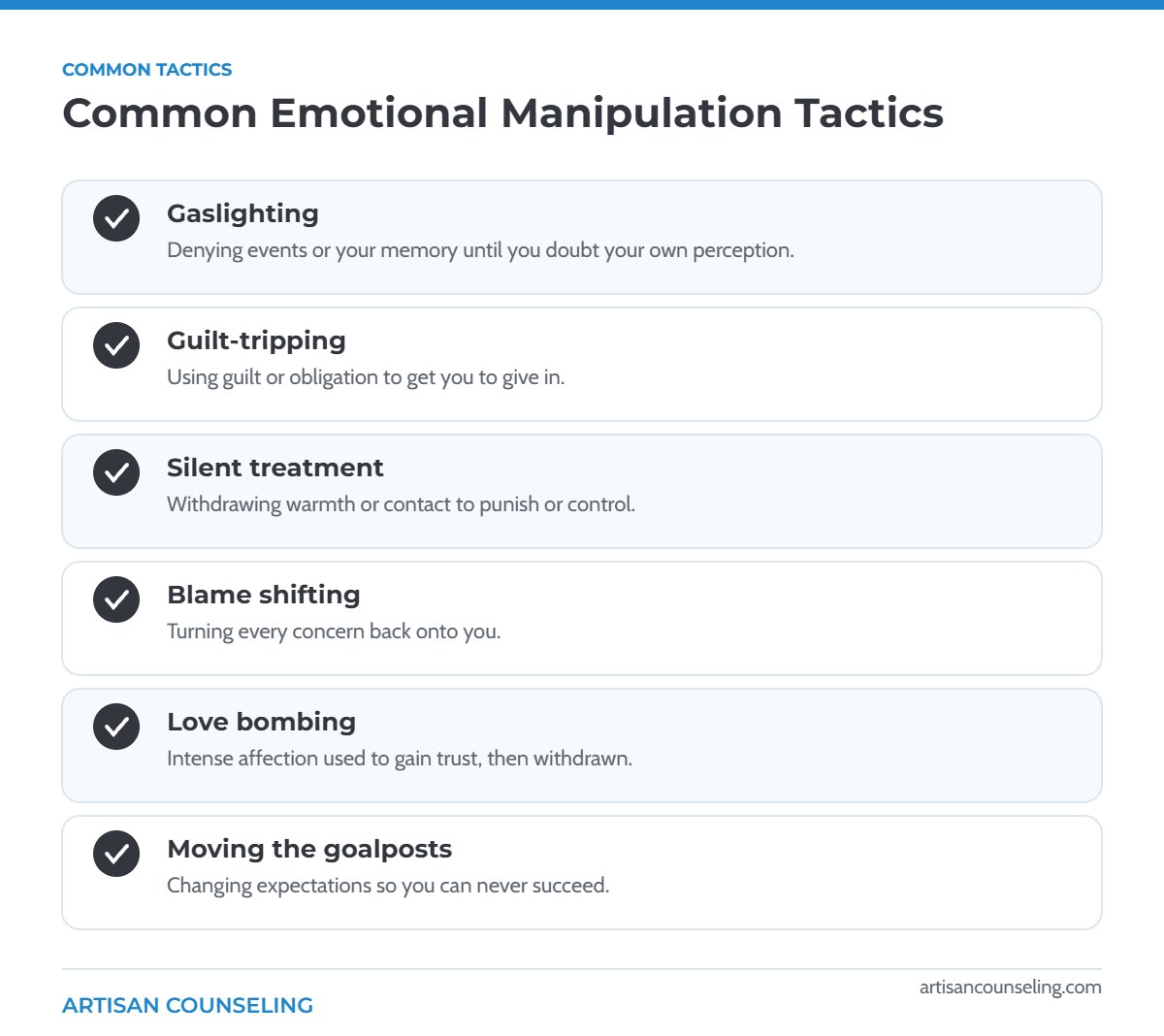
Gaslighting
Gaslighting involves denying things that happened, twisting facts, or insisting you are “too sensitive” or “remembering it wrong.” Over time, you may stop trusting your own memory and perceptions.
Guilt-Tripping
Statements like “after everything I’ve done for you” are used to make you feel you owe the other person, so you give in even when you do not want to.
The Silent Treatment
Taking space to calm down is healthy. The silent treatment is different: withholding contact or affection as punishment until you apologize or change your behavior.
Blame Shifting
Whenever you raise a concern, the conversation turns to your faults instead. You leave having apologized for something that started as their behavior.
Love Bombing and Intermittent Affection
Intense attention, gifts, and flattery early on can create fast attachment. When warmth is later withdrawn and returned unpredictably, it can keep you working hard to win it back.
Moving the Goalposts
Expectations keep changing, so nothing you do is ever quite enough. This can leave you feeling chronically inadequate.
What Manipulation Can Sound Like
Manipulation is often easier to spot in specific words than in theory. Phrases like these, especially when they come up again and again, are worth noticing:
- “You’re overreacting. That never happened.”
- “If you really loved me, you would do this.”
- “Look what you made me do.”
- “Fine. I guess I’m just a terrible partner.” (said to end a conversation about their behavior)
- “Nobody else would put up with you.”
Any of these can slip out during a bad argument. The concern is a consistent pattern that leaves you doubting yourself or giving in to avoid the fallout.
Why Is Emotional Manipulation So Hard to Recognize?
Manipulation is effective precisely because it is confusing. Several factors make it hard to see clearly:
- It is mixed with good moments. Kindness and affection make the hurtful moments seem like exceptions.
- It builds gradually. Small changes over months feel normal by the time they add up.
- It targets self-trust. If you doubt your memory, you are less likely to challenge the pattern.
- It may feel familiar. If you grew up with similar dynamics, they can feel like how relationships work.
Pay attention to how you feel around the person. Common signs include feeling confused after conversations, apologizing constantly, hiding things from friends to avoid conflict, or feeling like you are “never enough.” If you notice patterns that may come from early experiences, our article on how childhood trauma affects adult relationships may help.
A Realistic Example
For example, imagine you tell your partner you felt hurt when they made fun of you in front of friends. Within minutes, the conversation becomes about how you embarrassed them last year, how sensitive you are, and how hard their week has been. You end the night apologizing and comforting them. Later, you realize your original concern was never addressed. When this happens once, it is a poorly handled conversation. When it happens most times you raise an issue, it is a pattern worth taking seriously.
Questions to Ask Yourself
- Do I feel more confused or more clear after we talk?
- Do I edit what I say to avoid a reaction?
- Have I stopped seeing friends or family because it causes problems?
- Would I be worried if a friend described this relationship to me?
Try this: After a confusing conversation, write down what was said as soon as you can. Reviewing your notes later can help you see patterns more clearly and trust your own recollection.
What Should You Do If You Are Being Manipulated?
Recognizing manipulation is an important first step. These strategies can help you respond in a grounded way.
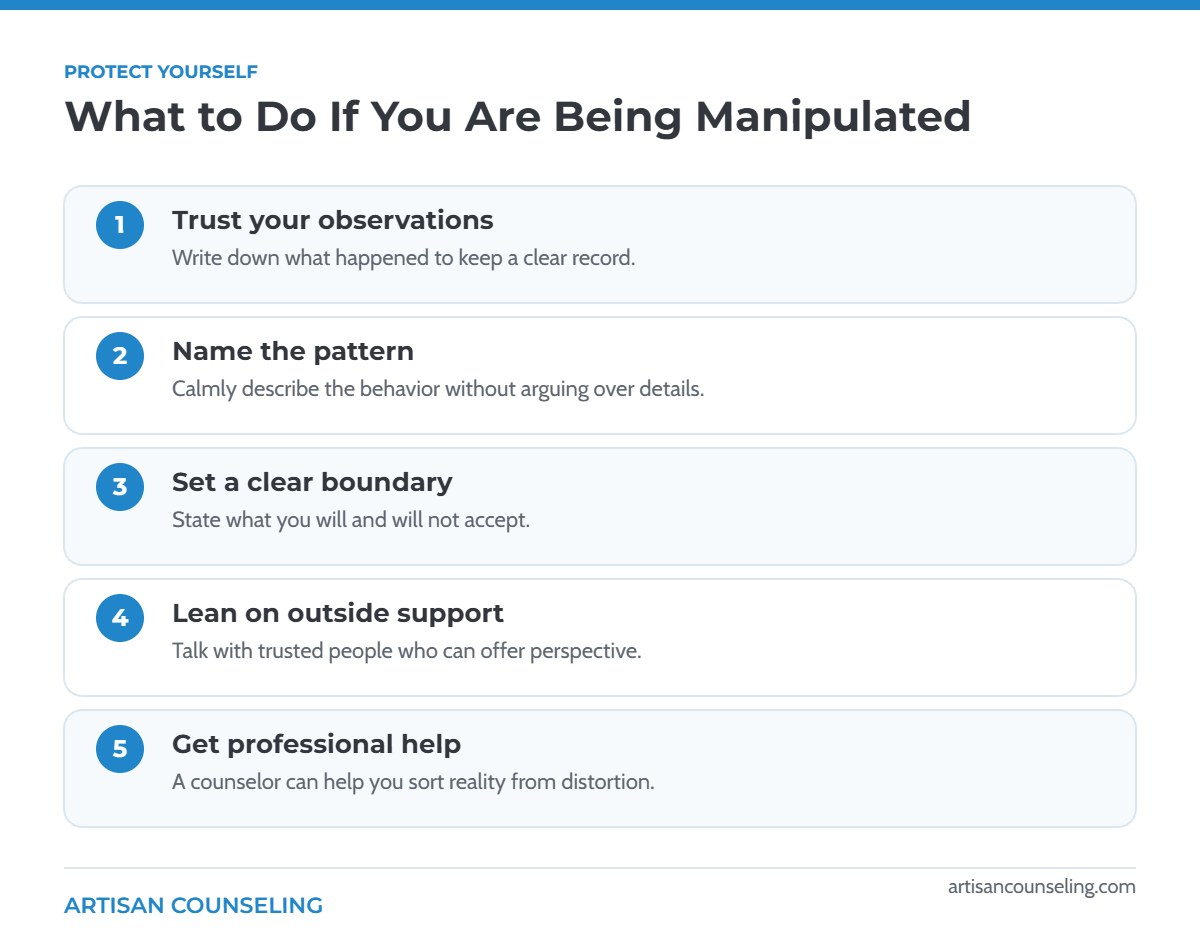
Trust and Record Your Experience
Keeping a simple journal of incidents helps counter gaslighting and gives you a clearer picture over time.
Name the Behavior Calmly
You do not need to win an argument about details. Try: “When I bring up a concern, the conversation turns to me. I’d like us to talk about the original issue.”
Set and Hold Boundaries
A boundary describes what you will do, not what the other person must do: “If you start yelling, I’m going to end the conversation and we can try again later.” Learn more in our guide to healthy boundaries.
Reconnect With Outside Support
Manipulation often thrives in isolation. Trusted friends and family can offer perspective and remind you of who you are.
Know When the Situation Is Unsafe
If manipulation comes with threats, monitoring, control over money, intimidation, or physical harm, it may be part of a pattern of abuse. Your safety comes first. A domestic violence advocate can help you make a safety plan.
If you are in crisis: call or text 988 to reach the 988 Suicide & Crisis Lifeline, available 24/7. If you are in immediate danger, call 911. For domestic violence support, you can also contact the National Domestic Violence Hotline at 1-800-799-7233.
How Can Counseling Help?
A counselor offers a neutral space to sort out what happened, rebuild trust in your own judgment, and decide what you want next. Individual counseling can help you strengthen self-trust, understand why certain dynamics feel familiar, and practice assertive communication. If you are wondering why leaving or changing a relationship feels so hard, read why people stay in unhealthy relationships.
At Artisan Counseling, individual sessions might include sorting through specific conversations to separate facts from distortions, noticing your own early warning signs, and practicing calm, direct responses. Many people also work on rebuilding confidence and reconnecting with friends and activities that may have faded. You set the pace, and you decide what changes you want to make.
Couples counseling can help when both partners are willing to look honestly at their behavior. It is generally not recommended when one partner is abusive or controlling, since joint sessions can be unsafe. A counselor can help you weigh these options.
Frequently Asked Questions
What is the difference between manipulation and persuasion?
Persuasion is open: someone shares their view and respects your right to decide. Manipulation is hidden or coercive, using guilt, fear, or confusion to get you to act against your own interests or wishes.
Can someone manipulate without knowing it?
Yes. Some people use manipulative strategies they learned early in life without fully realizing it. The behavior can still be harmful, and you can still set boundaries around it.
What are signs I am being gaslighted?
Common signs include frequently doubting your memory, feeling confused after conversations, apologizing often without knowing why, and feeling like you are “too sensitive.” A counselor can help you sort through these experiences.
Can a manipulative person change?
Some people can change when they genuinely recognize the harm, take responsibility, and do sustained work, often with professional help. Promises alone are not enough. Look for consistent changes in behavior over time, and keep your own well-being at the center of your decisions.
Should I confront a manipulative partner?
It depends on your safety and the relationship. Calmly naming behaviors and setting boundaries can help in some situations. If you fear retaliation or harm, prioritize safety and talk with a counselor or advocate first.
Support From Artisan Counseling
You deserve relationships where you feel clear, respected, and safe. Our licensed counselors can help you make sense of confusing dynamics and decide on next steps. We offer sessions in Newport News, Suffolk, and through telehealth across Virginia. Reach out to our team when you are ready.